
Plants
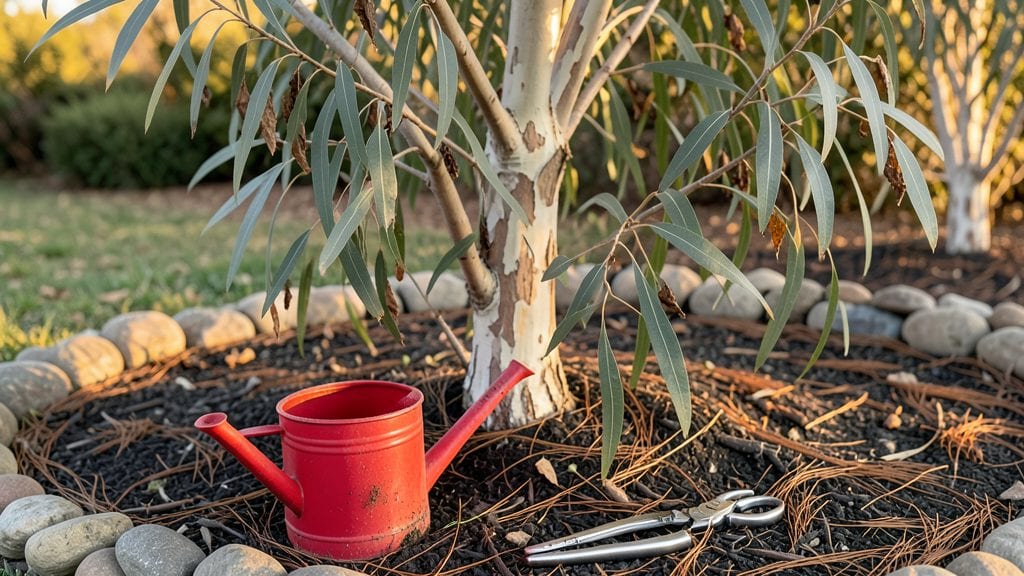
Seeing your eucalyptus plant dying despite steady watering? Root rot could be silently suffocating its roots—and I’ve saved more than a few trees from this exact crisis by acting fast before the fungus takes hold.
The first sign is often yellowing leaves paired with a foul, sour smell at the base, but many gardeners miss it until the plant collapses.
Root rot thrives in soggy soil, so the fix starts with drainage. If your plant’s in a pot, swap it into a container with drainage holes and fresh, gritty potting mix. For in-ground eucalyptus, mound soil around the base to lift roots out of waterlogged zones.
Prune back any mushy, blackened roots you find—healthy roots should be firm and white or light tan.
After repotting, hold off on watering for 3–5 days to let the roots recover. Once you resume, water deeply but only when the top inch of soil feels dry.
A fan running nearby for a few hours daily mimics eucalyptus’ native windy conditions, helping leaves dry faster and discourage fungal spores from settling.
Prevention is easier than rescue: eucalyptus hate "wet feet," so never let them sit in saucers of water, and avoid heavy clay soils. If your plant’s in a humid climate, space them apart to improve airflow.
With these adjustments, you’ll see fresh green growth in just a few weeks—proof the roots are healing.
Root Causes Behind Your Struggling Eucalyptus
Eucalyptus trees are hardy, drought-tolerant powerhouses—but even they can succumb to stress when conditions go wrong. Understanding why your eucalyptus plant is dying is the first step to saving it.
Below, we break down the most common culprits, backed by science, so you can diagnose the issue and act fast.
Eucalyptus trees hate soggy roots. Their native Australian habitat features well-drained, sandy soils, and they’ve evolved to thrive in conditions where excess water drains away quickly.
When planted in heavy clay or compacted soil—or watered too frequently—they’re prone to root rot, a fungal infection that chokes their roots by blocking oxygen and nutrient uptake.
Why it happens:
- Fungal pathogens (Phytophthora spp. or Pythium) thrive in waterlogged soil, infecting roots and cutting off water/oxygen flow.
- Anaerobic conditions (no oxygen) cause roots to suffocate, turning brown and mushy.
- Salt buildup from overwatering can further stress roots, mimicking drought symptoms while the plant is actually drowning.
🔍 Actionable sign: Yellowing leaves starting from the bottom, wilting despite moist soil, or a foul smell at the base.
While eucalyptus trees tolerate dry spells, prolonged drought weakens them, making them vulnerable to pests, disease, or even death. These trees rely on deep root systems to access moisture, but shallow watering or neglect can leave them parched.
Why it happens:
- Moisture deficit triggers transpiration stress, where leaves lose more water than they absorb, leading to wilting and leaf drop.
- Root shrinkage occurs as cells lose turgor pressure, reducing nutrient uptake.
- Pest attraction: Stressed trees are magnets for psyllids, scale insects, or borers, which further drain the plant.
🔍 Actionable sign: Crispy, curling leaves (especially on edges), dry soil pulling away from the pot, or a sudden leaf drop despite no visible pests.
Eucalyptus trees prefer slightly acidic to neutral soil (pH 6.0–7.5). If your soil is too alkaline (high pH) or lacks essential nutrients, the plant struggles to absorb what it needs, leading to chlorosis (yellowing) and stunted growth.
Why it happens:
- High pH (alkaline soil) locks out iron, manganese, and zinc, causing interveinal chlorosis (yellowing between leaf veins).
- Nitrogen deficiency (common in sandy soils) leads to pale, yellow leaves and poor growth.
- Phosphorus or potassium deficiencies weaken roots and make the tree susceptible to disease.
🔍 Actionable sign:
- Yellow leaves with green veins (iron deficiency).
- Purple or red stems/leaves (phosphorus deficiency).
- Brown leaf edges (potassium deficiency).
Eucalyptus trees are not pest-proof—certain insects and pathogens target them when stressed.
Common offenders include: - Psyllids (tiny sap-sucking insects that cause galls and sticky honeydew). - Scale insects (armored pests that drain sap, leading to black sooty mold). - Root-knot nematodes (microscopic worms that girdle roots, stunting growth). - Fungal diseases like canker (Botryosphaeria) or leaf blight, which thrive in humid conditions.
Why it happens:
- Weakened immunity from poor growing conditions (over/underwatering, nutrient deficiencies).
- High humidity or poor airflow (common in dense plantings) encourages fungal spread.
- Physical damage (e.g., from pruning tools) creates entry points for pathogens.
🔍 Actionable sign:
- Sticky residue on leaves (honeydew from psyllids/scale).
- Black sooty mold (a fungal growth fed by insect honeydew).
- Wilting despite moist soil (nematode root damage).
- Dark, sunken lesions on bark or branches (canker).
Eucalyptus trees are adapted to hot, sunny climates, but extreme conditions—whether too cold or too hot—can shock them into decline.
Why it happens:
- Cold damage (below 20°F/-7°C) causes leaf scorch or bud dieback, as eucalyptus are not frost-tolerant.
- Heat stress (above 95°F/35°C with poor humidity) leads to leaf burn or premature leaf drop.
- Windburn (dry, scouring winds) strips moisture from leaves, causing brown, papery edges.
🔍 Actionable sign:
- Brown, crispy leaf edges (heat or wind damage).
- Blackened leaf tips (cold damage).
- Sudden wilting in hot weather (transpiration overload).
Even mature eucalyptus trees can struggle after moving if not planted correctly. Poor root establishment leads to stunted growth, wilting, or death.
Why it happens:
- Root damage during transplanting disrupts the mycorrhizal fungi (beneficial soil microbes) that help absorb water/nutrients.
- Overly compacted soil restricts root expansion, leading to oxygen deprivation.
- Incorrect depth planting (burying the trunk too deep) causes girdling roots or stem rot.
🔍 Actionable sign:
- Slow recovery after transplanting (no new growth for weeks).
- Wilting despite regular watering (roots can’t establish).
- Cracked or swollen trunk base (girdling roots).
Revive Your Eucalyptus Plant Now
If your eucalyptus plant is struggling, don’t panic—there’s hope! Root rot, overwatering, or poor drainage are common culprits, but with the right steps, you can nurse it back to health. Below, we’ve mapped out practical fixes for each issue, along with prevention tips to keep your eucalyptus thriving long-term.
Root rot is a silent killer, but early action can save your eucalyptus. Here’s how:
🔥 Step 1: Stop Watering Immediately
- Why? Overwatering suffocates roots, worsening rot.
- How? Let the soil dry out completely before watering again. Stick your finger 2-3 inches deep—if it’s damp, wait.
🍳 Step 2: Remove the Plant & Inspect Roots
- Gently dig up the plant and rinse the roots under lukewarm water to assess damage.
- Healthy roots are firm and white; rotten roots are mushy, brown, or black.
- Trim away any squishy or discolored roots with sterilized scissors (wipe with rubbing alcohol).
👨🍳 Step 3: Repot in Fresh, Draining Soil
- Choose a pot with drainage holes (terracotta works best).
- Use a well-draining mix: Combine 50% potting soil, 30% perlite, and 20% coarse sand (or orchid bark).
- Replant at the same depth, ensuring roots aren’t buried too deep.
🥘 Step 4: Adjust Watering & Monitor
- Water only when the top 1-2 inches of soil are dry (about once a week in warm weather).
- Avoid soggy soil—eucalyptus hates "wet feet."
- Fungicide help? If rot persists, spray roots with a hydrogen peroxide solution (1 part 3% H₂O₂ to 4 parts water) before repotting.
💡 Pro Tip: After repotting, place the plant in bright, indirect light (no harsh sun) for 2-3 weeks to help it recover.
Eucalyptus plants are drought-tolerant—too much water drowns them. Here’s how to correct it:
🌡️ Step 1: Check Soil Moisture Levels
- Use a moisture meter or the finger test (insert your finger 2 inches deep).
- If soil feels damp within 24 hours of watering, you’re overdoing it.
🎯 Step 2: Improve Drainage
- Add perlite or sand to heavy clay soil to loosen it.
- Raise the pot on feet or a saucer to prevent water pooling.
- Avoid saucers unless you empty them immediately after watering.
✨ Step 3: Adjust Your Watering Schedule
- Water deeply but infrequently: Soak the soil until water drains from the bottom, then wait 7-10 days before repeating.
- Morning watering is best—allows foliage to dry before night.
💡 Pro Tip: If your eucalyptus is in a container, ensure it has multiple drainage holes. No holes? Drill them yourself!
Compacted or waterlogged soil strangles roots. Here’s how to fix it:
🔪 Step 1: Loosen Compacted Soil
- If planted in ground, aerate the soil with a garden fork, breaking up hard layers.
- For potted plants, repot into a larger container with fresh, airy soil.
🏗️ Step 2: Amend Soil for Better Drainage
- Mix in compost, perlite, or coarse sand (1 part amendment to 3 parts soil).
- For clay-heavy soil, add gypsum (follow package instructions).
🌿 Step 3: Mulch Properly
- Apply 2-3 inches of organic mulch (wood chips or straw) around the base but not touching the trunk.
- Mulch helps retain moisture while preventing soil compaction.
💡 Pro Tip: If your eucalyptus is in a shady spot, poor drainage worsens. Move it to full sun (6+ hours/day) for faster recovery.
- Water wisely: Stick to the "dry before watering" rule.
- Choose the right pot: Always use containers with drainage holes.
- Monitor humidity: Eucalyptus prefers moderate humidity—mist leaves occasionally if indoors.
- Fertilize lightly: Use a balanced, slow-release fertilizer (10-10-10) once in spring.
- Prune dead branches: Remove yellowing or wilted leaves to redirect energy to healthy growth.
🌟 Remember: Patience is key! A eucalyptus recovering from root rot may take 4-8 weeks to show new growth. Stay consistent with care, and your plant will bounce back stronger than ever. 🌿✨
Frequently asked questions
Why are my eucalyptus leaves turning yellow and falling off?
Yellowing leaves usually signal root rot or overwatering. Check the soil—if it stays soggy for more than 24 hours, your plant’s roots are suffocating. Stop watering immediately, repot in well-draining mix (50% potting soil + 30% perlite), and trim any mushy roots before replanting.
Can I save a eucalyptus with black, mushy stems?
Blackened stems indicate advanced rot or fungal disease. Prune back to healthy green tissue and treat with a hydrogen peroxide (3% solution) spray before repotting. If over 50% of the plant is affected, it may be beyond saving—start fresh with a cutting.
How often should I water a eucalyptus plant?
Water only when the top 1-2 inches of soil are bone-dry (about once every 7-10 days in warm weather). These drought-tolerant trees hate "wet feet"—always use pots with drainage holes and avoid saucers that trap moisture.
What’s the best soil mix for eucalyptus?
Use a fast-draining blend: 50% potting soil, 30% perlite, and 20% coarse sand. For in-ground planting, amend heavy clay with gypsum or compost. Eucalyptus roots need oxygen—never plant in compacted or water-retentive soil.
Will my eucalyptus survive winter indoors?
Eucalyptus aren’t frost-tolerant, but they can adapt to indoor life with bright light (6+ hours/day) and moderate humidity (40-50%). Keep away from heat vents and mist leaves occasionally. If leaves yellow indoors, it’s likely from low light or overwatering.