Planting
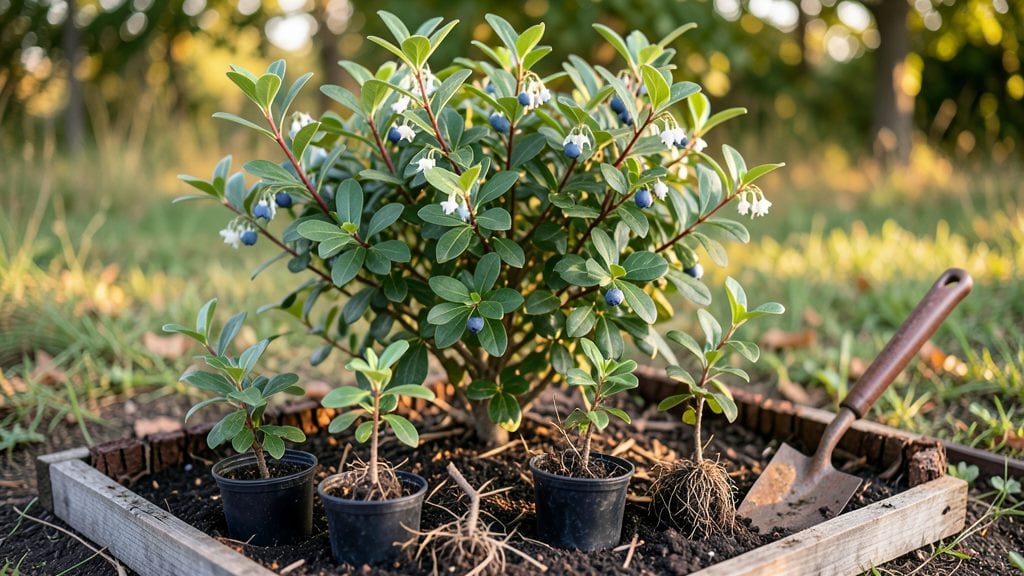
Here are some blueberry planting tips you’ll wish you’d known before your first crop—like why my bushes once yielded only bitter, shriveled berries despite my best efforts. 🌱 berries because the soil was too alkaline.
The right mix of peat moss, pine fines, and sulfur creates that perfect tangy environment they crave.
Once you’ve got the soil tested and amended, dig a hole twice as wide as the root ball but only as deep—planting too deep drowns the roots. Space northern varieties like ‘Bluecrop’ 5-6 feet apart, while southern types like ‘Climax’ can handle 4-5 feet.
The first year is all about getting them established, so water deeply once a week unless rain does the job for you.
📚 In This Guide
- What you need
- Instructions
- Tips and common mistakes
- Wrapping up and next steps
What you need
- ● Blueberry plants: 2–5 plants (choose southern highbush, northern highbush, or lowbush varieties based on your climate zone).
- ● Well-draining soil: Acidic (pH 4.5–5.5). Test your soil with a pH test kit (available at garden centers).
- ● Organic mulch: 2–3 inches of pine needles, wood chips, or peat moss to retain moisture and acidify soil.
- ● Slow-release fertilizer: Acid-loving plant fertilizer (e.g., Osmocote or Miracle-Gro Azalea/Camellia)
- ● Pruning shears: Sharp, clean pair for trimming dead wood.
- ● Garden gloves: Heavy-duty to protect hands from thorns.
- ● Watering can or hose: With a gentle spray nozzle (blueberries hate soggy roots!).
- ● Epsom salt: 1–2 tablespoons per plant annually to boost magnesium (great for leaf health!).
- ● Bird netting: To protect ripe berries from hungry birds and wildlife.
- ● Drip irrigation system: For consistent moisture in dry climates.
- ● Soil sulfur: If your soil pH is too high (above 6.0), use sulfur pellets to lower it gradually.
- ● Composted manure: Well-aged leaf mold or compost for nutrient-rich soil amendments.
Step-by-Step instructions for planting blueberries
Here's how to plant blueberries for a bountiful harvest using proven soil techniques.
🌱 Step 1: Choose the Right Location and Soil Type
Blueberries thrive in acidic soil with a pH between 4.5 and 5.5. Test your soil first—most garden centers sell inexpensive kits. If your soil isn’t acidic enough, you’ll need to amend it with peat moss or sulfur before planting. I like to plant mine in a sunny spot with at least 6 hours of direct sunlight daily—they’ll tolerate partial shade, but fruit production suffers.
Pick a location with well-draining soil—blueberries hate soggy roots. If your yard has heavy clay, raise the bed or plant in containers (they grow beautifully in large pots). Dig a hole twice as wide as the root ball but only as deep—planting too deep can suffocate the roots. Loosen the sides of the hole so roots can spread easily.
🪴 Step 2: Prepare the Planting Hole and Amend Soil
Mix equal parts of your native soil with peat moss or pine bark fines to lower the pH naturally. Avoid garden soil—it’s too alkaline and will stunt growth. For 4 plants, you’ll need about 2-3 gallons of peat moss mixed into the hole. I like to add a slow-release acid-forming fertilizer (like one labeled for blueberries) to the bottom of the hole to give them a nutrient boost right away.
Place the plant in the hole so the root flare (where roots meet the stem) sits just above soil level. Fill in around the roots with your amended mix, pressing gently to remove air pockets. Water deeply to settle the soil—this helps roots make contact with the amended mix. If planting multiple bushes, space them 4-6 feet apart to allow for airflow and future growth.
☀️ Step 3: Mulch and Water for Establishment
Spread 3-4 inches of pine needles or wood chips around the base of the plant—this keeps the soil acidic and retains moisture. Avoid fresh wood chips, as they can rob nitrogen from the soil. Water deeply once a week (about 1 gallon per plant) during the first growing season to help roots establish. You’ll know they’re getting enough water when the soil feels damp 2 inches down—not soggy, just consistently moist.
Here’s the thing—blueberries are drought-tolerant once established, but young plants need consistent moisture. If leaves start curling or turning brown at the edges, that’s your cue to water more frequently. Avoid overhead watering, which can spread disease. Instead, water at the base of the plant in the early morning so foliage dries quickly.
✂️ Step 4: Prune and Fertilize for First-Year Growth
In the first year, focus on root and leaf growth—don’t expect fruit. Prune any dead or damaged branches in early spring, cutting back to a healthy bud. Avoid heavy pruning in the first year, as it stresses young plants. Instead, let them grow strong. Apply a balanced, acid-forming fertilizer (like 10-10-10 with sulfur) in early spring and again in early summer to encourage healthy foliage.
Watch for new shoots emerging from the base—these are called "suckers." Remove them in the first year to direct energy into the main plant. You’ll see dark green, glossy leaves by midsummer—that’s your sign the plant is thriving. If leaves turn yellow or pale, that’s a sign the soil pH is too high. Test it again and amend with more peat moss or sulfur if needed.
Tips & tricks for thriving blueberry bushes
Here's what nobody tells you about planting blueberries that'll make all the difference between a struggling bush and a fruit-bearing superstar.
Soil pH is non-negotiable: That 4.5-5.5 pH range in Step 1 isn't just a suggestion—it's the difference between thriving bushes and plants that barely survive. I've seen blueberries planted in soil with pH 6.0 struggle to produce fruit for years. Test your soil before planting, and if it's off, don't skimp on the peat moss or sulfur. Mix in enough to lower the pH properly, and retest after a few weeks. The roots will thank you with vigorous growth.
The root flare placement matters: When planting in Step 2, that root flare (where roots meet the stem) should sit just above soil level—never buried. I learned this the hard way after watching several plants develop root rot from being planted too deep. If you're unsure, dig a shallow trench around the root flare after planting to expose it, then backfill. This simple adjustment prevents one of the most common planting mistakes.
Mulch thickness makes a difference: Those 3-4 inches of pine needles or wood chips in Step 3 aren't just for looks—they're working hard to maintain that crucial acidic environment. Too little mulch (under 3 inches) lets soil pH creep up, while too much (over 4 inches) can suffocate roots. I like to refresh the mulch annually in late winter, adding a fresh 2-inch layer to keep the soil consistently acidic and moisture-retentive.
Watering schedule is critical: That weekly gallon of water in Step 3 might seem like a lot, but it's essential for young roots. I've found that watering in the early morning (as instructed) prevents fungal issues, but timing matters too. If you're watering in hot climates, you might need to add a second watering mid-afternoon to prevent wilting. The key is keeping that soil damp 2 inches down—never soggy, never dry.
Pro Tips for Blueberry Planting Tips
- Here's what nobody tells you about planting blueberries that'll make all the difference between a struggling bush and...
- Soil pH is non-negotiable: That 4.5-5.5 pH range in Step 1 isn't just a suggestion—it's the difference between thrivi...
- The root flare placement matters: When planting in Step 2, that root flare (where roots meet the stem) should sit jus...
Frequently asked questions
Got questions about growing juicy, bountiful blueberries? Here are answers to the most common queries—from timing to troubleshooting—so you can plant with confidence!
When is the best time to plant blueberry bushes?
Plant blueberries in early spring (just as new growth begins) or fall (4–6 weeks before your first frost). Avoid extreme heat or cold—roots need time to establish before stress sets in. Southern climates? Spring is ideal; cooler northern zones? Fall works best.
How long does it take for blueberry bushes to produce fruit?
Patience pays off! Dwarf varieties may bear fruit in 1–2 years, while standard bushes take 2–3 years. Focus on soil prep (acidic, well-draining!) and consistent watering—healthy roots = faster fruiting. Pro tip: Mulch with pine needles to boost acidity naturally!
Can I grow blueberries in containers? What’s the trick?
Use a 5-gallon+ pot with drainage holes, filled with a mix of peat moss, perlite, and acidic potting soil. Choose compact varieties like ‘Top Hat’ or ‘Peach Sorbet.’ Keep pots in full sun and fertilize monthly with an acidic formula (pH 4.5–5.5). Warning: Containers dry faster—water deeply 2–3x/week!
Why are my blueberry leaves turning yellow or brown?
Yellow leaves often signal pH issues (test soil—blueberries need acidic conditions, pH 4.5–5.5). Brown edges? Overwatering or fungal diseases (like botrytis) may be to blame. Fix it: Amend soil with sulfur or pine fines, improve drainage, and prune for airflow. Prevent pests with neem oil if spots appear.
Do blueberry bushes need cross-pollination to produce fruit?
Most wild-type blueberries (like ‘Duke’ or ‘Bluecrop’) are self-pollinating, but yields double with a second bush nearby! Rabbiteye varieties (e.g., ‘Climax’) require a pollinator. Plant two compatible bushes 15–20 feet apart for best results. Bonus: Bees love them—plant flowers nearby to attract pollinators!
Wrapping up and next steps
You’ve got everything you need to grow juicy, thriving blueberries—from the right soil prep to smart planting techniques! 🌱 Remember, the key is acidic, well-draining soil with a touch of organic matter, plus a little patience as your bushes establish roots.
With these 3 soil secrets, you’re well on your way to a bountiful harvest.
Now’s the time to roll up your sleeves and get planting! Start small—even a few bushes can make a big difference in your garden or kitchen. Ready to dive deeper? Check out our guide on pruning and fertilizing to keep your blueberries happy year after year!