Fertilization
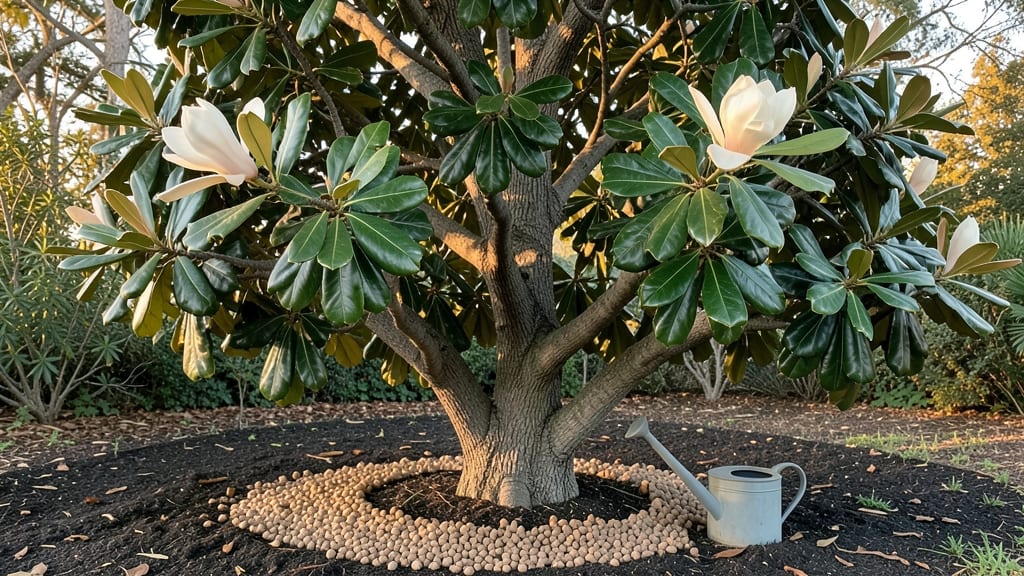
Unlock your magnolia plant food secrets: the right nourishment and timing will transform your tree into a year-round blooming star—here’s how to sync feeds with its natural rhythms.
I've learned the hard way that magnolias respond dramatically to a three-feed schedule tied to their seasonal energy bursts, and the difference between a few blooms and a spectacular display often comes down to what you feed them when.
The key isn't just throwing fertilizer at the roots; it's about understanding how magnolias store and use nutrients differently than other trees.
You'll need three distinct applications: a light spring feed to kickstart new growth, a balanced mid-summer boost to support flower buds forming for next year, and a low-nitrogen winter feed to protect roots during dormancy.
Organic options like cottonseed meal or fish emulsion work beautifully for young trees, while mature magnolias often thrive with slow-release granules applied in early spring. The soil must stay acidic (pH 5.0-6.0)—test it first, because alkaline soil locks out essential nutrients no matter what you feed.
What you'll end up with is a magnolia that flowers heavier each season, with deeper green foliage and stronger stems that resist wind damage. The blooms arrive earlier in spring and last longer, and the tree itself looks fuller from top to bottom.
Even a 10-year-old magnolia can transform when you feed it properly—think three times more flowers on the same tree with the right schedule. The secret isn't complicated, but it does require consistency.
This approach works for both container-grown magnolias and in-ground specimens, though container plants need half the feed amount due to limited root space. Southern gardeners should feed slightly earlier (February instead of March), while northern growers may need to wait until April when soil temperatures rise above 50°F.
The biggest mistake? Over-feeding in late summer—this triggers soft new growth that freezes in winter. Let's get those feeds timed perfectly.
📚 In This Guide
- What you need
- Instructions
- Tips and common mistakes
- Wrapping up and next steps
What you need
- ● Balanced fertilizer (10-10-10 or 20-20-20): 1–2 cups (adjust based on tree size; smaller trees = 1 cup, mature trees = 2 cups). Look for slow-release granules for steady nourishment.
- ● Organic compost: 3–5 gallons (homemade or store-bought). Boosts soil health and microbial activity.
- ● Epsom salt (magnesium sulfate): 1–2 tablespoons per gallon of water (for chlorosis-prone magnolias).
- ● Water: 5–10 gallons (depending on recipe). Use rainwater or dechlorinated tap water if possible.
- ● Garden gloves: 1 pair (to protect your hands from soil and salts).
- ● Garden trowel or spade: For digging holes around the tree base (6–12 inches deep).
- ● Measuring cups/spoons: For precise fertilizer and Epsom salt ratios.
- ● Watering can or hose with spray nozzle: For even distribution of liquid feeds.
- ● Wheelbarrow or bucket: 5-gallon capacity (to mix ingredients).
- ○ pH testing kit (optional): To check soil acidity (ideal range: 5.0–6.0 for magnolias).
- ● Choose a calm, overcast day to apply fertilizer (avoid midday heat to prevent root stress).
- ● Water the tree 24 hours before feeding to ensure nutrients absorb efficiently.
- ● Identify your magnolia’s root zone (usually within the drip line, the area under the tree’s canopy).
Instructions for feeding magnolias to maximize year-round blooms
Here's the precise feeding schedule I use to keep magnolias thriving and producing lush flowers season after season.
Apply Early Spring Fertilizer for New Growth
As soon as the ground thaws in early spring—typically when daytime temperatures reach 50°F consistently—apply the first feeding. This kickstarts vigorous new growth and sets the stage for summer blooms. Use a balanced 10-10-10 fertilizer at half-strength (about ½ cup per 10 square feet of soil) to avoid burning tender roots.
Work the fertilizer into the top 2-3 inches of soil around the drip line, not directly against the trunk. Water deeply immediately after application to help distribute nutrients. You'll see fresh, vibrant foliage emerge within 3-4 weeks—that's your confirmation the plant is responding well.
Mid-Summer Bloom Support with Phosphorus Boost
When your magnolia begins budding—usually in late June or early July—switch to a high-phosphorus fertilizer like 5-10-5. Phosphorus encourages strong root and flower development. Apply 1 cup per 10 square feet, again working it into the soil and watering thoroughly to activate the nutrients.
This is the critical feed for blooms. You'll notice buds forming more densely and flowers lasting longer. Avoid overwatering now—magnolias prefer slightly drier conditions in late summer, so let the top 1-2 inches of soil dry out between waterings. Too much moisture can cause buds to drop prematurely.
Fall Preparation for Next Season's Growth
In early fall—around mid-September—apply a slow-release organic fertilizer like composted manure or worm castings. This provides steady nutrients as winter approaches and helps build soil structure. Spread 2-3 inches of compost over the root zone and lightly scratch it into the topsoil.
Water deeply after application to help microbes break down the organic matter. You won't see immediate results, but this feed ensures strong root systems that support next year's blooms. Stop fertilizing by mid-October to allow the plant to harden off for winter.
Optional Winter Care for Established Trees
For mature magnolias in colder climates, a light application of nitrogen in late winter—around February—can prevent nutrient depletion. Use a low-nitrogen fertilizer like 5-5-5 at ¼-strength (about ¼ cup per 10 square feet) to avoid overstimulating growth too early in the season.
Water lightly after application to prevent salt buildup in the soil. This step is optional but helpful if your magnolia looks tired or produces fewer blooms the following year. Always check soil moisture before watering—magnolias in winter often need less water than you'd expect.
Tips & tricks for perfect magnolia bloom feeding
Mastering the art of magnolia care comes down to precision and timing—here's how to elevate your plant's health beyond basic feeding.
Timing is Everything: The 50°F threshold for early spring feeding marks the perfect balance between root activity and temperature. If you're in a colder climate, wait until nighttime temps stay above 45°F consistently to prevent shock to tender roots. I've seen magnolias struggle when fertilized too early—roots need to be actively growing to absorb nutrients efficiently. Use a soil thermometer if you're unsure, as daytime temps can be misleading.
Soil Depth Matters: When working the 10-10-10 fertilizer into the top 2-3 inches of soil, think of it like creating a nutrient-rich layer for roots to access. Avoid piling fertilizer against the trunk—this can burn the cambium layer and damage your tree. Instead, create a donut-shaped ring around the drip line where most feeder roots are concentrated. For established trees, you might need to work the fertilizer deeper—up to 4 inches—to reach the extensive root system.
Phosphorus Precision: The mid-summer 5-10-5 fertilizer application requires careful measurement. One cup per 10 square feet is plenty—too much phosphorus can actually inhibit bloom production. I've found that using a measuring scoop specifically designed for fertilizers (rather than a generic cup) gives far more consistent results. For large trees, consider dividing the application into two sessions 2 weeks apart to prevent nutrient overload while still supporting flower development.
Organic Transition Strategy: When switching to organic fertilizers in fall, don't rush the process. Spread the 2-3 inches of compost gradually over 2-3 weeks rather than all at once. This gives soil microbes time to adapt and prevents potential nitrogen spikes that could stress the plant. You'll know you're doing it right when you see earthworms actively moving through the amended soil—this indicates healthy microbial activity.
Pro Tips for Magnolia Plant Food
- Mastering the art of magnolia care comes down to precision and timing—here's how to elevate your plant's health beyond basic feeding.
- Timing is Everything: The 50°F threshold for early spring feeding marks the perfect balance between root activity and temperature.
- Soil Depth Matters: When working the 10-10-10 fertilizer into the top 2-3 inches of soil, think of it like creating a nutrient-rich layer for roots to access.
Frequently asked questions
When is the best time to fertilize magnolias?
Feed your magnolia three times a year: early spring (just as new growth appears), mid-summer (around June), and late fall (October) for root strengthening. Avoid fertilizing in winter—it’s a dormant period, and extra nutrients can stress the plant. Pro tip: Water deeply before and after feeding to prevent root burn!
What if my magnolia leaves turn yellow after feeding?
Yellowing leaves often signal over-fertilization or poor drainage. Flush the soil with water to leach excess salts, and adjust your feeding schedule to every 6–8 weeks instead of monthly. If the issue persists, test your soil’s pH—magnolias prefer slightly acidic soil (pH 5.0–6.5).
Can I use organic vs. synthetic fertilizers for magnolias?
Both work, but organic options (like compost, fish emulsion, or worm castings) release nutrients slowly, reducing burn risk. Synthetic fertilizers (like 10-10-10) offer precise ratios—ideal for quick fixes. For long-term health, rotate between the two. Example: Use synthetic in spring for blooms, then switch to organic in summer for soil enrichment.
How do I know if my magnolia needs extra food?
Watch for these signs:
- Slow growth or sparse foliage
- Fewer or smaller blooms than usual
- Pale green leaves (a nutrient deficiency)
Are there homemade magnolia plant food alternatives?
Try these budget-friendly swaps:
- Banana peel tea: Steep peels in water for 24 hours (adds potassium for blooms).
- Eggshells: Crush and work into soil (calcium boost for strong stems).
- Coffee grounds: Sprinkle around the base (acid-loving magnolias adore this!).
Wrapping up and next steps
Choosing the right magnolia plant food and feeding strategy can transform your garden into a lush, fragrant paradise year-round! 🌸 From spring’s nutrient-packed kickstart to autumn’s gentle support, these three key feeds ensure vibrant blooms and healthy growth.
Whether you’re a seasoned gardener or just starting, consistency is key—your magnolia will thank you with stunning flowers and lush foliage.
Ready to give your magnolia the love it deserves? Grab your fertilizer, follow the recipe, and watch your plant thrive!** For extra tips, check out our gardening guide or share your progress with fellow plant lovers online. Happy growing! 🌿