Diseases
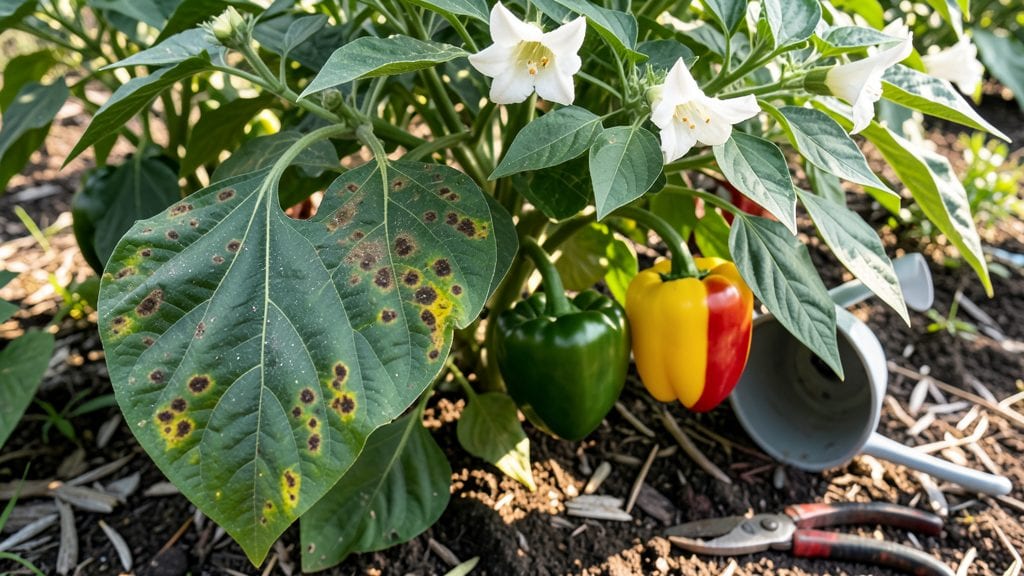
Pepper plant diseases can turn a thriving harvest into a sad, spotted mess—unless you catch them early. 🌿 I’ve seen bacterial spot, powdery mildew, and blight ruin entire plants in weeks, but the right prevention and quick action can save your crop every time.
The key is knowing what to watch for and acting fast.
Most pepper diseases start with damp leaves or crowded plants, giving fungi and bacteria the perfect chance to move in. Proper spacing, watering at the base (not overhead), and choosing disease-resistant varieties cut the risk dramatically. Even a simple copper spray can stop early signs before they spread.
You’ll spot the first signs as tiny brown spots or white powder on leaves—don’t ignore them. With the right mix of organic sprays, pruning infected foliage, and adjusting watering, you’ll keep your plants healthy and productive all season. The payoff? Juicy, disease-free peppers straight from your garden.
Works for bell peppers, jalapeños, and everything in between—no matter your climate. Let’s get those plants back in fighting shape before the next wave hits.
Root Causes of Pepper Plant Struggles
Pepper plants may seem tough, but they’re just as vulnerable as any other crop to a host of fungal, bacterial, and environmental stressors. Understanding why these diseases take hold is the first step to prevention.
Below, we break down the science behind the most common culprits—so you can stop them before they start.
Fungal spores thrive in damp, stagnant air—think of them as tiny, invisible vampires feeding on moisture. When pepper plants are packed too closely together, airflow is restricted, creating the perfect breeding ground for diseases like Phytophthora blight and powdery mildew.
- Why it happens: Dense foliage traps humidity, slowing evaporation. Fungal spores land on leaves, germinate, and spread rapidly in these conditions.
- Science behind it: Many fungi (e.g., Oidium for powdery mildew) release spores that float on air currents. Without airflow, spores linger longer, increasing infection rates.
- Actionable fix: Space plants 18–24 inches apart and prune lower leaves to improve circulation. Use fans in greenhouses to mimic natural breezes.
Pepper plants despise "wet feet"—soggy soil is a fast track to root rot (Pythium or Phytophthora) and foliar diseases. Overwatering or poor drainage turns the soil into a fungal buffet.
- Why it happens: Waterlogged soil cuts off oxygen to roots, weakening the plant’s defenses. Fungi like Phytophthora capsici exploit this by invading through root wounds or stomata (leaf pores).
- Science behind it: Anaerobic (oxygen-poor) conditions trigger the plant’s stress response, releasing sugars that fungi love as a food source.
- Actionable fix:
- Water deeply but infrequently—aim for 1–1.5 inches per week, adjusting for rain.
- Use raised beds or containers with drainage holes to prevent pooling.
- Avoid overhead watering; use drip irrigation or soaker hoses to keep foliage dry.
Peppers are tropical at heart but can’t handle extreme swings. High humidity (<80%) combined with warm nights (70–85°F) creates a fungal paradise, while sudden temperature drops shock the plant, making it susceptible to infections.
- Why it happens: Fungi like Alternaria and Colletotrichum (cause of anthracnose) thrive in warm, humid conditions. Cold stress weakens cell walls, giving pathogens an easy entry point.
- Science behind it: At high humidity, fungal spores germinate faster due to increased water availability on leaf surfaces. Temperature shocks disrupt the plant’s cuticle (its natural protective layer), creating micro-wounds.
- Actionable fix:
- Monitor humidity with a hygrometer; aim for 40–60% during the day.
- Use shade cloth (30–50%) to reduce heat stress in peak sun.
- Hardening off seedlings gradually to acclimate them to outdoor temps.
Fungal spores are sneaky survivors—they can lurk in soil for years, waiting for the right conditions to strike. Even well-meaning gardeners unknowingly spread diseases through shared tools or compost.
- Why it happens: Pathogens like Fusarium or Verticillium (vascular wilts) persist in organic matter. Pruners, trellises, or pots contaminated with old plant debris transfer spores to healthy plants.
- Science behind it: Soilborne fungi produce chlamdospores—thick-walled resting spores—that survive drought, heat, and even solarization. They germinate when roots disturb the soil during planting.
- Actionable fix:
- Solarize soil in late summer by covering it with clear plastic for 4–6 weeks to kill pathogens.
- Disinfect tools with 70% isopropyl alcohol or a 10% bleach solution between uses.
- Rotate crops—don’t plant peppers in the same spot for 3–4 years.
Peppers are heavy feeders, and when they’re malnourished or overfed, their immune systems crash. Too much nitrogen? Lush foliage but weak stems. Too little potassium? Poor disease resistance.
- Why it happens: Nutrient deficiencies (e.g., magnesium for calcium uptake) or excess salts from fertilizers disrupt the plant’s cell wall integrity, making it easier for pathogens to invade.
- Science behind it: Potassium (_K_) strengthens cell membranes, while calcium (Ca) helps form pectin in cell walls—both are critical for disease resistance. Imbalances (e.g., too much phosphorus) can also attract root-infecting fungi.
- Actionable fix:
- Test soil pH (6.0–6.8 is ideal for peppers) and amend with compost or lime if needed.
- Use a balanced fertilizer (e.g., 10-10-10) and avoid over-fertilizing.
- Apply calcium nitrate or crushed eggshells to prevent blossom-end rot and boost resistance.
💡 Pro Tip: Healthy peppers are resistant peppers. Focus on prevention—good airflow, proper watering, and soil health—rather than treating diseases after they appear. A single ounce of prevention is worth a pound of fungicide!
Fixing Fungal Foes in Peppers
When fungal diseases strike your pepper plants, quick action is key to saving your harvest. Below are practical, step-by-step solutions tailored to the most common fungal threats—plus prevention tips to keep your plants healthy long-term.
Cause: White, powdery spots on leaves (usually from poor airflow or humidity).
How to Fix It: 🔥 Remove Infected Leaves – Snip off heavily affected foliage with sterilized scissors (dip in rubbing alcohol between cuts). 🍳 Homemade Spray – Mix 1 tsp baking soda + 1 tsp dish soap + 1 quart water. Spray early morning (avoid direct sun to prevent leaf burn). 👨🍳 Neem Oil Treatment – Apply neem oil spray (1 tbsp oil + 1 tsp mild soap per quart of water) every 7–10 days until symptoms fade. 🥘 Boost Airflow – Space plants 12–18 inches apart and prune for better circulation.
Prevent It: ✨ Pre-plant tip: Choose resistant varieties like ‘Early California Wonder’ or ‘Jupiter’. 🌡️ Water wisely – Aim for deep watering at the base (not overhead) in the early morning.
Cause: Brown, concentric rings on lower leaves (from Alternaria solani spores in soil).
How to Fix It: 🔪 Prune Aggressively – Cut off all infected leaves and disinfect tools between cuts. ⏰ Copper Fungicide – Apply copper-based spray (follow label rates) every 10–14 days for 3 weeks. 🥗 Soil Sterilization – After harvest, solarize soil (cover with clear plastic for 4–6 weeks in summer) to kill spores.
Prevent It: 💡 Crop rotation – Wait 3 years before replanting peppers in the same spot. 🎯 Mulch properly – Use straw or grass clippings (not wood chips) to keep soil dry.
Cause: Wilting, blackened stems (from waterlogged soil and Phytophthora fungus).
How to Fix It: 💦 Improve Drainage – Amend soil with compost + perlite and raise beds if needed. 🧼 Hydrogen Peroxide Soak – Mix 1 tbsp 3% H₂O₂ per gallon of water and drench roots (repeat weekly). 🚫 Remove Severely Infected Plants – Do not compost—burn or trash to prevent spread.
Prevent It: 🔥 Never overwater – Stick your finger 1 inch into soil; water only if dry. 🌡️ Avoid late planting – Start seeds indoors 8–10 weeks early to harvest before fall rains.
Cause: Dark, sunken lesions on fruit/leaves (spread by splashing water).
How to Fix It: 🔥 Burn or Bag Infected Debris – Do not compost—this fungus overwinters in organic matter. 🍳 Baking Soda Spray – Use the same mix as for powdery mildew but add 1 tbsp vegetable oil to help it stick. 👨🍳 Fungicidal Soap – Spray potassium bicarbonate-based fungicide (e.g., Bonide Copper Fungicide) every 10 days.
Prevent It: 🎯 Water at the base – Use a soaker hose or drip irrigation. ✨ Sanitize tools – Wipe pruners with rubbing alcohol between plants.
- Space plants – Crowding = humidity = fungal buffet.
- Rotate crops – Never plant peppers, tomatoes, or eggplants in the same spot two years in a row.
- Start strong – Use sterile potting mix and healthy seedlings from reputable sources.
- Monitor early – Check undersides of leaves weekly for white fuzz or spots.
Pro Tip: 💡 Prevent > Cure—healthy plants with good airflow, proper watering, and resistance rarely get severe infections. When in doubt, test soil pH (aim for 6.0–6.8)—fungi thrive in acidic or alkaline extremes.
Frequently asked questions
Why do my pepper leaves develop white powdery spots even when I water at the base?
Powdery mildew thrives when humidity stays high—even with proper watering. The issue often comes from poor airflow (crowded plants) or evening dew. Space plants 18–24 inches apart and prune lower leaves to improve circulation. A baking soda spray (1 tsp baking soda + 1 tsp dish soap per quart of water) applied every 7 days helps stop the spread.
Can I still harvest peppers from plants with bacterial spot?
Yes, but only the healthy fruit—never eat peppers with visible lesions or spots. Remove infected leaves immediately and disinfect your tools with 70% isopropyl alcohol. For severe cases, apply copper fungicide every 10–14 days until new growth appears. The key is acting fast before the disease spreads to the fruit.
How do I tell if my pepper plant has root rot or just needs more water?
Root rot causes wilting leaves that stay limp even after watering, yellowing, and blackened stems at the base. Stick your finger 1 inch into the soil—if it’s soggy, you’ve got root rot. Healthy plants wilt temporarily in dry conditions but perk up after watering. For root rot, improve drainage with perlite and avoid overhead watering.
Will neem oil work on all pepper plant diseases?
Neem oil is great for fungal diseases (like powdery mildew) and some pests, but it won’t cure bacterial infections (e.g., bacterial spot or leaf blight). For bacterial issues, use copper-based sprays instead. Always apply neem oil in the early morning or evening to avoid leaf burn from sunlight.
Can I save my pepper plants if they’ve already got blackened stems from Phytophthora?
Unfortunately, once stems turn black, the plant is usually beyond saving. Remove it immediately to prevent spreading spores. For future crops, solarize your soil (cover with clear plastic for 4–6 weeks) and avoid planting in the same spot for 3–4 years. Use resistant varieties like ‘Aristotle’ or ‘Carmen’ next season.