Watering
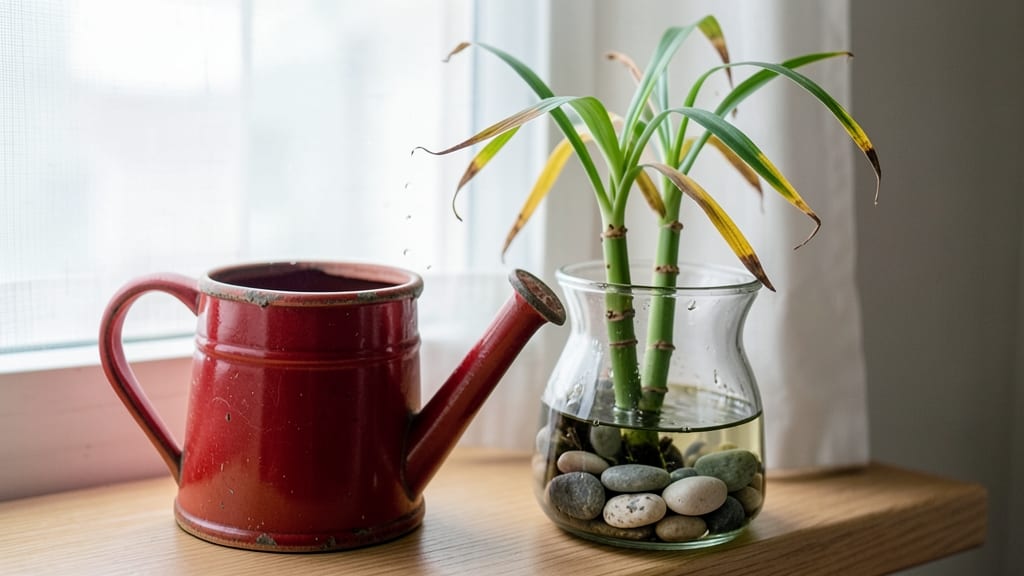
An overwatered bamboo plant can look like it’s drowning—yellow leaves, mushy stems, and roots that smell like a swamp. 🌱 I’ve seen this happen more than I’d like to admit, but the good news is recovery is possible with the right moves.
The key is stopping the water first, then giving the roots room to breathe again.
Bamboo thrives on moisture but chokes when its roots sit in soggy soil for days. That’s why the first step is cutting back on water—wait until the top inch of soil feels dry before adding more.
Pair that with a well-draining mix (think perlite or sand) to prevent future soggy soil. Most people skip this part, but it’s the difference between a plant that recovers and one that gives up.
Within two weeks, you’ll notice new growth pushing through, and the yellowing will fade as the roots firm up. The goal is a plant that’s lush but not waterlogged—bamboo that bounces back with sturdy canes and vibrant leaves. Trust me, this method works even for plants that looked hopeless.
For severe cases, don’t hesitate to trim back the worst-affected stems—it’s better to prune than lose the whole plant. And if the roots are black and mushy, it’s time to repot into fresh, dry soil.
Prevention is simple: stick your finger in the soil before watering. If it’s damp, wait. If it’s dry, it’s time to water.
Common Causes Of Excess Moisture
When your bamboo plant starts looking like a soggy swamp monster instead of a lush green beauty, overwatering is usually the culprit. But why does this happen so often? Let’s break down the most common reasons—so you can avoid turning your plant into a waterlogged disaster. 🌧️🌱
Bamboo thrives in moist soil, but it hates standing water. If your pot lacks proper drainage—whether through missing holes, compacted soil, or a container that traps excess water—the roots suffocate. Here’s why it’s a problem:
- Root Rot: Without airflow, roots drown in anaerobic conditions (low oxygen), leading to fungal infections like Pythium or Phytophthora. These pathogens feast on weakened roots, cutting off nutrient uptake.
- Clay or Dense Soil: Heavy soils (like clay) hold water like a sponge. Even if you water "lightly," the moisture lingers for days, keeping roots waterlogged.
- No Drainage Holes: Plastic or decorative pots without holes act as water prisons. After 24 hours, excess moisture sits at the bottom, where roots can’t escape.
Actionable Fix: Upgrade to pots with drainage holes or add a layer of perlite, pumice, or gravel to the bottom 20% of the pot to improve airflow.
Bamboo’s love for moisture doesn’t mean it wants a bathtub every day. Overwatering often stems from:
- Ignoring Soil Dryness: Sticking your finger 1–2 inches into the soil is the gold standard. If it’s damp, wait. If it’s bone-dry, you’ve likely underwatered (not overwatered).
- Mistaking Wilting for Thirst: Bamboo wilts when overwatered (roots can’t absorb oxygen) or underwatered (cells lose turgor pressure). Check the soil first!
- Seasonal Blind Spots: Winter slows growth, so bamboo needs half the water. Yet many water on the same schedule year-round.
- Automatic Irrigation Gone Rogue:
Actionable Fix: Water only when the top 1–2 inches of soil are dry. In winter, reduce frequency by 50%. Use a moisture meter for precision.
Humidity, temperature, and even your home’s layout can turn your watering routine into a root-drowning nightmare. Here’s how:
| Factor | How It Causes Overwatering | Solution |
|---|---|---|
| 🌡️ Low Light | Bamboo grows slower in shade, so it doesn’t drink as much. But if you water it like it’s in full sun, roots stay soggy. | Move to brighter indirect light (east/west windows) or reduce watering by 30%. |
| 💧 High Humidity | Humid air (e.g., bathrooms, kitchens) slows evaporation, keeping soil wet longer. Roots suffocate faster. | Use a hygrometer to aim for 40–60% humidity. Add a fan for airflow. |
| ❄️ Cold Drafts | Drafty windows or AC vents cool the soil, reducing root activity. Stagnant water pools around roots. | Keep bamboo away from vents/drafts. Use a heat mat in winter if needed. |
Pro Tip: If your home is humid, let the soil dry out completely between waterings. Test with a chopstick—if it comes out clean, it’s time to water.
Not all bamboo pots and soil are created equal. Here’s how wrong choices lead to waterlogged roots:
- Terracotta Traps: While terracotta breathes, it also wicks moisture from the soil. In humid climates, this can keep roots damp for days.
- Peat-Heavy Soil: Pure peat retains water like a sponge. Mix in 30% perlite or orchid bark to improve drainage.
- Too Much Fertilizer: Excess salts from fertilizers (especially synthetic ones) bind water to soil particles, making it harder for roots to dry out.
Actionable Fix: Use a chunky, airy mix (e.g., 50% potting soil, 30% perlite, 20% coco coir). For terracotta pots, water less frequently—they dry out faster but also evaporate moisture quickly.
Now that you know the why, the next step is recovery. Stay tuned for 3 simple steps to revive your bamboo’s roots—without losing your sanity (or your plant!). 🚀
Revive Your Drowning Bamboo
Overwatering can feel like a death sentence for your bamboo, but with the right steps, you can nurse it back to health—sometimes even saving it within days. The key is acting fast, diagnosing the root cause, and applying targeted fixes.
Below, we’ll break down the most common signs of overwatering and the exact steps to reverse the damage, plus how to keep your bamboo thriving long-term.
Cause: Compacted, waterlogged soil suffocates roots, cutting off oxygen and nutrients. Fix:
- 🔥 Emergency Drainage Test
- Stick your finger 2–3 inches into the soil. If it’s soggy or smells like rot, your bamboo is drowning.
- Pro Tip: 💡 Use a moisture meter for accuracy—aim for a reading between 40–60% (not bone-dry, not soggy).
- 🍳 Repot or Amend the Soil
- Option 1 (Quick Fix): Remove the plant, gently loosen the roots, and repot in fresh, well-draining mix (60% potting soil + 30% perlite + 10% sand).
- Option 2 (No Repotting): Amend the existing soil by mixing in orchid bark or coconut coir to improve aeration.
- ⚠️ Warning: Avoid heavy garden soil—it compacts and traps moisture.
- 👨🍳 Elevate the Pot
- Place the pot on gravel or a saucer to prevent water pooling at the bottom. Elevate it slightly to encourage airflow.
Prevention:
- Use pots with drainage holes (non-negotiable!).
- ✨ Rule of Thumb: If your bamboo’s pot doesn’t have holes, drill them—or switch to a terra-cotta pot, which wicks away excess moisture.
Cause: Overwatering + poor airflow = fungal growth or root rot, which strangles the plant. Fix:
- ⏰ Let the Soil Dry Between Waterings
- Test: Stick your finger in—water only when the top 1–2 inches feel dry.
- Schedule: Bamboo typically needs water every 7–10 days (adjust for humidity/climate).
- 🌡️ Trim the Damage (But Save the Core)
- Snip off only the brown, crispy tips—healthy green tissue can regrow.
- 💡 Pro Tip: If >50% of leaves are brown, your plant is in critical condition. Trim aggressively to redirect energy to new growth.
- 🔪 Prune Rotten Roots (If Repotting)
- Rinse the roots, then cut away any black, mushy sections with sterilized scissors.
- ✨ Revival Hack: Soak the roots in a 1:10 hydrogen peroxide solution (3% strength) for 10 minutes to kill fungus before repotting.
Prevention:
- 🎯 Watering Hack: Use the "knuckle test"—if the soil feels damp at knuckle depth, wait before watering.
- 🌬️ Boost Airflow: Place a small fan nearby (on low) to mimic outdoor breezes and deter fungal spores.
Cause: Advanced root rot has spread to the stem—your bamboo is fighting for its life. Fix:
- 🚨 Emergency Root Rescue
- Remove the plant and rinse roots thoroughly to dislodge soil.
- 🔪 Surgical Strike: Cut 1–2 inches below the blackened stem (healthy tissue is green/white).
- 🌱 Propagate the Top: Place the trimmed top in clean, dry perlite for 3–5 days to callous over before repotting.
- 🍄 Fungal Treatment
- Mix 1 tsp neem oil + 1 tsp dish soap per quart of water and spray all surfaces (avoid over-saturating).
- ⏰ Repeat weekly until new growth appears.
- 🏡 Quarantine & Monitor
- Keep the rescued plant in bright, indirect light (no direct sun yet) and avoid watering for 5 days to prevent further rot.
- 💡 Sign of Hope: If the trimmed stem sprouts new leaves within 2 weeks, you’ve won the battle!
Prevention:
- 🚫 Avoid Overpotting: Use a container only 1–2 inches larger than the root ball to prevent waterlogging.
- 🌧️ Weather Watch: Move potted bamboo to a covered porch or garage during heavy rains.
Once your bamboo recovers, prevent relapse with these habits: - 📊 Watering Log: Track how often you water and adjust for seasons (less in winter, more in summer). - 🥗 Soil Refresh: Every 6 months, top-dress with orchid bark or compost to maintain drainage. - 🌡️ Humidity Check: Bamboo loves 40–60% humidity.
Use a pebble tray or humidifier if your air is dry.
🎯 Remember: Even severely overwatered bamboo can bounce back—patience and precision are your best tools. Start with drainage, trim the dead, and adjust your routine. Your bamboo’s comeback story is just beginning!
Frequently asked questions
How do I know if my bamboo is overwatered vs. underwatered?
Check the soil first—stick your finger 1-2 inches deep. If it's damp and the leaves are yellowing with droopy stems, it's likely overwatered. Underwatered bamboo has crispy brown edges and dry soil. Pro tip: Wilting can happen with both—always test moisture before assuming thirst!
Can I save bamboo with black, mushy roots?
Yes, but act fast! Trim away all blackened roots with sterilized scissors, then repot in fresh, dry soil with 30% perlite. Soak the roots in a 1:10 hydrogen peroxide solution for 10 minutes to kill fungus before replanting. Keep it dry for 5 days to prevent further rot.
Why does my bamboo keep getting overwatered even when I think I'm being careful?
Common traps include using pots without drainage holes, heavy clay soil, or ignoring seasonal changes. Bamboo needs 50% less water in winter. Try the "knuckle test"—if soil feels damp at knuckle depth, wait before watering. A moisture meter helps too!
Is it better to underwater or overwater bamboo?
Overwatering is far riskier—it causes root rot and fungal diseases that can kill bamboo quickly. Underwatering just slows growth. The key is balance: water when the top 1-2 inches of soil are dry, and always use pots with drainage holes.
How often should I water bamboo in different seasons?
Spring/Fall: Every 7-10 days when topsoil is dry. Summer: Every 5-7 days (more evaporation). Winter: Every 2-3 weeks—growth slows dramatically. Always adjust for humidity and light levels in your space.