Fertilization
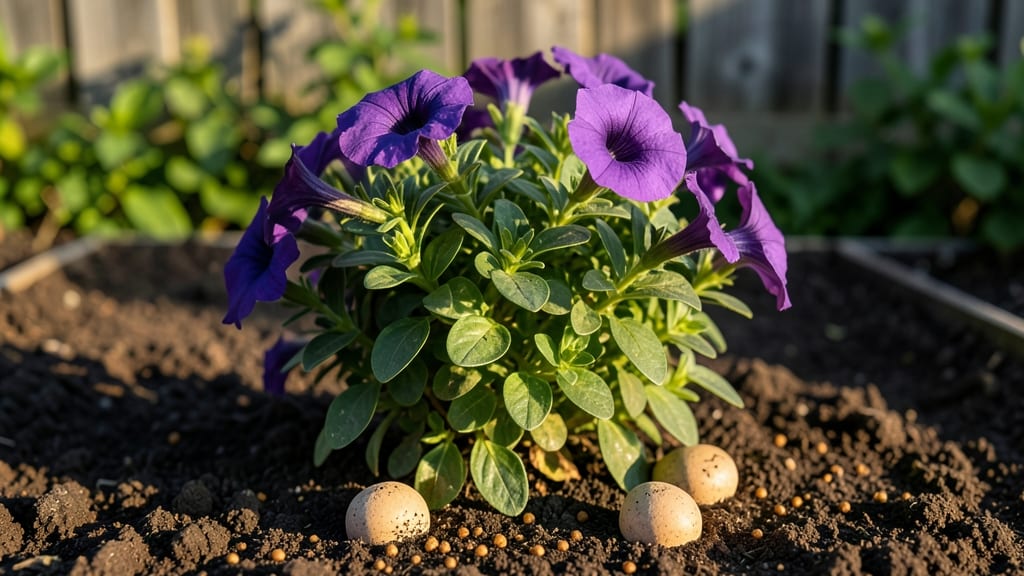
My petunia plant food secret? A balanced bloom booster that turns lackluster blooms into jaw-dropping displays—no fancy degrees in horticulture required. 🌸 Last summer, my petunias went from "meh" to "wow" in just three feedings, and the key was understanding when and how to feed them without burning the roots.
You don’t need a chemistry set—just a few simple ingredients and a watering can. Start with a water-soluble fertilizer (like 10-10-10) or organic options such as fish emulsion, diluted to half-strength.
Feed every 2-3 weeks during the growing season, but cut back in late summer to let them focus on blooms, not leaves. Overfeeding is the silent killer of petunias, so less is more.
What you’ll end up with is petunias that burst with color—deep purples, vibrant pinks, and whites that make your garden the envy of the block. The blooms stay fuller, last longer, and even handle heat better. The trick? Feed light, feed often, and watch them thrive.
Works for container petunias, hanging baskets, or in-ground plantings—just adjust the amount based on pot size. Here’s how to keep them blooming like crazy without the guesswork.
📚 In This Guide
- What you need
- Instructions
- Tips and common mistakes
- Wrapping up and next steps
What you need
- ● Balanced liquid fertilizer (10-10-10 or 20-20-20 NPK ratio) – 1 gallon per 10 sq ft of garden or follow label instructions.
- ● Slow-release granular fertilizer (14-14-14 or similar) – 1 lb per 10 sq ft (sprinkle evenly and water in).
- ● Compost or organic matter (e.g., worm castings, aged manure) – 2-3 inches mixed into soil for nutrients.
- ● Water-soluble bloom booster (high in phosphorus, like 5-10-5) – Use every 2-3 weeks during flowering.
- ● Epsom salt (magnesium sulfate) – 1 tbsp per gallon of water (monthly for green foliage).
- ● Garden gloves – To protect hands from soil and fertilizers.
- ● Watering can or hose with spray nozzle – For even distribution of liquids.
- ● Measuring scoop or spoon – For precise fertilizer doses.
- ● Garden trowel or rake – To mix compost into soil.
- ○ pH test kit (optional) – Petunias thrive in 6.0–7.0 pH; adjust with lime (to raise) or sulfur (to lower).
- ○ Mulch (optional) – 2-3 inches of straw or shredded leaves to retain moisture and regulate soil temp.
Step-by-Step instructions for feeding petunias for maximum blooms
Here’s how to transform your petunias from modest bloomers into showstopping displays—using the right nutrients at the right time.
🌿 Step 1: Understand Petunia Nutrient Needs
Petunias thrive on a balanced fertilizer with equal parts nitrogen, phosphorus, and potassium (10-10-10 or 20-20-20), but they’re heavy feeders that need extra phosphorus for blooms. I always start with a slow-release granular fertilizer to avoid overfeeding, which causes leafy growth at the expense of flowers. The key is consistency—petunias respond best to weekly feedings during peak bloom season.
Test your soil first if possible. Petunias prefer slightly acidic to neutral soil (pH 6.0-7.0). If your soil is too alkaline, the plants won’t absorb nutrients efficiently, leading to yellowing leaves and fewer blooms. A simple soil test kit (available at garden centers) takes the guesswork out of adjustments.
💧 Step 2: Apply Liquid Fertilizer at the Right Time
Feed petunias every 7-10 days during active growth (spring through fall), but reduce to every 2-3 weeks in extreme heat—overwatering and overfeeding stress plants. I use a water-soluble bloom booster (like 5-10-5) mixed at half-strength to avoid burning roots. Dilute the fertilizer in a watering can, then apply it directly to the soil, not the leaves.
Water the soil thoroughly before applying fertilizer to help distribute nutrients evenly. You’ll see the difference within 2-3 weeks: darker green foliage, sturdier stems, and more abundant, longer-lasting blooms. If you notice yellowing leaves with green veins, that’s a classic sign of overfeeding—flush the soil with plain water and cut back on fertilizer for a week.
☀️ Step 3: Supplement with Organic Boosters for Extra Vibrancy
For a natural edge, I add fish emulsion (5-1-1) every 4-6 weeks in early spring to jumpstart growth and kelp meal (0-0-2) every 8 weeks to strengthen stems and improve flower color. Both are rich in micronutrients petunias crave but often lack in synthetic fertilizers. Sprinkle fish emulsion directly on the soil and water it in, while kelp meal can be worked into the top 2 inches of soil at planting or mid-season.
Petunias also benefit from calcium and magnesium—signs of deficiency (like blossom-end rot or crinkled leaves) mean it’s time for a Epsom salt (magnesium sulfate) spray or crushed eggshells (calcium) worked into the soil. I mix 1 tablespoon Epsom salt per gallon of water and spray foliage lightly every 4-6 weeks during hot weather.
✂️ Step 4: Deadhead and Adjust Feeding Seasonally
Deadheading spent blooms 2-3 times per week encourages nonstop flowering, but it also signals your petunias to redirect energy into new buds. After each deadheading, give them a light feeding with a half-strength liquid bloom booster. In late summer, switch to a lower-nitrogen, higher-phosphorus formula (5-10-5) to prolong the bloom cycle.
As temperatures drop in fall, reduce feedings to every 3-4 weeks—petunias slow down in cooler weather. If you’re growing them as annuals, stop fertilizing 4-6 weeks before the first frost to harden them off naturally. For overwintering petunias, cut back on nitrogen in winter to prevent leggy growth and focus on potassium-rich feedings to boost cold tolerance.
🪴 Step 5: Monitor and Troubleshoot Nutrient Issues
Watch for yellow leaves with brown spots—this often means chlorosis, a sign of iron or magnesium deficiency. A quick fix is a chelated iron spray applied every 2 weeks until leaves green up again. If blooms are small and sparse, increase phosphorus with a bone meal top-dressing (0-3-0) worked into the soil. For weak stems or drooping leaves, the issue is usually overwatering or potassium deficiency—switch to a potassium-rich fertilizer (like 0-0-50) and let the top 1 inch of soil dry out between waterings.
Petunias are forgiving, but they won’t tolerate soggy soil or salt buildup from over-fertilizing. If you see white crusty deposits on the soil surface, flush the pot or bed with plain water to leach out excess salts. The goal is lush foliage with nonstop blooms—not leafy stems with a few flowers. Adjust your feeding routine based on what you see, and your petunias will reward you with vibrant, long-lasting color all season.
Tips & tricks for perfect petunia bloom nutrition
These targeted strategies will help you maximize your petunias' potential without wasting nutrients or stressing the plants.
The Soil Foundation: Before applying any fertilizer, prioritize soil preparation. Petunias thrive in slightly acidic to neutral soil (pH 6.0-7.0), so if your soil test reveals alkalinity, amend it with peat moss or sulfur before planting. I've seen petunias double their bloom production after a simple soil adjustment—don't skip this foundational step! The 7-10 day feeding schedule in Step 2 will only work properly if the soil can actually absorb nutrients.
Fertilizer Application Technique: When applying your water-soluble bloom booster (like 5-10-5) at half-strength, use a spray bottle with a fine mist setting rather than pouring directly onto the soil. This ensures even distribution without creating concentrated salt pockets that can burn roots. In Step 2, after thoroughly watering the soil first, apply the fertilizer solution to the outer 6 inches of soil—this mimics natural root distribution patterns and prevents nutrient runoff.
Organic Booster Timing: The 4-6 week schedule for fish emulsion and 8 week schedule for kelp meal in Step 3 are designed to complement your regular feeding routine. For maximum impact, apply fish emulsion in early spring when new growth begins, and add kelp meal in mid-summer to strengthen stems before the heat stress of late summer. Both amendments should be worked into the top 2 inches of moist soil—never dry soil—to ensure proper absorption.
Seasonal Transition Strategy: When switching to lower-nitrogen, higher-phosphorus formulas in late summer (Step 4), make this change gradually over 2-3 feedings rather than all at once. Mix equal parts of your regular 5-10-5 with a 0-10-10 formula for the first week, then increase to full strength the following week. This gradual shift prevents nutrient shock while encouraging the bloom-heavy growth pattern petunias need for fall displays.
Pro Tips for Petunia Plant Food
- These targeted strategies will help you maximize your petunias' potential without wasting nutrients or stressing the plants.
- The Soil Foundation: Before applying any fertilizer, prioritize soil preparation.
- Fertilizer Application Technique: When applying your water-soluble bloom booster (like 5-10-5) at half-strength, use a spray bottle with a fine mist setting rather than pouring directly onto the soil.
Frequently asked questions
Got questions about keeping your petunias blooming beautifully?
Here are answers to the most common ones—so you can grow vibrant, healthy flowers with ease!
How often should I feed petunias with plant food?
For best results, feed petunias every 2–4 weeks during the growing season (spring to fall). Use a balanced liquid fertilizer (10-10-10 or 20-20-20) diluted to half-strength to avoid overfeeding. Cut back to monthly in late summer to encourage fall blooms.
Can I use coffee grounds or compost as petunia plant food?
Yes! Coffee grounds and compost are great organic alternatives—they add nutrients and improve soil. Mix 1–2 inches of compost into the soil before planting, and sprinkle used coffee grounds (let them brew and cool first) around the base. For a quick boost, top-dress with worm castings every few weeks.
Why are my petunia leaves turning yellow after fertilizing?
Yellow leaves often mean overfertilization or root burn. Flush the soil with water to remove excess salts, then reduce feeding frequency and use a weaker fertilizer solution. Ensure pots have drainage holes to prevent soggy roots. If yellowing persists, check for nutrient deficiencies (e.g., magnesium) and adjust with Epsom salt.
When is the best time to start fertilizing petunias?
Begin fertilizing 2 weeks after transplanting (when roots are established) and continue throughout the growing season. For container-grown petunias, feed weekly with a diluted liquid fertilizer in early spring to kickstart blooms. Avoid fertilizing in extreme heat (above 90°F), as it can stress plants.
What’s the difference between petunia plant food and regular fertilizer?
Petunia-specific fertilizers are formulated for flowering plants, often with higher phosphorus (P) to promote blooms. Regular fertilizers (like all-purpose 10-10-10) work too, but petunia food may include micronutrients like calcium and iron to prevent leaf issues. For organic options, look for fish emulsion or seaweed-based fertilizers.
Wrapping up and next steps
Choosing the right petunia plant food is the secret to those show-stopping blooms that turn your garden into a living postcard! 🌸 Whether you opt for organic compost, balanced synthetic fertilizers, or homemade tea blends, consistency and proper application are key.
Remember, petunias thrive on regular feeding—just like they love a little TLC.
Ready to watch your petunias flourish? Start small: pick one fertilizer type, test it on a few plants, and observe the results. Before you know it, your garden will be the talk of the neighborhood—one vibrant bloom at a time! 🌿✨