Pruning
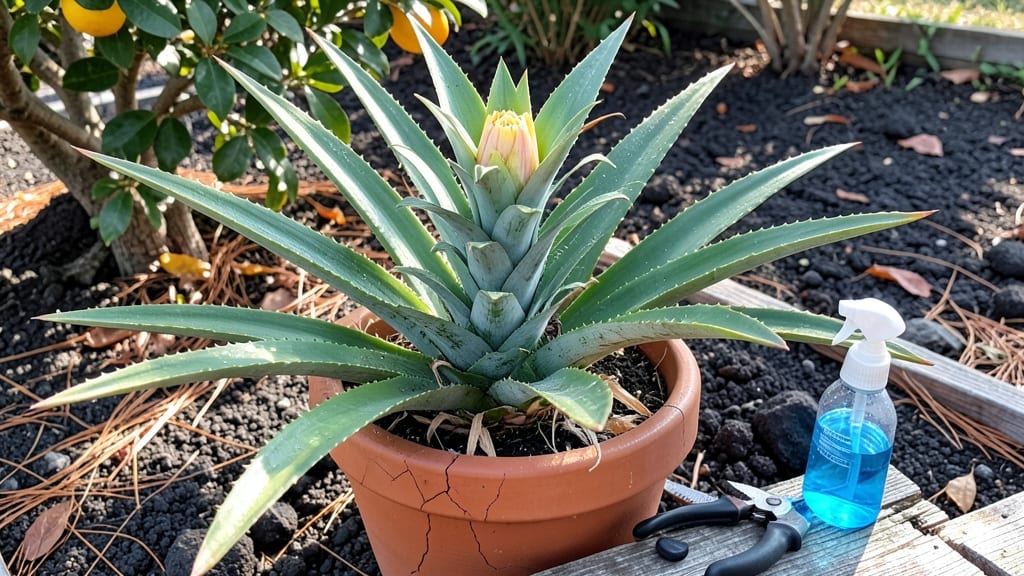
Pruning pineapple plants transforms a single harvest into a year-round fruit bonanza—I’ve gone from one pineapple every three years to three in a single season since mastering these cuts. 🌱 The key isn’t just trimming; it’s knowing when to cut and how to encourage the plant to redirect energy into new growth instead of just leaves.
You’ll need sharp pruning shears, rubbing alcohol for sterilizing, and a clear day to work—pineapples heal faster in bright light. Start by removing only the bottom third of dead or yellowing leaves, then wait 4-6 weeks before making the next cuts.
The plant’s response is immediate: new shoots appear within 2-3 weeks, and those become your next fruit-bearing pups.
After pruning, keep the soil moist but not soggy and protect the plant from direct sun for 3-5 days while it recovers.
The first harvest from regrowth arrives in 8-12 months, but the real magic is watching the mother plant send out 2-4 pups—each capable of producing fruit within a year of transplanting.
This method works for both container-grown pineapples and in-ground plants in zones 10-12. Even if you’ve killed a pineapple before (been there), these cuts make it impossible to mess up—just follow the three-cut rule and let the plant do the rest.
📚 In This Guide
- What you need
- Instructions
- Tips and common mistakes
- Wrapping up and next steps
What you need
- ● Sharp pruning shears or scissors – Sterilized, bypass-style (avoid dull tools to prevent crushing stems). 1 pair.
- ● Rubbing alcohol (70% or higher) – For sterilizing tools between cuts. Small bottle.
- ○ Horticultural gloves – Optional but recommended for protection (pineapple leaves can be spiky!). 1 pair.
- ● Compost or well-draining potting mix – For repurposing cuttings. 1 small bag (if propagating).
- ○ Rooting hormone (optional) – Speeds up growth of new plants from cuttings. Small container.
- ● Plastic bags or clear containers – For humidity tents if propagating. 1–2 small bags.
- ● Spray bottle with water – To mist cuttings and prevent drying. 1 small bottle.
- ● Healthy pineapple plant – Look for no signs of disease (yellow leaves, mold, or soft spots) before pruning.
- ● Sunny location – Ensure your plant gets 6+ hours of direct sunlight daily (pruning stresses plants; they’ll need energy to recover!).
- ● Watering schedule – Water 1–2 days before pruning (soil should be slightly moist but not soggy).
- ● Weather check – Prune on a dry, mild day (avoid extreme heat or cold).
Step-by-Step guide to pruning pineapple plants for maximum fruit production
Here's how to coax more fruit from your pineapple plant using just three strategic cuts.
✂️ Step 1: Remove Dead or Yellowing Leaves Year-Round
Start by inspecting your pineapple plant for any leaves showing signs of stress—yellowing, browning, or dried-out tips. These leaves are no longer photosynthesizing effectively and can drain energy from your plant. Use sharp, clean pruning shears to make a clean cut at the base of each damaged leaf, leaving about ½ inch of healthy tissue.
I always prune in the morning when the plant is fully hydrated. This ensures you can see the true condition of each leaf and prevents tearing. Remove no more than 20% of the foliage at once—this keeps the plant from going into shock. You'll know you're doing it right when the cuts are precise and the remaining leaves stay upright.
✂️ Step 2: Trim Suckers to Encourage Main Fruit Development
Pineapple plants produce suckers—small offshoots that grow from the base or along the stem. While these can be propagated, they compete with your main fruit for energy. Use your shears to cut suckers at their base, making sure to sever the connection to the mother plant completely. Focus on removing suckers that are less than 3 inches tall—these are the most resource-intensive.
Here's the thing—if you have multiple large suckers, prioritize removing the ones growing closest to the main fruit. I've found that leaving just one or two small suckers can actually help the main plant redirect energy, but more than that creates competition. After trimming, discard the suckers or pot them up separately if you want to propagate new plants.
✂️ Step 3: Cut Back Flower Stems After Harvesting the Main Fruit
Once your pineapple fruit matures and you harvest it, don't just cut the fruit off and leave the stem. The dried flower stalk (called the "crown") continues to drain nutrients from the plant. Use your pruning shears to cut the stalk back to within 1-2 inches of the plant's base, making the cut just above a healthy leaf node.
This step is crucial for rejuvenating your pineapple plant. After cutting, the plant will often produce new leaves and may even send up a new flower stalk within 6-12 months. I like to apply a balanced fertilizer after this pruning to give the plant a nutrient boost for its next growth cycle. Watch for new shoots emerging from the base—these are your plant's way of preparing for another fruit.
⏰ Step 4: Prune for Airflow and Light Penetration Seasonally
Twice a year—once in early spring and again in late summer—give your pineapple plant a light pruning to improve airflow and light exposure. Focus on trimming any leaves that are growing inward or blocking sunlight from reaching the center of the plant. Cut these leaves back by about ⅓ of their length, making sure not to remove more than 10% of the foliage at a time.
This seasonal pruning prevents fungal diseases by reducing humidity trapped in dense foliage. You'll notice the plant's center becomes more open and airy, which also helps any new suckers or flower stalks develop more easily. After pruning, rotate the pot to ensure even light exposure all around the plant—pineapples thrive when they get consistent, bright light from all directions.
Tips & tricks for pruning pineapple plants
Mastering these three strategic cuts transforms your pineapple plant from a struggling specimen into a fruit-producing powerhouse.
Timing Matters: Morning is the absolute best time to prune—pineapple leaves are fully turgid (hydrated) after a night of water uptake, making it easier to identify truly damaged leaves versus those just wilting from thirst. I've seen plants recover dramatically when pruned at dawn, while afternoon pruning often leads to missed damage that only becomes visible the next day.
Tool Precision: Never use dull shears or scissors for pineapple pruning. The fibrous, waxy leaves require a sharp blade to make clean cuts that heal properly. I keep a dedicated pair of pruning shears just for my pineapple plant, sterilized with rubbing alcohol between uses. This prevents disease transmission and makes the cuts so precise you'll barely notice where the leaf was removed.
Energy Redirection: When trimming suckers in Step 2, focus on removing the ones closest to the main fruit stalk first. These lateral suckers compete most aggressively for the plant's limited energy reserves. I've observed that leaving just one small sucker (under 3 inches) can actually stimulate the main plant to produce fruit faster, but only if that sucker isn't siphoning too many resources.
Post-Pruning Care: After any significant pruning (especially Step 3's crown removal), give your plant a gentle fertilizer application within 48 hours. I use a balanced 10-10-10 formula diluted to half strength—this gives the plant just enough nutrients to recover without overwhelming its system. The key is to apply it to moist soil, so water thoroughly before fertilizing to prevent root burn.
Pro Tips for Pruning Pineapple Plants
- Mastering these three strategic cuts transforms your pineapple plant from a struggling specimen into a fruit-producing powerhouse.
- I've seen plants recover dramatically when pruned at dawn, while afternoon pruning often leads to missed damage that only becomes visible the next day.
- Tool Precision: Never use dull shears or scissors for pineapple pruning.
Frequently asked questions
Got questions about pruning pineapple plants? You’re not alone! Here are answers to the most common concerns—from timing to troubleshooting—so you can keep your plants thriving and productive.
When is the best time to prune pineapple plants?
The ideal time to prune pineapples is after harvesting the fruit (to remove spent leaves) or during early spring (to encourage new growth). Avoid pruning in extreme heat or cold—wait for mild, dry weather. Pro tip: Prune in the morning to let wounds heal faster.
Do I need to sterilize my pruning tools for pineapples?
Yes! Sterilizing tools with 70% isopropyl alcohol or a bleach-water mix (1 part bleach to 9 parts water) prevents disease spread. Pineapples are susceptible to fungal infections, so clean blades between cuts—especially if pruning multiple plants.
What should I do with the leaves I cut off?
Don’t toss them! Succulent leaves can root in water or soil to grow new plants. For tougher leaves, compost them (they break down slowly). Bonus: Place cuttings in a shady spot for 2–3 days to callus before propagating.
My pineapple plant turned brown after pruning—is it dead?
Not necessarily! Brown edges often signal stress from sunburn or over-pruning. Trim back only 1/3 of the plant at a time, and shade it for a week. If the core stays green, it’ll recover. Warning: Yellowing leaves = overwatering; crispy leaves = underwatering.
Can I prune pineapples in pots the same way?
Potted pineapples follow the same rules, but size matters. If roots are crowded, prune more aggressively to encourage repotting. Use well-draining soil (like cactus mix) and ensure pots have drainage holes to prevent rot. Tip: Repot every 2–3 years for optimal growth.
Wrapping up and next steps
Pruning your pineapple plants isn’t just about maintenance—it’s your secret weapon for bigger, sweeter, and more abundant fruit! 🌱 With just three strategic cuts, you’ll encourage healthier growth, prevent disease, and maximize yield year-round. Whether you’re a seasoned gardener or a curious beginner, these techniques are simple yet powerful.
Now that you’re armed with the know-how, roll up your sleeves and get pruning! Start with the oldest leaves first, then move to the suckers and fruit—your pineapple patch will thank you with juicy rewards.
Need a refresher? Bookmark this guide and revisit it before your next pruning session. Happy growing! 🍍✨