
Diseases
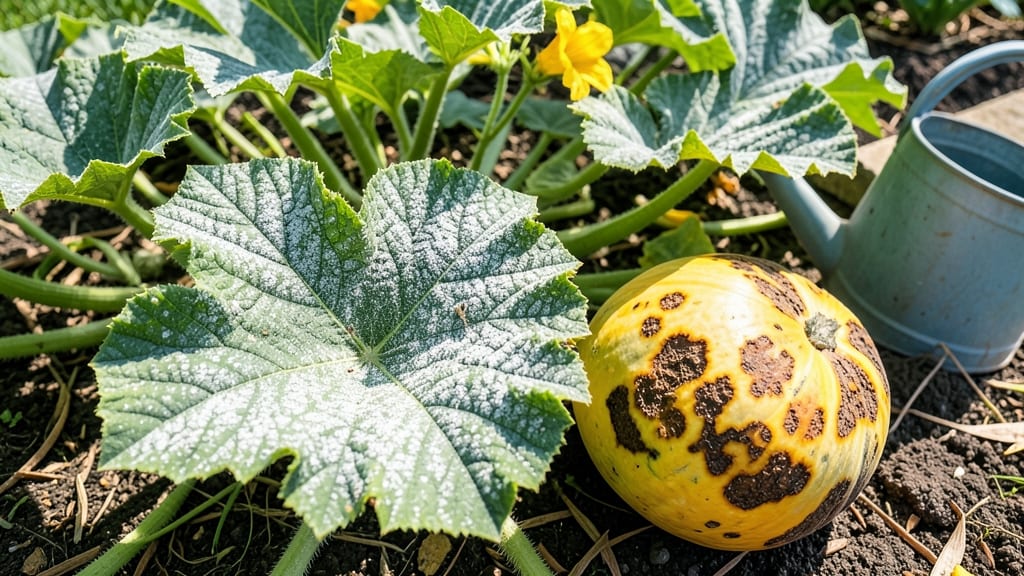
Pumpkin plant diseases can turn your lush vines into a sad, wilted mess if you miss the early signs. 🌱 I’ve watched my biggest pumpkins rot from the inside out because I ignored those first yellow spots—don’t let that happen to you.
The key is catching problems before they spread, and knowing which diseases strike pumpkins (and how to stop them) makes all the difference.
Most pumpkin diseases start with water—too much, too little, or the wrong kind. Powdery mildew leaves white dust on leaves, downy mildew creates yellow splotches, and bacterial wilt makes vines collapse overnight.
The good news? Organic fixes like neem oil, copper spray, and proper spacing work better than you’d think when you act fast. I’ve saved entire patches just by adjusting watering and airflow.
You’ll spot the difference in just a few days: leaves stay crisp, vines grow strong, and those first blooms turn into pumpkins instead of mush. The secret is prevention—clean tools, healthy soil, and knowing when to prune for airflow.
Even if you’ve lost plants before, this method works. Trust me, your future giant pumpkins will thank you.
Works for all pumpkin varieties, from small sugar pies to 50-pound monsters. Let’s get those vines thriving again—no more wasted seasons.
Root Causes of Pumpkin Plant Struggles
Pumpkin plants, though hardy, are vulnerable to a variety of diseases that can stifle growth, wilt foliage, or even kill the plant entirely. Understanding why these issues arise is the first step to preventing them.
Below, we break down the key factors that create the perfect storm for pumpkin plant diseases—from environmental conditions to human habits.
Pumpkins thrive in warm, stable conditions, but extreme fluctuations or prolonged dampness can trigger fungal and bacterial infections. Here’s how it happens:
- Cool, Wet Nights: Temperatures between 60–75°F (15–24°C) are ideal, but when nights dip below 50°F (10°C), fungal spores like Phytophthora (which causes root rot) or Pythium become aggressive. High humidity (above 80%) keeps spores moist, speeding up infection.
- Frost or Heat Stress: Frost damages leaves, creating entry points for pathogens. Meanwhile, heat waves above 90°F (32°C) weaken plants, making them susceptible to Fusarium wilt or powdery mildew.
- Slow-Drying Soil: Heavy clay or poorly drained soil traps moisture at the roots, fostering Phytophthora blight. Even well-draining soil can hold too much water if rainfall is frequent.
💡 Pro Tip: Use a soil moisture meter to monitor dampness. Aim for 1–2 inches of dry soil between waterings, and avoid overhead irrigation at dawn.
Soil isn’t just dirt—it’s a living ecosystem. If it’s overworked or harboring pathogens, pumpkin plants pay the price. Here’s how:
- Repeated Planting in the Same Spot: Pumpkins are Cucurbitaceae, meaning they share diseases with squash, cucumbers, and melons. Planting them in the same soil year after year lets Fusarium or Verticillium wilt pathogens build up, surviving for years in organic matter.
- Infested Compost or Manure: Fresh manure (especially from ruminants like cows) can introduce E. coli or fungal spores. Even "cured" compost may harbor Sclerotinia sclerotia (fungal survival structures).
- Weak Beneficial Microbes: Healthy soil has Trichoderma fungi and Bacillus bacteria that suppress pathogens. Overuse of synthetic fertilizers or tilling disrupts this balance.
💡 Pro Tip: Practice 3–4 year crop rotation and solarize soil in summer (cover with clear plastic for 4–6 weeks to kill pathogens). Test soil pH—aim for 6.0–6.8—and amend with composted (not fresh) plant matter.
Diseases don’t appear out of thin air—they hitchhike via wind, water, tools, or even your shoes. Here’s how pumpkin plants get infected:
- Windborne Spores: Fungal diseases like powdery mildew (Podosphaera xanthii) spread via wind, landing on leaves and germinating in 6–12 hours under humid conditions.
- Water Splash: Overhead watering or rain splashes Alternaria or Colletotrichum spores from soil to leaves, causing leaf spot or anthracnose.
- Contaminated Tools or Hands: Pruners, gloves, or even your fingers can transfer bacterial wilt (Erwinia tracheiphila) from diseased to healthy plants.
- Wild Hosts: Weeds like morning glory or smartweed can harbor Cucumber mosaic virus (CMV), which jumps to pumpkins via aphids.
💡 Pro Tip: Sanitize tools with a 10% bleach solution between uses. Remove voles or rodents (they spread Sclerotinia via burrowing). And quarantine new plants for 2 weeks before introducing them to the garden.
Pumpkins need a precise balance of nutrients to fight off disease. Too much or too little throws them off-kilter:
- Nitrogen Overload: Lush, soft growth (from excess nitrogen) attracts powdery mildew and downy mildew because dense foliage traps moisture.
- Potassium Deficiency: Low potassium (K) weakens cell walls, making plants vulnerable to Fusarium or Phytophthora. Symptoms: yellowing leaf edges and poor root development.
- Calcium Shortage: Blossom end rot (a bacterial or fungal issue) occurs when calcium isn’t mobile enough to reach growing fruit—common in acidic or waterlogged soil.
- Micronutrient Imbalance: Lack of magnesium (Mg) or zinc (Zn) stresses plants, making them easier targets for Alternaria leaf spot.
💡 Pro Tip: Use a balanced organic fertilizer (5-5-5 or 3-4-6 NPK) and supplement with kelp meal (for potassium) or crushed eggshells (for calcium). Mulch with straw to stabilize soil moisture and temperature.
Some pests don’t just eat pumpkin leaves—they create wounds that invite diseases. Here’s the connection:
- Aphids and Viruses: These sap-suckers transmit Cucumber mosaic virus (CMV) or Zucchini yellow mosaic virus (ZYMV), causing mottled leaves and stunted growth.
- Cucumber Beetles and Bacterial Wilt: Striped and spotted cucumber beetles carry Erwinia tracheiphila, a bacteria that clogs plant vascular systems, leading to sudden wilting.
- Root-Knot Nematodes: These microscopic worms damage roots, making plants more susceptible to Fusarium or Pythium by reducing water and nutrient uptake.
- Slugs and Snails: Their razor-sharp trails create entry points for Botrytis cinerea (gray mold), especially in damp conditions.
💡 Pro
Quick Fixes for Pumpkin Plant Woes
When your pumpkin plants show signs of distress, acting fast can save your harvest. Below, we’ve mapped out practical, organic solutions for the most common pumpkin diseases, along with prevention tips to keep your garden thriving.
Think of this as your emergency repair kit—easy steps to revive your plants and stop future outbreaks.
Cause: Fungal spores thrive in humid, shaded conditions, leaving a white, powdery coating on leaves. Fix: 🔥 Remove infected leaves – Snip off heavily affected foliage (don’t compost—toss it in the trash). 🍳 Mix a baking soda spray – Combine 1 tsp baking soda + 1 tbsp vegetable oil + 1 tsp dish soap + 1 gallon water. Spray every 7–10 days on both leaf surfaces. 👨🍳 Boost airflow – Prune crowded vines and space plants 3–4 feet apart to reduce humidity. 🥘 Prevent recurrence – Apply neem oil spray (2 tbsp neem oil + 1 tsp soap per gallon of water) weekly during humid months.
> 💡 Pro Tip: Water at the base of plants in the morning—never overhead—to keep leaves dry.
Cause: This fungal disease creates yellow spots on top leaves and fuzzy gray growth underneath, spreading in cool, wet weather. Fix: 🔥 Pull and destroy – Remove infected plants immediately to prevent spread. 🍳 Copper fungicide spray – Use organic copper soap (follow label rates) every 10–14 days for 3 weeks. 👨🍳 Rotate crops – Avoid planting pumpkins in the same spot for 3+ years to break the fungus life cycle. 🥘 Strengthen plants – Feed with compost tea to boost natural resistance.
> ✨ Prevention Hack: Interplant with marigolds—their scent repels fungal spores!
Cause: A fatal bacterial infection (often spread by squash bugs) that clogs plant vessels, causing sudden wilting. Fix: 🔥 Remove infected plants – Do not compost. Burn or bag them to prevent bacteria from re-infecting soil. 🍳 Handpick squash bugs – Check undersides of leaves daily and drown them in soapy water. 👨🍳 Use row covers – Protect seedlings with floating row fabric until vines are established. 🥘 Disinfect tools – Clean pruners with rubbing alcohol between cuts to avoid spreading bacteria.
> 🎯 Critical Tip: If bacterial wilt appears, rotate crops aggressively—this bug loves cucurbits (pumpkins, squash, melons).
Cause: Overwatering or poor drainage leads to soft, black roots and wilting—even in moist soil. Fix: 🔥 Stop watering immediately – Let soil dry out completely before resuming. 🍳 Improve drainage – Amend soil with perlite or coarse sand to prevent compaction. 👨🍳 Raise beds or use containers – If your garden stays soggy, elevate plants on mounds or in pots with drainage holes. 🥘 Apply hydrogen peroxide – Mix 1 tbsp 3% H₂O₂ per gallon of water and water roots once a week to kill fungus.
> 🌡️ Soil Test Tip: Aim for well-draining soil with a pH of 6.0–6.8—test kits are cheap and save your plants!
Cause: Dark, sunken spots on leaves and fruit, caused by fungal spores that survive in old plant debris. Fix: 🔥 Prune and dispose – Cut off all infected leaves/fruit and sterilize pruners with bleach. 🍳 Copper fungicide – Spray weekly until new growth appears (use organic copper for edibles). 👨🍳 Solarize soil – Cover beds with clear plastic for 4–6 weeks in summer to kill spores. 🥘 Prevent future outbreaks – Rotate crops and avoid overhead watering.
> 🔥 Hot Water Trick: Soak seeds in 122°F water for 30 minutes before planting to kill anthracnose spores.
Want to avoid diseases entirely?
Follow these year-round habits: - Rotate crops – Never plant pumpkins, squash, or melons in the same spot two years in a row. - Sanitize tools – Wipe pruners with rubbing alcohol between plants. - Choose resistant varieties – Look for ‘Howden’ or ‘Waltham Butternut’ (disease-resistant pumpkins). - Mulch properly – Use straw or grass clippings (not wood chips) to keep leaves dry. - Monitor weather – Cover plants if rain is forecasted for >3 days straight.
Your pumpkin patch can bounce back! With these targeted fixes, you’ll stop diseases in their tracks and keep your vines healthy for a bountiful harvest. 🎃💪
Frequently asked questions about pumpkin plant diseases
What are the first signs of powdery mildew on pumpkin leaves?
Look for a white, powdery coating on the upper leaf surfaces—like dusting flour—that spreads quickly in warm, humid conditions. The undersides may show yellow patches as the disease progresses. Act fast by pruning infected leaves and applying a baking soda spray (1 tsp baking soda + 1 tbsp oil + 1 tsp soap per gallon of water).
Can I still harvest pumpkins if the vines show bacterial wilt symptoms?
No, if you see sudden wilting (even with moist soil) or yellowing leaves, the plant is likely infected with Erwinia tracheiphila. Remove the entire plant immediately—this disease spreads rapidly and can’t be cured. Destroy the plant (don’t compost) to prevent contamination of your soil.
How do I prevent downy mildew in my pumpkin patch?
Downy mildew thrives in cool, wet weather—so space vines 3–4 feet apart for airflow and water at the base in the morning. Interplant with marigolds (their scent deters spores) and apply copper fungicide every 10–14 days during humid periods. Crop rotation for 3+ years also breaks the disease cycle.
Why do my pumpkin leaves turn yellow but the plant still looks healthy?
Yellowing leaves can signal nutrient deficiencies (like potassium or magnesium) or early-stage diseases like Alternaria leaf spot. Check for dark spots first—if none, test your soil pH (aim for 6.0–6.8) and amend with compost or kelp meal. Overwatering can also cause yellowing by suffocating roots.
Is neem oil safe to use on pumpkins before harvest?
Yes! Neem oil is organic and safe when used correctly. Apply it every 7–10 days during humid weather (mix 2 tbsp neem oil + 1 tsp soap per gallon of water). Wait 24 hours after spraying before harvesting to avoid any bitter taste. It’s great for preventing powdery mildew and aphids.