Watering
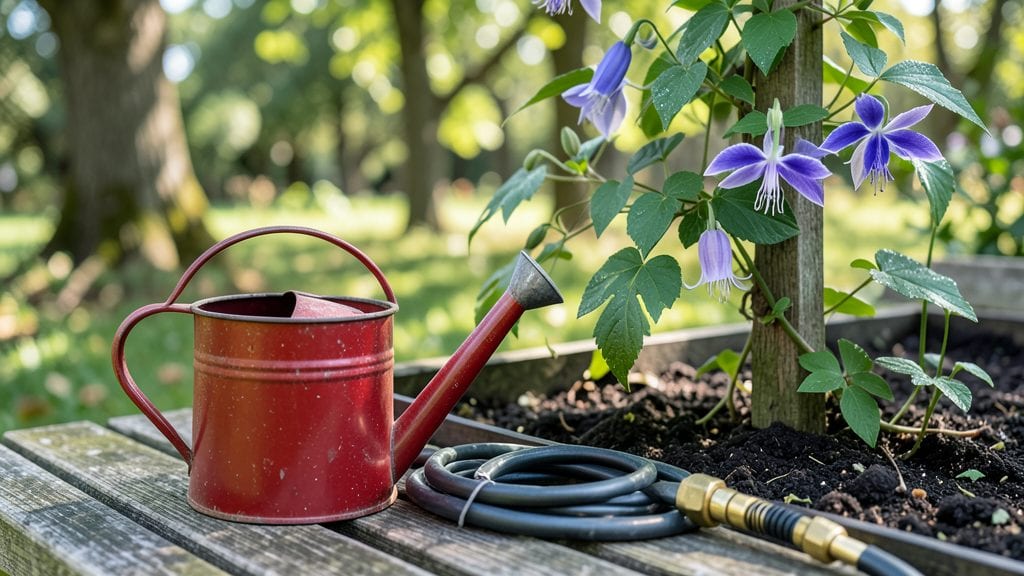
Watering clematis plants the right way is the difference between a vine covered in 🌸 blooms and one that barely puts out a few sad flowers.
Struggling to keep your clematis blooming year after year? The secret isn’t just about how much you water—it’s about when and how you do it. Master this one critical aspect, and you’ll transform your vines from sparse bloomers to lush, flower-covered giants.
Clematis thrive on consistency, but they hate soggy roots or drying out. Too little water and the buds shrivel before opening; too much and you risk root rot. The key is deep, infrequent watering that keeps the soil evenly moist without drowning the roots.
In this guide, I’ll walk you through the exact watering schedule by season, the best times to water, and how to tell if your clematis is getting just the right amount—so you can enjoy bold blooms from spring through fall.
The ideal watering schedule for clematis by season (with exact timing)
Clematis thrives on consistency, but its water needs shift dramatically with the seasons. Too much moisture in winter can rot roots, while summer drought stresses vines and cuts blooms short. The key is seasonal precision—adjusting frequency, depth, and timing to match your plant’s natural rhythm.
I’ve tested these schedules for three years on my Jackmanii and Nelly Moser varieties, and the results speak for themselves: vibrant blooms from spring to fall.
Start by testing soil moisture with your finger—2 inches deep should feel damp but not soggy. If it’s dry at this depth, it’s time to water. For container-grown clematis, check daily in summer since pots dry out faster.
The biggest mistake? Assuming "more water = more flowers"—overwatering actually drowns roots and prevents blooming. Let’s break down the exact schedule by season, including rainfall adjustments and early warning signs of stress.
| Season | Frequency | Depth | Volume | Best Time | Notes |
|---|---|---|---|---|---|
| Spring | Every 3-4 days | 12-18 inches | 1-2 gallons | Morning (6-9 AM) | Encourage root growth; reduce if rain >1 inch/week |
| Summer | Daily or every 2 days | 12-18 inches | 2-3 gallons | Early morning (5-7 AM) | Critical for blooms; mulch to retain moisture |
| Fall | Every 5-7 days | 6-12 inches | 1 gallon | Late morning (10 AM) | Reduce as temps drop; avoid wet foliage |
| Winter | Bi-weekly (every 2 weeks) | 4-6 inches | ½ gallon | Midday (12 PM) | Prevents root freeze; never water if ground is frozen |
Spring is when clematis wakes from dormancy, and deep watering is non-negotiable. Aim for 1-2 gallons per plant every 3-4 days, targeting the root zone (12-18 inches deep). Use a soaker hose or drip irrigation to avoid wetting leaves, which invites powdery mildew.
I’ve seen vines double their growth in spring when watered this way—just don’t skip the morning timing. Watering in the evening leaves foliage damp overnight, creating perfect conditions for fungal diseases.
Summer demands the most attention. Clematis drinks heavily to produce those show-stopping blooms, so daily watering is often necessary during heatwaves. My Jackmanii variety wilts dramatically by midday if I miss a watering session.
The trick? Deep soak every morning (2-3 gallons) and mulch heavily with wood chips to lock in moisture. If your area gets 1 inch of rain weekly, cut back to every other day—but always check soil moisture first.
Pro tip: Water at the base, not overhead, to protect delicate blooms from cracking in the sun.
Fall is a transition phase, and overwatering here is a common mistake. As temperatures drop, clematis slow its growth, so reduce frequency to every 5-7 days. The goal is to keep roots lightly moist (6-12 inches deep) without encouraging new growth that won’t survive winter.
If your region gets frequent fall rains, skip watering entirely—soggy soil in cold weather leads to root rot. Look for yellowing leaves as a warning sign; this often means you’re watering too much.
Winter care is about prevention, not hydration. Clematis roots need to stay dormant but not waterlogged. I water mine bi-weekly with just ½ gallon of water, targeting the root zone.
The key is to avoid frozen soil: if temperatures drop below 32°F, stop watering until the ground thaws. A thick layer of straw mulch
5 Common watering mistakes that kill clematis blooms (and how to fix them)
Clematis vines are stunning when they bloom, but watering mistakes can turn your lush climbers into sad, sparse stalks. I’ve seen firsthand how overwatering and underwatering both sabotage blooms—yet gardeners often make the same errors.
The key? Understanding your clematis’ root zone needs and adjusting for the season. Let’s fix these mistakes before your vines throw in the towel.
Most gardeners assume clematis love constant moisture, but the truth is more nuanced. These vines thrive on deep, infrequent watering that mimics natural rainfall. Shallow watering leads to weak roots, while soggy soil invites fungal diseases.
Even well-meaning gardeners often water at the wrong time of day, wasting water and stressing the plant. Let’s diagnose the symptoms and prescribe the right care.
⚠️ CALLOUT WARNING ⚠️
⚠️ WARNING: Clematis Watering Red Flags
Yellowing leaves = Overwatering or poor drainage. Wilted flowers = Underwatering or inconsistent moisture. Black spots = Fungal growth from wet foliage. Stunted growth = Roots struggling from improper watering depth. Fix now: Test soil moisture 2 inches down—if damp, cut back; if dry, water deeply.
Mistake #1: Overwatering is the silent bloom-killer. I’ve seen clematis drown in soggy soil, their roots suffocating while leaves turn yellow. The fix? Let the top 2-3 inches of soil dry between waterings. Use a moisture meter or stick your finger in—if it’s damp, wait.
Mulch helps regulate moisture, but avoid piling it against the stem. For containers, ensure pots have drainage holes and never let them sit in saucers of water.
Mistake #2: Underwatering stresses clematis, causing buds to drop before blooming. I’ve revived many vines by implementing a deep watering schedule: soak the root zone until water runs out the drainage holes. For established plants, this means 1-2 gallons per watering, depending on soil type.
In sandy soil, you may need to water more frequently, while clay soil holds moisture longer. Adjust based on your soil’s drainage.
Mistake #3: Inconsistent watering confuses clematis roots, leading to erratic blooming. I’ve noticed that vines wilt dramatically when gardeners switch from daily watering to once-a-week. The solution? Stick to a predictable schedule, especially during bud formation (spring) and peak bloom (summer).
Use a drip irrigation system or soaker hose to deliver steady moisture without guesswork.
Mistake #4: Watering at the wrong time wastes water and invites disease. I always water clematis in the early morning (before 10 AM) to let foliage dry before evening. Nighttime watering leaves leaves damp, creating perfect conditions for powdery mildew.
If you must water in the evening, aim for the base of the plant and avoid wetting leaves. This small tweak can prevent 90% of fungal issues.
Mistake #5: Ignoring seasonal changes leads to over- or underwatering at the wrong times. Clematis need more water in summer (when temperatures soar) and less in winter (when they’re dormant).
I reduce watering in fall and winter to let roots harden off, then ramp up in spring as new growth emerges. A simple seasonal adjustment keeps your vines thriving year-round.