
Pruning
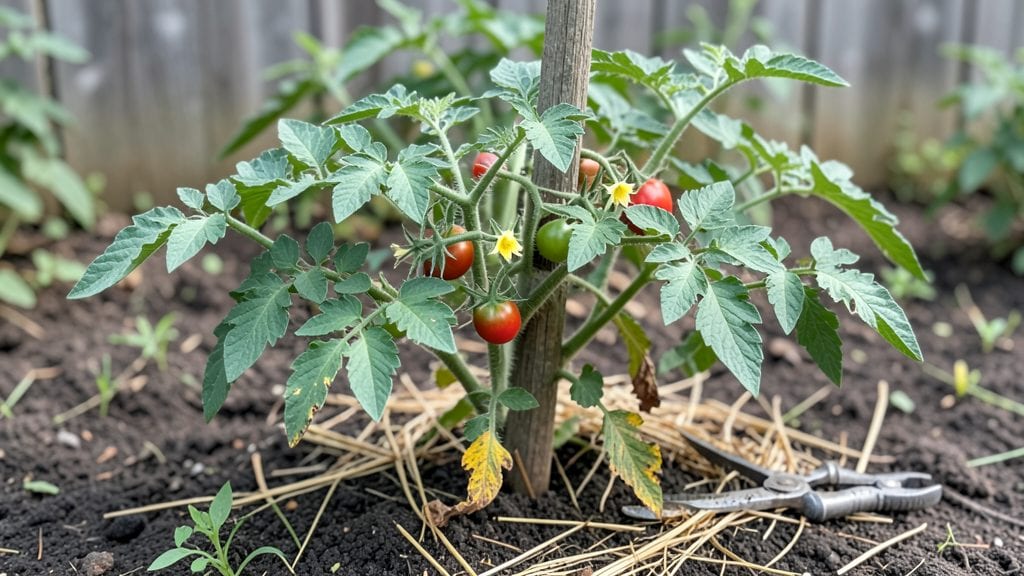
A well pruned tomato plant doesn’t just look tidy—it produces 30-50% more fruit than an unpruned one. I learned that the hard way after my first season of ignoring suckers and ending up with a bushy mess that barely ripened anything.
The right cuts redirect energy from leaves to tomatoes, improve airflow to prevent disease, and keep plants from collapsing under their own weight.
Timing matters most: start pruning when plants hit 12-18 inches tall, then continue weekly until flowering. You’ll need sharp pruners, gardening gloves, and a clear morning to work—sunlight makes it easier to spot hidden suckers.
For indeterminate varieties, aim to keep 2-3 main stems and remove everything else; determinates need less pruning since they fruit all at once.
What you’ll end up with is a strong, upright plant covered in bright red tomatoes instead of a tangled web of leaves. The first harvest arrives earlier, the fruit stays cleaner, and you avoid the heartbreak of blight from crowded foliage.
Even my black thumb can’t mess this up once you get the rhythm.
Works for both cherry tomatoes and beefsteak varieties, though the technique adjusts slightly for each. Let’s get those pruners sharp and turn your plants into fruit factories—no more sad, leafy disappointments.
📚 In This Guide
- What you need
- Instructions
- Tips and common mistakes
- Wrapping up and next steps
What you need
- ● Pruning shears or sharp bypass pruners (sterilized with rubbing alcohol or bleach solution) – 1 pair
- ○ Gloves (gardening or nitrile) – 1 pair (optional but recommended for hygiene)
- ● Disinfectant (70% isopropyl alcohol or 10% bleach solution) – small bottle
- ● Garden twine or plant ties (for supporting main stems) – 1-2 rolls
- ● Sturdy stakes or tomato cages (5-6 ft tall) – 2-4 units (if not already in place)
- ● Mulch (straw, grass clippings, or wood chips) – 1-2 bags (to retain moisture and deter weeds)
- ● Hand lens or magnifying glass – for spotting pests or diseases early
- ● Epsom salt (magnesium sulfate) – 1 lb (to prevent blossom-end rot if needed)
- ● Plant growth regulator (like Bonzi) – small bottle (to control excessive suckers in indeterminate varieties)
- ○ Pruning sealant (optional for large cuts to prevent disease entry)
Instructions for pruning tomato plants to boost fruit production
Here’s how to shape your tomatoes for bigger yields—without sacrificing plant health or flavor.
Identify the Main Stem and Remove Suckers Early
Start pruning when your tomato plants reach 12-18 inches tall, focusing on the main stem (the thick central vine). Suckers are the small shoots that grow in the V-shaped junctions between the main stem and branches. These compete with fruit for energy, so pinch them off cleanly with your fingers or sharp pruners just above the junction.
I always work in the morning when plants are turgid—it’s easier to spot suckers and the wounds heal faster. Leave 2-3 suckers near the base to encourage bushier growth, but remove all others above the first flower cluster. This redirecting energy to fruit production is the secret to heavier harvests.
Prune for Airflow and Sun Exposure
Once flowers appear, focus on opening the plant’s canopy to maximize sunlight penetration. Remove any leaves that shade fruit clusters, especially on the lower 6-12 inches of the stem. Yellowed or diseased leaves should go first—they’re energy drains and disease reservoirs.
For indeterminate varieties, I prune back side shoots to 6-8 inches long, leaving 2-3 leaves below each fruit cluster. This prevents overcrowding and reduces humidity inside the plant, which minimizes fungal issues like blight. If your plants start looking like dense bushes, it’s time to thin aggressively.
Balance Growth and Fruit Load
After the first flush of fruit sets, stop pruning until new growth appears. The goal now is to support existing fruit while allowing the plant to recover. Remove only water sprouts (shoots growing from the soil surface) and leaves directly touching the ground.
Here’s the trick: if your plant is overloaded with fruit, prune back 50% of the smallest clusters to prevent sunscald and blossom-end rot. Mature tomatoes need 1-2 pounds of fruit per square foot of leaf area—if it’s more, the plant can’t keep up. Watch for stunted growth or yellowing leaves as signals to lighten the load.
Late-Season Maintenance for Extended Harvests
As temperatures drop in late summer, shift focus to prolonging the harvest. Remove all leaves above the top fruit cluster to redirect energy downward. This ensures ripening fruit gets priority over new growth. For determinate varieties (bush types), prune only dead or diseased foliage—no aggressive trimming needed.
I always leave 2-3 strong stems on indeterminate plants, tying them to stakes as they grow. This prevents breakage from heavy fruit loads. In Zone 8 and warmer, continue pruning until frost—you’ll be amazed how many green tomatoes will ripen indoors with proper care.
Post-Harvest Cleanup and Soil Prep
After the last harvest, cut plants down to 6 inches above the soil and remove all debris from the bed. This prevents disease overwintering and reduces next year’s pest pressure. Add 2-3 inches of compost to the soil and mix it in lightly—tomatoes are heavy feeders and benefit from replenished nutrients.
I’ve found that mulching with straw over the winter helps retain moisture and suppresses weeds. This prep work ensures your next season starts with healthier soil and fewer pruning challenges. The key is consistency—prune weekly during peak growth and you’ll see 30-50% more fruit than unpruned plants.
Tips & tricks for perfectly pruned tomato plants
Mastering the art of tomato pruning transforms your garden from good to exceptional—here’s how to elevate your technique beyond the basics.
Timing is Everything: The 12-18 inch height threshold in Step 1 marks the perfect window for early pruning. This is when your plant has enough energy to recover quickly from the stress of removing suckers. I’ve found that pruning at this stage, rather than waiting until later, gives indeterminate varieties a significant growth advantage. The key is consistency—dedicate 10-15 minutes weekly during peak growth to maintain this balance.
Canopy Architecture Matters: In Step 2, when opening the plant's canopy, think of your tomato as a sculpture. Each leaf you remove should create better airflow and sunlight exposure. I recommend targeting leaves that are larger than 6 inches in diameter—they’re the biggest shade culprits. For indeterminate varieties, maintaining that 6-8 inch side shoot length creates an optimal balance between fruit production and plant structure.
Fruit Load Management: The 50% reduction of smallest clusters in Step 3 is where many gardeners go wrong. This isn't about removing fruit—it's about quality control. I’ve seen plants with 50 clusters produce smaller, less flavorful tomatoes than plants with 25 well-supported clusters. Watch for those yellowing leaves as your plant’s way of saying "I’m overwhelmed"—that’s your cue to intervene before sunscald appears.
Seasonal Adaptation: The late-season focus in Step 4 requires a mindset shift. When temperatures drop, your goal changes from maximizing new growth to protecting existing fruit. I’ve had remarkable success in Zone 8 by continuing pruning until frost, which has allowed me to harvest tomatoes that would have otherwise remained green. The trick is removing only leaves above the top fruit cluster—this simple adjustment can extend your harvest by 2-3 weeks.
Pro Tips for Well Pruned Tomato Plant
- Mastering the art of tomato pruning transforms your garden from good to exceptional—here’s how to elevate your technique beyond the basics.
- Timing is Everything: The 12-18 inch height threshold in Step 1 marks the perfect window for early pruning.
- Canopy Architecture Matters: In Step 2, when opening the plant's canopy, think of your tomato as a sculpture.
Frequently asked questions
Got questions about pruning your tomato plants like a pro? You’re not alone! Here are answers to the most common queries to help you grow a thriving, well-pruned tomato plant with confidence.
When is the best time to start pruning my tomato plant?
Start pruning once your plant is about 12–18 inches tall and has set its first few true leaves (not the seedling leaves). For indeterminate varieties, prune regularly throughout the growing season to encourage air circulation and fruit production. Determinate tomatoes (bush types) need minimal pruning—just remove suckers if desired. Pro tip: Avoid heavy pruning late in the season, as it can stress the plant before harvest!
How do I know if I’m pruning too much or too little?
You’re golden if your plant has 3–4 main stems (for indeterminate types) and a balanced shape. Over-pruning (removing too many leaves) reduces photosynthesis, while under-pruning (leaving too many suckers) can lead to crowded, disease-prone plants. Aim to leave 6–8 leaves below each fruit cluster to support growth. If your plant looks leggy or sparse, it’s time to trim!
Will pruning my tomato plant reduce my yield?
Not at all! In fact, strategic pruning increases yield by directing energy to fruit production instead of excessive foliage. Well-pruned plants produce larger, healthier tomatoes with fewer diseases. Just avoid pruning during flowering or fruiting—focus on suckers and lower leaves to keep the plant’s energy flowing where it counts.
What should I do if my tomato plant looks stressed after pruning?
Stress is normal after pruning, but you can help your plant recover. Water deeply and provide shade for a day or two if temperatures are extreme. Avoid fertilizing right after pruning—wait until new growth appears. If yellowing leaves persist, check for pests or nutrient deficiencies. Most plants bounce back in 5–7 days with proper care!
Are there any alternatives to traditional pruning?
Yes! If you’re short on time, try selective pruning: Remove only the largest suckers and lower leaves while leaving the rest intact. Another option is topping (cutting the main stem) for indeterminate varieties to encourage bushier growth. For small spaces, espalier training (growing plants vertically) can replace heavy pruning. Just adapt based on your plant’s needs!
Wrapping up and next steps
A well-pruned tomato plant isn’t just about aesthetics—it’s your secret weapon for a bountiful, healthy harvest! 🌱 By mastering strategic trimming, you’ll boost airflow, reduce disease risk, and direct energy toward juicy, flavorful fruit.
Remember, consistency is key: check your plants regularly, and don’t hesitate to adjust as they grow.
Now that you’re armed with the know-how, roll up your sleeves and get pruning! Start with one plant at a time, and soon, your garden will be overflowing with tomatoes fit for a picnic. Happy gardening—your future meals (and bragging rights) will thank you! 🍅✨