
Diseases
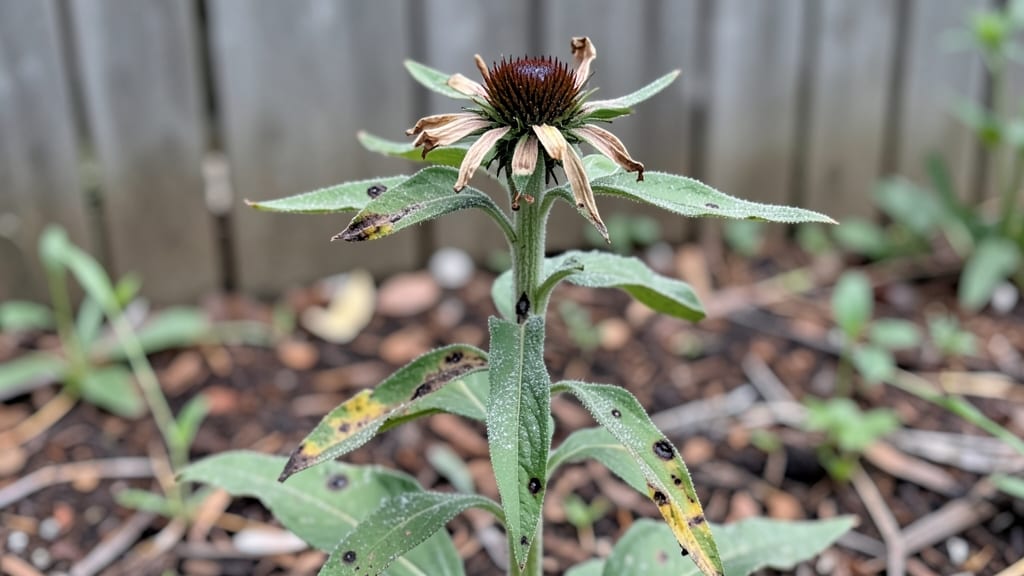
Echinacea plant diseases most commonly involve powdery mildew, rust fungus, and bacterial leaf spot, which cause leaf yellowing and stem weakening. Spotting issues early—especially on leaf undersides—and spacing plants properly boost airflow to stop outbreaks.
Echinacea plants face serious threats from fungal and bacterial infections that thrive in crowded, damp conditions. The powdery mildew fungus (Erysiphe cichoracearum) creates white, powdery patches that block sunlight, while rust fungi (Puccinia species) produce orange pustules that spread rapidly in humid weather.
Bacterial leaf spot (Xanthomonas) causes dark, water-soaked spots that eventually kill foliage. 🌱 The key to prevention is maintaining 3-4 feet of spacing between plants and removing infected leaves immediately to prevent spores from spreading to healthy growth.
For treatment, organic options like neem oil or sulfur-based sprays work well against fungal diseases, while copper fungicides target bacterial infections. Pruning back affected stems by one-third improves airflow and helps the plant recover faster.
I’ve found that adding 2-3 inches of compost to the soil also strengthens echinacea’s natural defenses against future outbreaks.
💡 In This Article
- How Fungal and Bacterial Pathogens Attack Echinacea
- Preventing and Treating Echinacea Fungal Infections
How fungal and bacterial pathogens attack echinacea
The powdery mildew fungus Erysiphe cichoracearum attacks echinacea by forming a white, thread-like network called a mycelium that spreads across leaf surfaces. This fungus thrives in temperatures between 60-80°F and relative humidity above 75%, creating ideal conditions for spores to germinate within 4-6 hours of landing on leaves.
The mycelium sucks nutrients from the plant, causing leaves to yellow and curl as photosynthesis slows down. 🌬️
Rust fungi like Puccinia species follow a complex lifecycle with up to five distinct spore stages, each requiring a specific host or environmental trigger.
The orange pustules you see on echinacea leaves contain urediniospores, which release clouds of spores when disturbed—even a light breeze can spread them up to 50 feet in a day.
These spores need free moisture (like dew or overhead watering) to germinate, which is why rust outbreaks peak after prolonged rainy periods or in gardens with poor drainage.
Bacterial leaf spot, caused by Xanthomonas bacteria, works differently by entering through wounds or natural openings like stomata. Once inside, the bacteria multiply rapidly, producing toxins that trigger dark, water-soaked lesions on leaves.
Unlike fungal diseases, bacterial infections spread through water splashes and contaminated tools—even a single infected plant can contaminate an entire garden if not isolated. The bacteria thrive in warm, wet conditions, with outbreaks often appearing within 7-10 days of initial infection. 🌧️
Environmental factors like crowded planting and poor airflow accelerate all three diseases by creating microclimates with high humidity and low light. When echinacea plants are spaced too closely (less than 2 feet apart), the center of the plant remains damp longer, giving pathogens more time to establish.
Poor drainage also contributes by keeping soil moisture elevated, which fungal spores need to germinate. Even healthy echinacea plants can become overwhelmed when these conditions persist for more than 3-4 weeks.
Here’s what’s happening at the cellular level: Powdery mildew fungi penetrate leaf cuticles using specialized enzymes that break down cutin (a waxy plant coating), while rust fungi form haustoria—root-like structures that directly tap into plant cells.
Bacterial leaf spot, meanwhile, triggers the plant’s immune system to overreact, causing the dark, necrotic spots you see. This cellular damage disrupts nutrient transport, leading to stunted growth and weakened stems that snap easily in wind or rain. 🌱
What most gardeners don’t realize is how quickly these pathogens can adapt.
For example, powdery mildew spores can survive in soil or on plant debris for up to 18 months, while rust fungi often require two different host plants to complete their lifecycle—meaning they might be hitching a ride from nearby weeds or wildflowers.
Understanding these lifecycles helps explain why diseases seem to appear suddenly, even in well-maintained gardens.
The takeaway? These pathogens exploit specific environmental triggers, and breaking their lifecycle—through proper spacing, targeted watering, and prompt removal of infected material—is the most effective defense. Even small changes, like watering in the morning instead of evening, can reduce leaf wetness by 30-40%, dramatically slowing disease spread. 💡