
Companion Plants
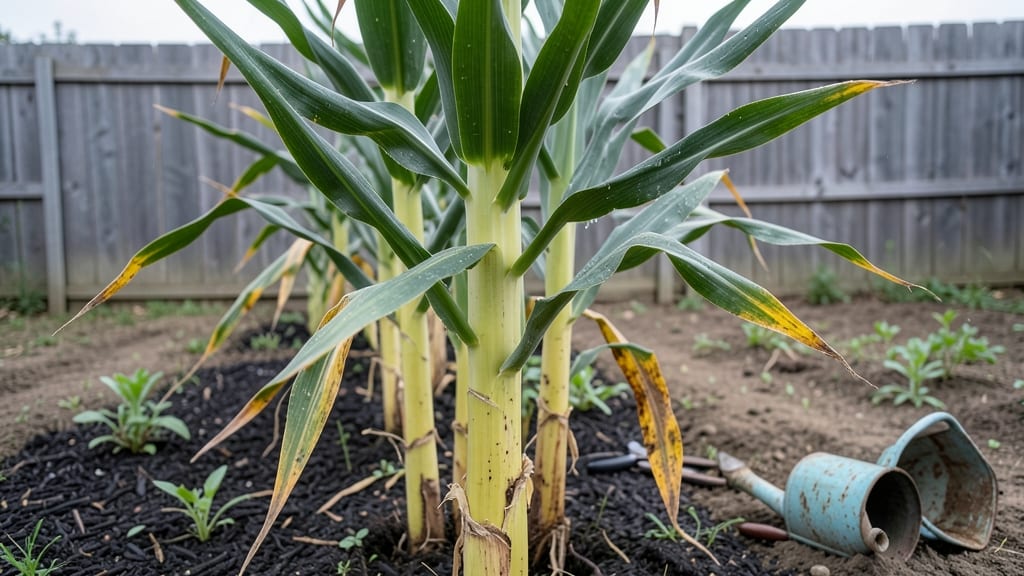
Plants produce glucose through photosynthesis, converting sunlight, carbon dioxide, and water into energy-rich sugars that fuel growth, storage, and reproduction. This process occurs in chloroplasts using chlorophyll, while excess glucose is stored as starch or converted into cellulose for structural support.
This natural energy production is what keeps plants thriving and growing strong. 🌱 The glucose they create isn't just for immediate fuel—it gets transformed into starch in roots like potatoes or converted into sucrose in stems for transport.
What's fascinating is how plants balance this energy between growth and reproduction, especially during their peak seasons. For gardeners, understanding this process helps explain why proper sunlight, water, and nutrients directly impact plant health and yield.
For example, leafy greens and corn rely heavily on this glucose production to develop their signature textures and flavors. When you see a lush garden or a thriving houseplant, you're witnessing the direct result of this biochemical magic at work.
💡 In This Article
- Photosynthesis: The Process Behind Glucose Production in Plants
- How Plants Store and Utilize Glucose for Optimal Growth
Photosynthesis: the process behind glucose production in plants
Here's what's actually happening inside those green leaves: photosynthesis begins with the light-dependent reactions in the thylakoid membranes of chloroplasts.
Chlorophyll absorbs sunlight, primarily in the blue (400-500 nm) and red (600-700 nm) wavelengths, which excites electrons that power the splitting of water molecules (H2O) into oxygen, protons, and electrons. This process generates ATP (adenosine triphosphate) and NADPH—the plant's energy currency and reducing power, respectively.
The energy captured as ATP and NADPH then fuels the Calvin cycle (light-independent reactions) in the stroma. Here, carbon dioxide molecules are fixed into an unstable 3-carbon compound called 3-phosphoglycerate, which gets converted into glyceraldehyde-3-phosphate (G3P)—the direct precursor to glucose.
For every 6 CO2 molecules processed, the cycle produces 1 glucose molecule (C6H12O6), using 18 ATP and 12 NADPH along the way. 🌿 This cycle operates continuously during daylight, but its efficiency depends heavily on environmental conditions.
Light intensity is the most critical factor—too little light slows electron transport, while too much can damage the chlorophyll. CO2 levels matter too: most plants thrive at 350-400 parts per million (ppm), but some like corn can concentrate CO2 internally to reach 1,000 ppm or higher.
Temperature plays a role too, with optimal photosynthesis occurring between 15-25°C (59-77°F)—below freezing or above 40°C (104°F) shuts down the Calvin cycle entirely. That's why desert plants like cacti have evolved CAM photosynthesis, opening their stomata at night to minimize water loss while still fixing carbon.
The glucose produced isn't just floating freely—it gets immediately funneled into metabolic pathways. Some gets converted to sucrose for transport through phloem to growing tissues, while excess is polymerized into starch (up to 80% of dry weight in storage organs like potatoes).
The remaining glucose may become cellulose for cell wall reinforcement or fructans for drought resistance. What's fascinating is how plants prioritize these conversions based on their life stage—young leaves need glucose for growth, while mature plants allocate more to storage or reproduction.
Consider how a sunflower operates: its leaves capture sunlight at 10-20% efficiency (compared to 20-40% in high-tech solar panels), but the plant's massive leaf surface area makes up for it.
During peak sunlight, a single sunflower head can produce enough glucose to grow 1,000+ seeds—each seed containing starch reserves that will fuel the next generation's germination. This is why agricultural crops like corn and sugarcane have been selectively bred for high photosynthetic efficiency over centuries.
What most people don't realize is how quickly this process responds to environmental changes. When you move a houseplant from dim light to sunlight, you'll see new leaves developing within days—the plant is literally rerouting its glucose production to support new growth.
Similarly, drought-stressed plants convert more glucose to osmoprotectants like proline to survive water shortages. This real-time adaptation is what makes photosynthesis such a remarkable biochemical process.