
Watering
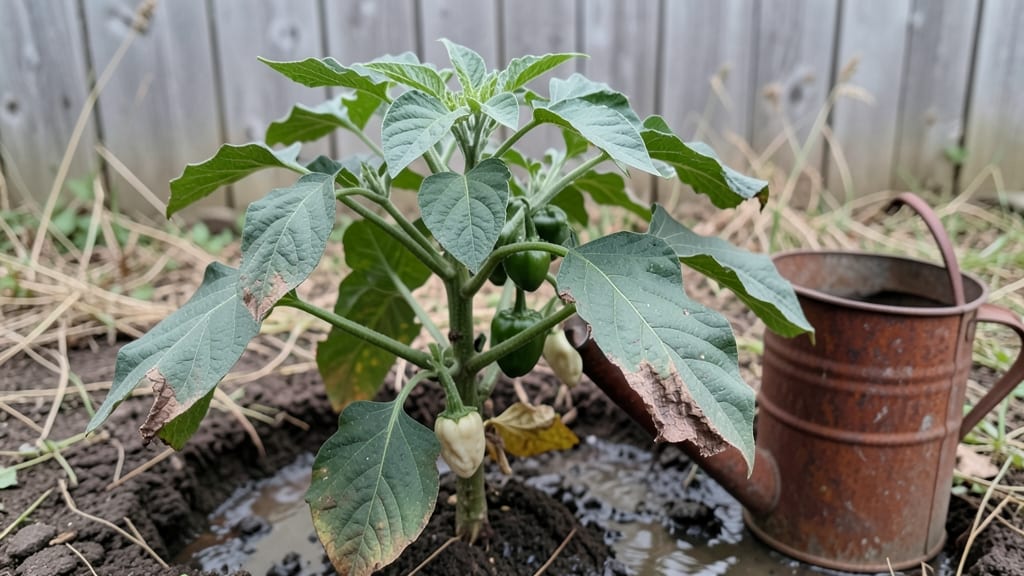
These pictures of overwatered pepper plants will show you exactly why soggy soil turns your once-vibrant peppers into droopy, yellowing ghosts—just like the sad sight I’ve seen far too often after days of standing water. 🌱 The good news? You can turn things around fast with a few simple adjustments.
Yellowing leaves and wilting stems are the first red flags, but don’t ignore the real culprit: soggy roots smothered in oxygen-starved soil. Mold or a foul smell near the base?
That’s root rot setting in, and it spreads faster than you think. The fix starts with letting the soil dry out completely between waterings—pepper plants hate wet feet.
Within a week of cutting back on water and improving drainage, you’ll see new green growth pushing through. Prune any blackened or mushy stems to stop the rot from spreading, and switch to a well-draining potting mix if your current soil holds too much moisture.
Your plants will bounce back faster than you’d expect.
This works for both container-grown peppers and in-ground plants, though containers dry out faster. The key is consistency—once you’ve adjusted your watering schedule, stick with it. Your peppers will thank you with a harvest that’s as vibrant as it is productive.
Root Causes Of Overwatered Peppers
Overwatering your pepper plants might seem like a harmless mistake—after all, more water equals happier plants, right? 🌧️ Wrong! When peppers get too much H₂O, their roots suffocate, nutrients wash away, and fungi move in like uninvited guests.
Let’s dig into the real reasons your peppers are drowning in their own pots (or garden beds) and why their leaves turn yellow or wilt despite your best efforts.
Pepper plants hate soggy feet. If your containers lack drainage holes or your garden soil is heavy clay, water pools around the roots instead of draining away.
Without airflow, roots can’t breathe, leading to: - Anaerobic conditions (no oxygen) → roots suffocate and rot. - Fungal infections (like Phytophthora or Pythium) that thrive in wet, oxygen-deprived soil. - Nutrient leaching—excess water flushes away essential minerals (like nitrogen, potassium, and magnesium) peppers need to stay green and productive.
Actionable fix: Test your soil’s drainage by filling a pot with water and timing how long it takes to drain. If it sits for more than 30 minutes, amend with perlite, coarse sand, or compost to improve aeration.
Peppers despise feast-or-famine watering. If you:
- Drench them one day (e.g., after a heavy rain or overzealous watering), then let the soil dry out completely before watering again,
- Water lightly but frequently (keeping the topsoil damp instead of deeply hydrating the roots),
…you create a rollercoaster moisture cycle that stresses the plant. Roots grow unevenly, and the plant struggles to absorb water efficiently, leading to wilting or yellowing leaves—even when the soil looks dry.
Actionable fix:
- Water deeply but infrequently—aim for 1–1.5 inches per week (adjust for climate).
- Use the "finger test": Stick your finger 1–2 inches into the soil. If it’s dry, water; if damp, wait.
- Mulch (with straw or wood chips) to retain moisture evenly and prevent surface evaporation.
Heavy, clay-rich, or poorly amended soil holds water like a sponge, starving roots of oxygen.
Signs your soil is too dense: - Puddles linger after watering. - Leaves yellow between veins (a classic sign of iron or nutrient deficiency in waterlogged conditions). - Roots appear black or mushy when you inspect them (a red flag for rot).
Actionable fix:
- Amend soil with organic matter (compost, coconut coir, or peat moss) to improve structure.
- For containers, use a well-draining potting mix (avoid garden soil alone—it compacts).
- Raise beds slightly if gardening in heavy clay to encourage drainage.
Not all watering is your fault—humidity, rain, and even your pepper’s growth stage play a role.
- High humidity (common in greenhouses or tropical climates) slows evaporation, keeping soil wet longer than expected.
- Recent rain can saturate the soil, making you overcompensate with extra water.
- Seedlings vs. mature plants: Young peppers need less water than fruiting plants (which are thirstier during hot spells).
Actionable fix:
- Adjust your schedule based on weather. Use a rain gauge to track natural water input.
- Reduce watering in humid conditions—let the top inch of soil dry out before adding more.
- Group peppers with drought-tolerant companions (like basil or marigolds) to balance moisture levels.
Timing matters! Watering at the wrong time of day or using the wrong method can lead to overwatering.
- Evening watering → Leaves stay wet overnight, inviting fungal diseases.
- Surface watering (e.g., sprinklers) → Encourages shallow root growth and evaporative loss.
- Overhead watering → Can wash away soil nutrients and disrupt root zones.
Actionable fix:
- Water in the morning (6–10 AM) to allow foliage to dry quickly.
- Use drip irrigation or soaker hoses to deliver water directly to the soil.
- Avoid wetting leaves—aim for the base of the plant to prevent disease.
When pepper roots circle the pot (a sign they’re root-bound) or the container is too small, the plant can’t absorb water efficiently.
Instead of spreading out, roots compete for space, leading to: - Poor oxygen circulation in crowded roots. - Waterlogging in small pots where drainage is limited. - Stunted growth and yellowing leaves as the plant struggles to access nutrients.
Actionable fix:
- Upgrade pots to at least 12–18 inches wide for mature peppers (bigger is better!).
- Repot root-bound plants into fresh, well-draining soil.
- Prune crowded roots gently if transplanting to encourage outward growth.
Too much nitrogen-heavy fertilizer (like fresh manure or synthetic blends) can burn roots and make plants more susceptible to overwatering damage. Meanwhile, lack of micronutrients (like magnesium or calcium) weakens cell walls, making them more prone to blossom-end rot or leaf yellowing when waterlogged.
Actionable fix:
- Use balanced fertilizer (e.g., 10-10-10 or 5-5-5) and follow label rates.
- Flush soil occasionally with plain water to prevent salt buildup from fertilizers.
- Add Epsom salt (1 tbsp/gallon) monthly for magnesium if leaves yellow between veins.
Grab a handful of soil near the roots—if it:
- Squeezes out water → You’re overwatering.
- Holds shape but crumbles → Just right.
- Powers like dust → Time to water.
Now that you know why your peppers are drowning, the next section will show you how to revive them fast—without losing your harvest! 🚀
Quick Fixes for Soggy Pepper Plants
Overwatering your pepper plants can turn them into a sad, yellow-leafed mess—but don’t worry! With the right steps, you can nurse them back to health and prevent future disasters. Below, we’ll match common overwatering symptoms to practical fixes, so you can act fast and save your harvest. 🌱💦
Signs: Yellowing leaves, wilting despite damp soil, or a mushy stem base. Fix:
- Stop Watering Immediately – Let the soil dry out completely before watering again. Overwatering is often a habit, not a one-time mistake.
- Check Drainage – If water pools in the pot or saucer, your plant is drowning. Ensure pots have drainage holes and use a well-draining soil mix (like 60% potting soil + 30% perlite + 10% compost).
- Repot if Needed – If roots are rotting (black, mushy, or smelly), trim the damaged roots with sterilized scissors and repot in fresh, dry soil.
💡 Pro Tip: Stick your finger 1-2 inches into the soil—if it’s damp, wait. If it’s bone-dry, water lightly.
Signs: Dark spots, mold, or a white powdery coating on leaves. Fix:
- Prune Infected Leaves – Snip off yellow or spotted leaves with clean shears to stop the spread.
- Apply Fungicide – Use a copper-based fungicide or a baking soda spray (1 tsp baking soda + 1 quart water + a drop of dish soap).
- Improve Airflow – Space plants apart and avoid overhead watering to keep foliage dry.
✨ Prevention: Water in the morning so leaves dry quickly, and avoid wet mulch around stems.
Signs: Black, slimy roots, stunted growth, or the plant toppling over. Fix:
- Remove the Plant – Gently take it out of the pot and rinse off the soil to inspect roots.
- Trim Rotten Roots – Use sterilized scissors to cut away any black, mushy roots. Keep only firm, white roots.
- Repot in Fresh Soil – Place the plant in a clean pot with fresh, dry soil and hold off on watering for 3-5 days to let roots recover.
🔥 Warning: If more than half the roots are rotten, the plant may not recover. Start fresh with a new cutting!
Prevention Tips:
- Water Deeply but Less Often – Peppers hate soggy soil. Water until it drains from the bottom, then wait until the top 1-2 inches are dry.
- Use the Right Soil – A mix with perlite, vermiculite, or coconut coir improves drainage.
- Monitor Weather – Heavy rain? Skip watering that day. Use a moisture meter if you’re unsure.
- Mulch Correctly – Use straw or wood chips to retain moisture but keep it 2 inches away from the stem to avoid rot.
🎯 Golden Rule: When in doubt, underwater slightly—peppers are drought-tolerant but not flood-tolerant!
By following these steps, your pepper plants will bounce back stronger—and you’ll avoid the heartbreak of another soggy disaster. 🌶️💪 Now go rescue those leaves!
Frequently asked questions
What do yellow leaves on pepper plants really mean?
Yellowing leaves are the most common sign of overwatering, but they can also indicate nutrient deficiencies or fungal issues. Check the leaf pattern: if yellowing starts at the edges or between veins, it’s often water-related. For a definitive diagnosis, squeeze the soil—if it’s damp, you’re likely overwatering.
How often should I water pepper plants to avoid overwatering?
Peppers need 1–1.5 inches of water per week, but this varies by climate. Use the "finger test": stick your finger 1–2 inches deep—if dry, water thoroughly; if damp, wait. Containers dry faster than garden beds, so check daily in hot weather. Morning watering prevents fungal growth from evening moisture.
Can I save a pepper plant with black, mushy roots?
Yes, but act fast! Trim all black/mushy roots with sterilized scissors, then repot in fresh, dry soil. Hold off on watering for 3–5 days to let roots recover. If over half the roots are rotten, the plant may not survive—start fresh with a cutting instead. Always use pots with drainage holes to prevent future rot.
What’s the best soil mix to prevent overwatering?
A well-draining mix like 60% potting soil + 30% perlite + 10% compost works best. Avoid garden soil alone—it compacts and holds too much moisture. For containers, add coarse sand or coconut coir to improve aeration. Test your mix: fill a pot with water and time drainage—if it takes 30+ minutes to drain, amend it further.
Why do my pepper plants wilt even when the soil looks dry?
This "feast-or-famine" cycle happens when you water lightly but frequently, keeping only the topsoil moist while roots stay dry. Peppers need deep watering to encourage root growth. Use drip irrigation or soaker hoses to deliver water directly to the root zone. Mulch with straw to retain moisture evenly and prevent surface evaporation.