
Blooming
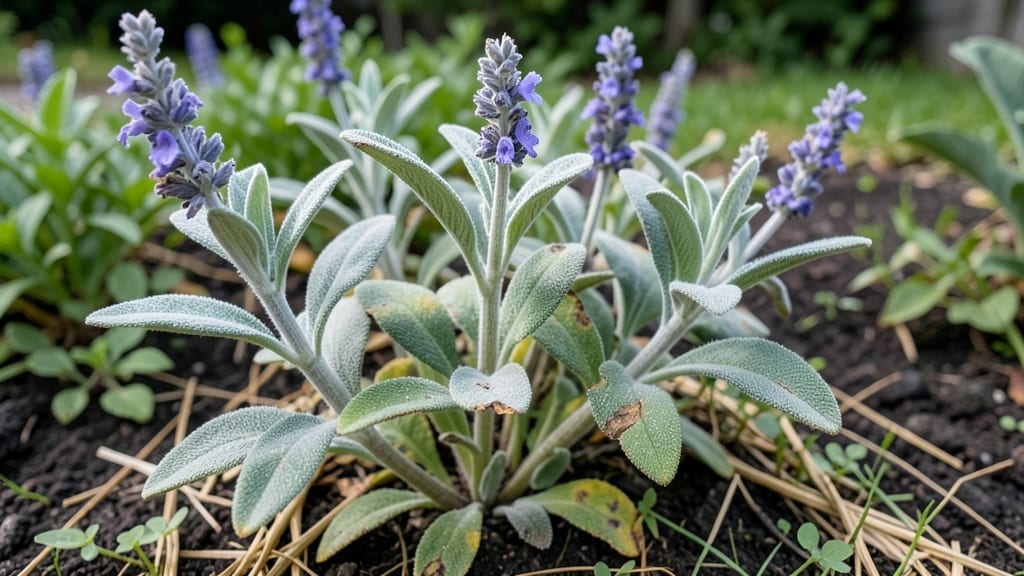
A blooming sage plant turns your garden into a fragrant sanctuary that never stops giving. 🌿 I’ve watched my purple sage burst with lavender flowers for months at a time—no fuss, just steady beauty—while struggling with other herbs that flopped after a single bloom.
The secret isn’t complicated, but it’s not what most guides tell you either.
Sage thrives with 6+ hours of direct sun daily and soil that drains like a sandy loam—never soggy. Water only when the top inch feels dry, and skip the fertilizer unless your soil is truly poor.
The varieties that bloom best—like ‘Purpurascens’ or ‘Berggarten’—reward patience with clusters of flowers that attract bees all season long. Pruning? Just trim back leggy stems after blooms fade, and you’ll encourage more growth.
You’ll end up with a plant that smells like a sun-warmed herb garden, even in winter. The flowers stay vibrant longer than most annuals, and the foliage keeps its silvery-blue hue year-round.
Best part? It rarely needs deadheading—just a light trim keeps it compact and productive. This is the kind of plant that makes gardening feel effortless.
Works for containers, borders, or even as a living border along walkways. Once you’ve got one thriving, you’ll want three—trust me. Here’s how to make it happen without the guesswork.
📚 In This Guide
- What you need
- Instructions
- Tips and common mistakes
- Wrapping up and next steps
What you need
- ● Sage plant (Salvia officinalis or Salvia nemorosa) – Choose a healthy, disease-free specimen from a nursery or propagate your own from cuttings.
- ● Well-draining potting mix – A blend of 60% garden soil, 30% perlite or coarse sand, and 10% compost works best.
- ● Container or garden bed – For potted sage: A container at least 12 inches deep and wide with drainage holes.
- ● For in-ground planting: A sunny spot with 6+ hours of sunlight daily and loose, rocky soil.
- ● Pruning shears or sharp scissors – Sterilized tools to avoid spreading disease.
- ● Watering can or hose with a gentle spray nozzle – Sage hates soggy roots!
- ○ Organic fertilizer (optional but recommended) – A balanced 10-10-10 or low-nitrogen formula (like fish emulsion) applied 2-3 times per year.
- ● Mulch (gravel or straw) – Helps retain moisture and deter weeds.
- ● pH testing kit – Sage prefers neutral to slightly alkaline soil (6.5–7.5 pH).
- ● Grow lights (for indoor sage) – A full-spectrum LED for 12–14 hours/day if natural light is limited.
- ● Compost tea or liquid seaweed – Boosts soil health naturally.
- ● Drip irrigation system – Automates watering for busy gardeners!
How to grow a thriving blooming sage plant
Here's the straightforward approach I use to keep my sage lush, fragrant, and blooming all year.
🌱 Step 1: Choose the Right Location and Soil
Sage thrives in full sun—at least 6-8 hours daily. A south-facing window or outdoor spot with afternoon shade in hot climates works best. I always use well-draining soil because soggy roots will kill your plant. Mix in some sand or perlite if your soil feels heavy.
This is the moment that matters: if your soil drains poorly, add a layer of gravel at the bottom of the pot. You'll know it's right when water runs through within 10-15 minutes of watering. Sage hates wet feet, so good drainage isn't optional.
☀️ Step 2: Plant and Establish Proper Spacing
Dig a hole twice as wide as the root ball but only as deep. Place your sage plant in, then fill the hole with soil, pressing lightly to remove air pockets. Space plants 18-24 inches apart—they'll spread over time, and crowding leads to weak growth.
Water deeply right after planting to settle the soil. You'll see new leaves emerge within 2-3 weeks if conditions are right. This is your signal that the plant has rooted successfully. Don't fertilize yet—let it establish for 4-6 weeks first.
💧 Step 3: Water and Feed for Continuous Blooms
Water only when the top inch of soil feels dry. Sage is drought-tolerant, so underwatering is better than overwatering. I check by sticking my finger in the soil—if it's damp below the surface, wait another day. Too much water causes root rot, which is silent until it's too late.
Feed with a balanced, water-soluble fertilizer every 4-6 weeks during the growing season. Cut back to once a month in winter. You'll notice vibrant new growth and more frequent blooms after just one feeding. Real talk: sage doesn't need much, but a little fertilizer keeps it thriving.
✂️ Step 4: Prune for Shape and Encourage More Blooms
Prune right after flowering to maintain shape and encourage new growth. Cut back one-third of the plant using clean, sharp shears. Always cut just above a leaf node—this is where new growth will emerge. I prune mine in early spring and again after summer blooms.
Remove any dead or yellowing leaves immediately. This isn't just for looks—it prevents disease from spreading. You'll see fresh, healthy foliage within 2-3 weeks of proper pruning. Don't skip this step; it keeps your sage bushy and productive.
🌿 Step 5: Overwinter for Year-Round Fragrance
Sage is hardy and can survive winter, but it needs protection in cold climates. Move potted plants to a sheltered spot or bring them indoors where temperatures stay above 30°F. Reduce watering to every 3-4 weeks once growth slows in fall.
In spring, trim back any dead growth and return plants to their usual spot. You'll see new shoots within 2-3 weeks of warmer weather. This is how you keep your sage fragrant and blooming all year—minimal effort, maximum reward.
Tips & tricks for perfect blooming sage plant care
Here's what nobody tells you about keeping your sage thriving and blooming like a pro.
The Sunlight Secret: That 6-8 hours of full sun isn't just about light—it's about timing. Morning sun is ideal because it prevents the leaves from scorching in afternoon heat. If you notice leaves turning yellow or crispy, your sage is getting too much direct midday sun. Move it slightly or provide afternoon shade with a sheer curtain.
Drainage is Non-Negotiable: The 10-15 minute water drainage test in Step 1 is your best friend. If water pools after 15 minutes, your plant is at risk. I've seen sage plants die from overwatering when people ignore this simple test. For containers, always use pots with drainage holes—no exceptions. You can also add a layer of coarse sand or small pebbles at the bottom before soil for extra insurance.
Fertilizer Timing Matters: The 4-6 week feeding schedule works because it matches sage's natural growth cycles. Too much fertilizer causes salt buildup that burns roots. I use half-strength fertilizer solution to be extra safe. In winter, when you reduce to once a month, you might skip entirely if your plant looks healthy—sage is naturally low-maintenance once established.
Pruning for Maximum Blooms: That one-third prune after flowering isn't just about shape—it's about redirecting energy. When you cut just above a leaf node, you're telling the plant "grow here" with those growth hormones. I prune mine in early spring right before new shoots appear, and again after summer blooms fade. This two-time pruning schedule keeps my sage bushy and blooming continuously.
Pro Tips for Blooming Sage Plant
- Here's what nobody tells you about keeping your sage thriving and blooming like a pro.
- The Sunlight Secret: That 6-8 hours of full sun isn't just about light—it's about timing.
- Drainage is Non-Negotiable: The 10-15 minute water drainage test in Step 1 is your best friend.
Frequently asked questions
When should I prune my blooming sage plant for best results?
Prune your sage right after flowering (late spring to early summer) to encourage bushier growth and prevent woody stems. Avoid heavy pruning in fall or winter, as sage needs energy to survive colder months. Use clean, sharp shears to trim just above a leaf node—never cut into bare wood!
How do I protect my sage plant from winter damage?
Most sage varieties are hardy to USDA zones 5–9, but young plants or tender types (like white sage) need extra care. Mulch the base with 2–3 inches of straw or pine needles after the first frost. For potted sage, move it to a sheltered spot or wrap the pot in burlap to insulate roots.
What pests should I watch for, and how do I treat them?
Sage is generally pest-resistant, but watch for aphids, spider mites, or whiteflies on new growth. Blast off pests with a strong spray of water or use neem oil (mix 1 tbsp per quart of water). For severe infestations, introduce ladybugs—nature’s pest control! Healthy plants are less vulnerable, so prioritize well-draining soil.
Can I grow blooming sage in containers, and what’s the best setup?
Choose a 5-gallon pot or larger with drainage holes, and use a fast-draining mix (like cactus/succulent soil with perlite). Place in full sun (6+ hours/day) and water only when the top inch of soil is dry. Dwarf varieties (e.g., ‘Berggarten’) thrive in containers, while standard sage may need occasional repotting to prevent root-bound stress.
Why isn’t my sage blooming, even though it’s healthy?
Sage often skips blooms if it’s over-fertilized, overwatered, or not getting enough sun. Ensure it’s in full sun and water sparingly (sage hates soggy roots). Deadhead spent flowers to encourage reblooming, but avoid heavy pruning—sage blooms on old wood. If it’s still stubborn, try a balanced, low-nitrogen fertilizer in early spring.
What’s a good alternative if my sage plant isn’t thriving?
If your sage struggles with your climate or soil, try lavender, rosemary, or thyme—they’re equally fragrant and low-maintenance. For a blooming alternative, consider Russian sage (Perovskia) (drought-tolerant!) or catmint (Nepeta), which attract pollinators and repel pests naturally.
Wrapping up and next steps
Your blooming sage plant is more than just a fragrant addition to your garden—it’s a low-maintenance superstar that thrives with just a little care. 🌿 Whether you’re drawn to its silvery foliage, delicate blooms, or soothing scent, this resilient plant rewards patience with beauty and ease.
Now that you’re armed with the right tips, go ahead and give it the perfect home—and watch it flourish year after year!
Ready to take the next step? Start by planting your sage today—whether in a sunny pot on your patio or tucked into your garden bed. Need inspiration? Browse varieties like Salvia officinalis or Salvia nemorosa to find your perfect match! 🌸