Plants
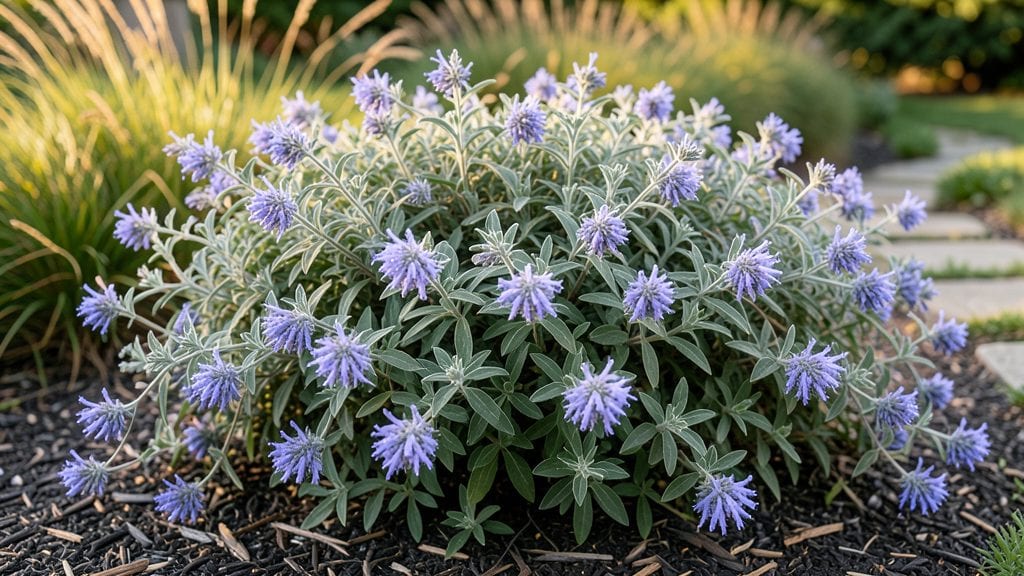
The bluebeard plant (Caryopteris) is invasive in some regions due to its aggressive growth habits, spreading rapidly through both underground runners and wind-dispersed seeds. This shrub outcompetes native plants by dominating disturbed areas, making eradication challenging without targeted control methods.
The bluebeard plant's invasiveness stems from its dual spread mechanisms: deep-rooted rhizomes that expand underground and lightweight seeds carried by wind. 🌿 These traits let it colonize open spaces quickly, often replacing wildflowers and grasses in just a few growing seasons.
Unlike slower-spreading invasives, bluebeard thrives in poor soils and drought conditions, giving it an edge in marginal environments where other plants struggle.
Its dominance isn't just about growth speed—bluebeard also produces toxic compounds that can inhibit nearby plants. This chemical warfare, combined with its ability to regenerate from root fragments, makes traditional removal methods like pulling less effective.
The key to control lies in combining herbicide treatments with thorough soil disturbance to prevent regrowth.
💡 In This Article
- How Bluebeard Plant Spreads Aggressively
- Effective Bluebeard Plant Removal Strategies
How bluebeard plant spreads aggressively
Bluebeard's invasion begins with its rhizomatous root system, which can extend up to 3 feet deep and 6 feet wide in ideal conditions. These underground stems produce new shoots at nodes, creating dense colonies.
Unlike many shrubs, bluebeard's rhizomes store high starch reserves, allowing them to regenerate even from small fragments—just 2 inches of root can sprout a new plant. This persistence makes mechanical removal ineffective without complete soil disruption.
The plant's seed dispersal strategy is equally aggressive. Each flower cluster produces 50-100 tiny seeds weighing less than 0.001 grams, perfect for wind transport. Seeds remain viable for 3-5 years in soil, germinating when disturbed—like after wildfires or construction.
Compare this to Russian olive (Elaeagnus angustifolia), which also spreads via seeds but requires animal ingestion for long-distance dispersal, while bluebeard's seeds hitch rides on breezes for miles.
Environmental triggers amplify bluebeard's dominance. It thrives in poor, dry soils where many natives struggle, tolerating pH levels from 5.5 to 8.5 and surviving prolonged drought through deep root penetration. Its allelopathic compounds (like caryopterin) suppress competing vegetation by 30-50% in surrounding soil.
This chemical advantage, combined with its fast growth rate (up to 2 feet per year), lets it monopolize space quickly.
Seasonal timing matters too. Bluebeard flowers in late summer, when most native plants are dormant, ensuring seed production coincides with minimal competition. Its evergreen leaves maintain photosynthesis year-round in mild climates, giving it a 12-month growth advantage over deciduous species.
This persistence explains why it outcompetes even established prairie grasses within 2-3 years of introduction.
What makes bluebeard particularly dangerous is its dual invasion strategy: rhizomes for immediate ground cover and seeds for long-term dominance.
While Russian olive relies on seed banks and nitrogen-fixing roots, bluebeard combines both tactics with chemical suppression, creating an ecosystem "feedback loop" where its presence inhibits native recovery. This multi-pronged approach explains why it's classified as highly invasive in states like Oregon and Washington.
Understanding these mechanisms reveals why traditional gardening tools fail. A hand trowel might remove the visible plant, but 90% of the threat remains underground.
The key to control lies in targeting both the rhizome system and seed bank simultaneously—a challenge that requires systemic herbicides and soil solarization for complete eradication. 🌱