Propagation
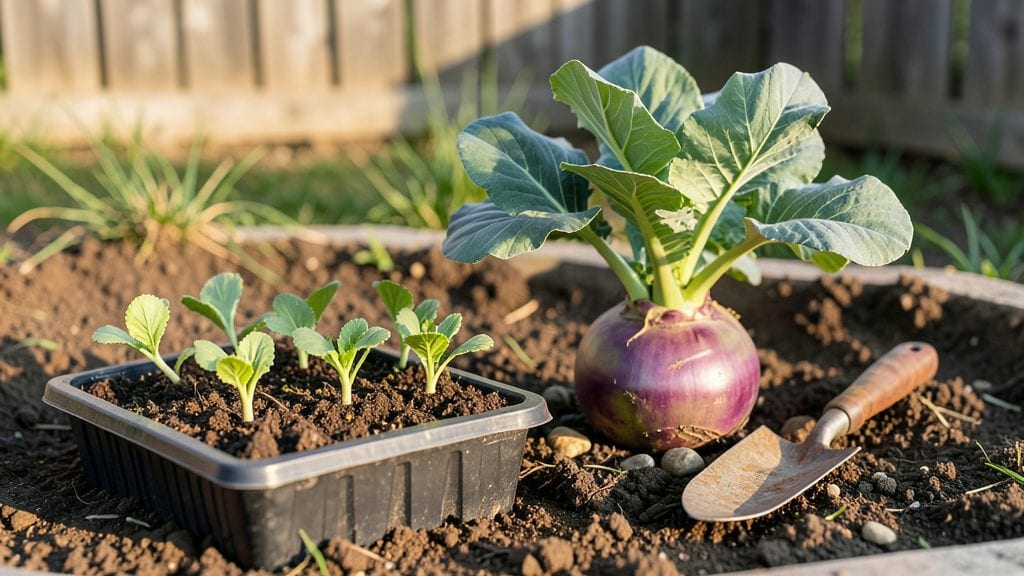
Planting kohlrabi seeds gives you fast-growing, crunchy harvests in just 50 days—no waiting around for slow starters here. 🌱 I learned the hard way that these seeds don’t play games: they sprout quickly when conditions are right, but get impatient when they’re cold or dry.
The secret? Warm soil, consistent moisture, and a little shade during their first week above ground.
You’ll need a sunny spot (at least 6 hours of light daily), loose soil mixed with compost, and a flat area to direct-sow seeds about ½ inch deep. Space them 2 inches apart in rows 18 inches apart—crowding leads to tough, woody stems.
Kohlrabi thrives in cool weather, so aim for spring or fall plantings in most climates, avoiding summer’s heat.
Within 10-14 days, you’ll see tiny leaves pushing through the soil, and those bulbous stems will be ready to harvest in 6-8 weeks. The key is keeping the soil evenly moist—never soggy—and thinning seedlings to avoid competition.
If your seedlings look leggy, it’s time to adjust your light or watering.
Common mistakes? Planting too deep (they won’t make it) or letting them bolt (too much heat or drought). But once you nail the timing, you’ll have a steady supply of sweet, versatile greens and bulbs that outperform store-bought any day. Ready to grow yours?
📚 In This Guide
- What you need
- Instructions
- Tips and common mistakes
- Wrapping up and next steps
What you need
- ● Kohlrabi seeds: 1–2 packets (about 50–100 seeds per packet; choose early-maturing varieties like ‘Purple Vienna’ or ‘White Vienna’ for faster results).
- ● Seed-starting mix or potting soil: 1–2 cubic feet (sterile, well-draining mix for containers or seed trays).
- ● Containers or seed trays: For indoor starts: 4–6-inch deep trays or pots (with drainage holes).
- ● For direct sowing: Well-prepared garden beds (loose, fertile soil with good drainage).
- ○ Grow lights or sunny windowsill: Optional but helpful for indoor seedlings (12–16 hours of light daily).
- ● Watering can or spray bottle: With a fine mist nozzle for gentle watering.
- ● Fertilizer: Balanced, water-soluble fertilizer (e.g., 10-10-10) for seedlings.
- ● Compost or organic matter for garden beds (mix 1–2 inches into soil before planting).
- ● Row covers or cloches: To protect seedlings from pests or cold snaps.
- ● Plant labels: To track varieties and planting dates.
- ● Organic mulch: (e.g., straw or grass clippings) to retain moisture and suppress weeds.
- ● pH test kit: Kohlrabi prefers soil pH 6.0–7.0; adjust with lime or sulfur if needed.
Step-by-step instructions for planting kohlrabi seeds
Here’s how to get your kohlrabi growing quickly and ready for harvest in just a few weeks.
🌱 Step 1: Prepare the Soil for Fast Germination
Kohlrabi thrives in loose, fertile soil that drains well. Work the 2 gallons of garden soil and 1 gallon of compost into the planting area until the mix is crumbly and free of clumps. Kohlrabi roots hate compacted soil, so break up any hard spots with a garden fork. Test the moisture by squeezing a handful—it should hold together lightly but not feel soggy.
Real talk: If your soil is heavy clay, mix in 1 cup of perlite to improve drainage. Kohlrabi bulbs will split or crack if they sit in wet soil. Aim for a pH between 6.0 and 7.0—you can test this with a simple soil kit if you’re unsure. Kohlrabi won’t grow well in acidic or alkaline soil.
🌱 Step 2: Sow Seeds at the Right Depth and Spacing
Plant the 1 packet of kohlrabi seeds (about 50 seeds) ¼ inch deep, pressing each seed gently into the soil with your finger. Kohlrabi seeds are tiny, so I like to use a toothpick to make small holes first—this keeps them neat and prevents overcrowding. Space seeds 1 inch apart in rows that are 12 inches apart.
Don’t skip this spacing! Kohlrabi bulbs need room to swell, or they’ll compete for nutrients and stay small. If you’re planting in a container, use a 5-gallon pot for 4 plants—just make sure it has drainage holes. Water the soil lightly after planting to settle the seeds in place.
☀️ Step 3: Provide Consistent Moisture and Light
Keep the soil evenly moist but not waterlogged for the first 2 weeks—this is when germination happens fastest. Kohlrabi seeds sprout best in 60-70°F soil, so if your spring nights are chilly, cover the bed with a lightweight row cover until sprouts appear. You’ll see tiny green shoots in 5-10 days—that’s your signal to stop covering.
Once seedlings emerge, give them full sun (6+ hours daily). Kohlrabi grows quickly, so if your plants start looking leggy (stretched with pale leaves), move them to a sunnier spot or add a grow light for 12-14 hours a day. Leggy seedlings mean the plant is starving for light and won’t produce strong bulbs.
✂️ Step 4: Thin Seedlings and Monitor Bulb Formation
When seedlings reach 2 inches tall, thin them to 4 inches apart in rows. Use scissors to snip off extras at soil level—this prevents disturbing the roots of the remaining plants. Kohlrabi bulbs form at the base of the stem, so leave the strongest, straightest stems. You’ll know it’s time to harvest when bulbs reach 2-3 inches in diameter—they’re ready about 6-8 weeks after planting.
Here’s the thing—don’t let bulbs get too large, or they’ll turn woody and tough. Harvest on a cool morning when the soil is damp, so the bulbs come out cleanly. Cut the stem just above the bulb with a sharp knife, and you’re ready to enjoy fresh, crisp kohlrabi in salads or roasted dishes.
💧 Step 5: Maintain Soil Moisture for Continued Growth
After thinning, water the plants 1 inch per week, splitting it between 2-3 waterings to encourage deep root growth. Kohlrabi is drought-sensitive, so let the soil dry slightly between waterings—top inch feels dry to the touch is the perfect cue. Mulch with 1 inch of straw to keep moisture in and weeds out.
Watch for pests like cabbage worms or flea beetles—they love kohlrabi too. If you spot holes in leaves, cover plants with floating row fabric or handpick pests early. With consistent care, you’ll get 4-6 harvests per plant before the growing season ends.
Tips & tricks for planting kohlrabi seeds
Fast germination and early harvests start with these key tricks that'll get your kohlrabi growing like a dream.
Soil Temperature is Everything: Those first 2 weeks are critical for germination, and soil temperature matters more than you might think. Aim for 60-70°F—this is when kohlrabi seeds wake up fastest. I've seen germination slow down dramatically when soil dips below 55°F, even if air temps are perfect. If your spring nights are chilly, cover the bed with a lightweight row cover until sprouts appear. Trust me on this: warm soil = faster sprouts.
Precision Planting Pays Off: When you're planting those 50 seeds at just ¼ inch deep, don't guess—use a toothpick to make precise holes first. This keeps seeds evenly spaced and prevents overcrowding right from the start. I learned this the hard way after planting too densely and ending up with tiny, stunted bulbs. Also, press seeds gently but firmly—they need good soil contact to germinate consistently.
Light is Non-Negotiable: Kohlrabi grows fast, but it needs 6+ hours of full sun daily to develop those crisp bulbs. If your seedlings start looking leggy (stretched with pale leaves), don't wait—move them to a sunnier spot immediately. I've found that adding a grow light for 12-14 hours a day can make all the difference in early growth stages, especially if you're in a shady spot. Leggy plants mean weak bulbs.
Thinning Technique Matters: When thinning those 2-inch tall seedlings to 4 inches apart, use scissors to snip at soil level rather than pulling. This prevents disturbing the roots of your remaining plants. I've noticed that plants thinned this way develop stronger bulbs faster. Also, harvest on cool mornings when soil is damp—this makes bulbs come out cleanly without tearing. The 2-3 inch diameter rule is your target for peak crispness.
Pro Tips for Planting Kohlrabi Seeds
- Fast germination and early harvests start with these key tricks that'll get your kohlrabi growing like a dream.
- Soil Temperature is Everything: Those first 2 weeks are critical for germination, and soil temperature matters more t...
- Precision Planting Pays Off: When you're planting those 50 seeds at just ¼ inch deep, don't guess—use a toothpick to ...
Frequently asked questions
Got questions about planting kohlrabi seeds?
You’re not alone! Here are answers to the most common queries to help you grow this versatile veggie with confidence.
When is the best time to plant kohlrabi seeds?
Kohlrabi thrives in cool weather, so plant seeds 2-4 weeks before your last frost date in spring or 6-8 weeks before your first frost in fall. Avoid extreme heat—seeds may rot, and plants bolt (go to seed) if temperatures rise above 75°F (24°C). For year-round harvests, try succession planting every 2-3 weeks.
How long does it take for kohlrabi seeds to germinate?
Expect germination in 5-10 days at soil temperatures of 60-70°F (15-21°C). Keep seeds moist but not soggy—consistent watering is key! If germination takes longer, check for too-cold soil or old seeds (store-bought seeds last 1-2 years). A seedling heat mat can speed things up in chilly climates.
Can I grow kohlrabi in containers or small spaces?
Kohlrabi is compact and perfect for containers—just use pots at least 6 inches deep and wide. For bush varieties (like ‘Purple Vienna’), space plants 6-8 inches apart. If space is tight, harvest the stems early (when golf-ball sized) to encourage regrowth. Window boxes and raised beds work great too!
What pests or diseases should I watch for?
Kohlrabi attracts cabbage worms, flea beetles, and aphids. Row covers deter pests early, and neem oil or insecticidal soap can help. Watch for clubroot (a soil-borne fungus)—rotate crops and avoid planting in infected soil. Healthy soil with compost boosts resistance. If leaves yellow, check for overwatering or nutrient deficiencies (add balanced fertilizer if needed).
What can I plant alongside kohlrabi for better yields?
Kohlrabi is a great companion plant! Pair it with:
- Herbs: Dill, mint, or thyme repel pests.
- Root veggies: Carrots or radishes share space well.
- Avoid: Tomatoes or strawberries (they compete for nutrients).
Wrapping up and next steps
Planting kohlrabi seeds is a rewarding experience—especially when you enjoy fast germination (just 4-7 days!) and early harvests in as little as 50 days. With the right soil, spacing, and care, you’ll be savoring crisp, nutritious bulbs in no time. 🌱
Now that you’re ready to grow, why not take the next step? Try experimenting with container gardening or companion planting (like with radishes or lettuce) to maximize your space and yields. Happy planting—and enjoy those homegrown harvests! 🎉