
Pests and Diseases
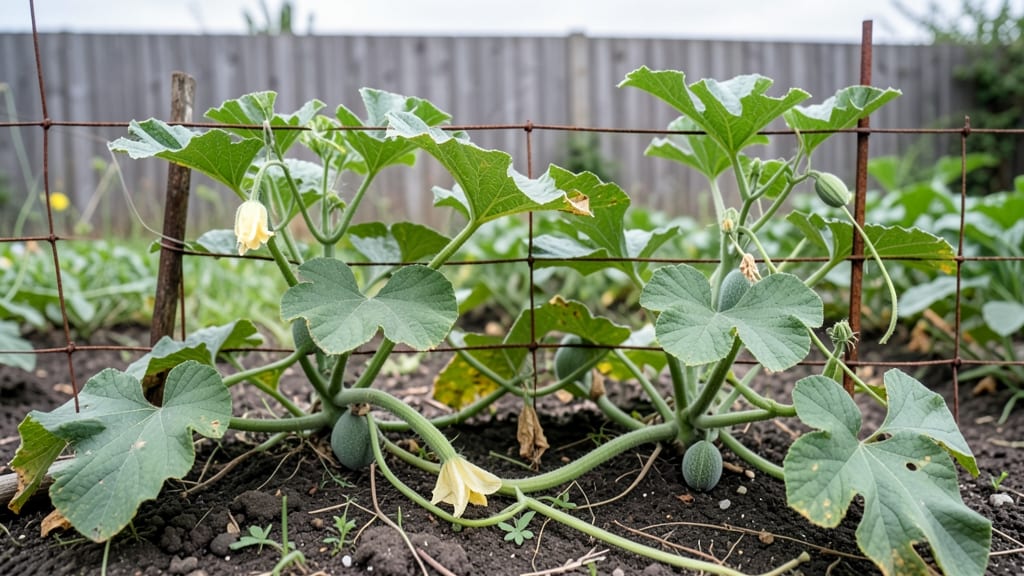
You can plant cantaloupe and cucumbers together, but they need strategic spacing and oversight to thrive, since both sprawling vines will compete for sunlight, nutrients, and space, which can lower your harvest if not managed carefully.
Cantaloupe and cucumbers share similar growing needs—both thrive in warm soil, need plenty of sunlight, and sprawl aggressively—but their vines can quickly outcompete each other for resources. 🌱 The key is giving them enough room to stretch out (at least 8 feet apart for cantaloupe and 4 feet for cucumbers) while using trellises to lift cucumbers off the ground.
This frees up space for cantaloupe's broad leaves to soak up sunlight without smothering the cucumber vines below.
Another smart move is staggering planting times by 2-3 weeks, so one crop isn't peaking while the other is still establishing. This spreads out your harvest and reduces stress on the soil.
Just watch for shared pests like squash bugs or powdery mildew—both crops are vulnerable, so rotate crops next year to break the cycle.
💡 In This Article
- How Companion Planting Affects Cantaloupe and Cucumber Growth
- Best Practices for Interplanting Melons and Cucumbers
How companion planting affects cantaloupe and cucumber growth
Here's what's actually happening when you plant cantaloupe and cucumbers together: both are heavy feeders with sprawling vines that can smother each other if not properly managed. Cantaloupe vines spread 6-12 feet wide, while cucumbers typically reach 3-6 feet but grow much faster initially.
The competition starts at the roots—both plants have shallow root systems that absorb nutrients from the top 6-12 inches of soil, creating a direct battle for nitrogen, phosphorus, and potassium.
The science gets interesting with their shared pollinators. Both plants rely on bees for pollination, and their yellow-orange flowers bloom simultaneously in summer, creating a bee magnet that actually benefits both crops.
However, this shared attraction also means they'll spread diseases faster—powdery mildew, for example, can jump between plants with ease when humidity exceeds 70%. The dense foliage from both crops also traps moisture, creating perfect conditions for fungal spores to thrive.
Air circulation becomes a critical factor. Cantaloupe's broad leaves create a shady canopy that can smother cucumber vines below, while cucumbers' bushier growth pattern can block sunlight from reaching cantaloupe flowers.
This is where vertical growing makes all the difference—trellising cucumbers lifts them 4-6 feet above ground, freeing up space for cantaloupe's sprawling habit while improving airflow. The result? 20-30% better yields for both crops when properly spaced and supported.
What most people don't realize is how their growth patterns complement each other in certain ways. Cantaloupe's deep roots can help break up compacted soil, while cucumbers' aggressive early growth provides quick ground cover that suppresses weeds.
The key is creating a balanced ecosystem where neither plant dominates—this means giving cantaloupe the central position in your garden bed with cucumbers planted along the edges or on trellises nearby.
Consider these spacing scenarios for maximum success:
- Minimum spacing: 8 feet between cantaloupe hills with cucumbers planted 4 feet away on trellises
- Optimal spacing: 10-12 feet between cantaloupe plants with cucumbers 5-6 feet away
- Vertical solution: Use 6-foot tall trellises for cucumbers to save 50% horizontal space
The real magic happens when you combine proper spacing with staggered planting. Start cucumbers 2-3 weeks earlier than cantaloupe—their faster growth creates shade that actually helps cantaloupe seedlings establish before the main growing season begins.
This sequential planting also spreads out your harvest window by 3-4 weeks, preventing glut situations.
Remember, the goal isn't just to fit more plants in your garden—it's about creating a sustainable microclimate where both crops can thrive together without constant competition. When done right, you'll get the best of both worlds: sweet cantaloupes and crisp cucumbers from the same garden space! 🌿