Planting
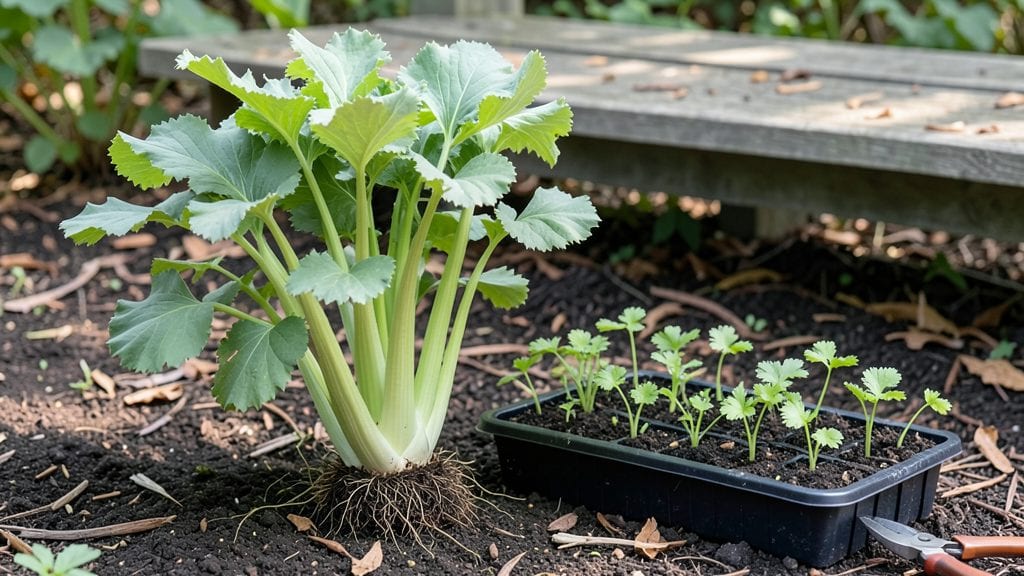
Here are celery planting tips that turn flimsy seedlings into sturdy, crisp stalks—no more guesswork, just raised beds or 5-gallon containers. 🌱 I’ve grown celery in everything from... disappointment always comes down to moisture, fertility, and drainage.
The trick is mimicking celery’s natural swampy habitat: keep soil consistently damp (not soggy) and rich with compost. Plant seeds just ¼ inch deep in well-draining mix, spaced 6 inches apart—celery hates competition. Direct-sow in spring after frost or start indoors 10-12 weeks before last frost for fall harvests.
📚 In This Guide
- What you need
- Instructions
- Tips and common mistakes
- Wrapping up and next steps
What you need
- ● Celery seeds or seedlings: Seeds: 1 packet (~1,000 seeds) for direct sowing
- ● OR 6–12 healthy seedlings (check for sturdy stems and vibrant leaves)
- ● Containers or garden bed: Containers: 12–18" deep pots (minimum 2–3 per plant) with drainage holes
- ● OR a well-draining garden bed (full sun, 6+ hours/day)
- ● High-quality potting mix: 1 bag (50 lbs) of organic, peat-free mix (e.g., 60% compost, 30% perlite, 10% vermiculite)
- ● Pro tip: Amend garden soil with compost (2–3 inches) if planting outdoors 🌡️
- ● Fertilizer: Balanced organic fertilizer (10-10-10 or 5-5-5) or compost tea
- ● Slow-release granules (1 tbsp per plant at planting)
- ● Watering supplies: Watering can or drip irrigation system
- ● Spray bottle (for seedlings)
- ● Mulch: Straw or shredded leaves (2–3 inches thick) to retain moisture
- ● Plant markers (to track varieties)
- ● Row covers (for frost protection or pest deterrence)
- ● Epsom salt (1 tbsp per gallon of water, monthly for magnesium boost)
- ● pH test kit (ideal soil pH: 6.0–6.8)
- ● Trellis or stakes (if growing tall varieties like Utah Mammoth)
How to plant celery for year-round harvests
Celery thrives when you master its soil needs—here's how to create the perfect conditions.
🌱 Step 1: Prepare the Soil with Organic Matter
Celery demands rich, moisture-retentive soil with pH 6.0-7.0. Start by amending your garden bed with 3 inches of compost mixed into the top 6 inches of soil. I like to work in aged manure (like cow or horse) for extra nutrients—this plant is a heavy feeder. The goal is soil that holds moisture like a damp sponge but still drains freely.
Test your soil's texture by squeezing a handful. If it crumbles easily, you're ready. If it forms a tight clump, add more organic matter. Avoid fresh manure—it can burn tender celery roots. Work the amendments in 2-3 weeks before planting so the soil stabilizes and microbes break down the materials.
💧 Step 2: Plant Transplants at the Right Depth
Celery grows best from 4-6 week old transplants (not seeds) because it has a long growing season. Plant them 12-18 inches apart in rows 18-24 inches apart—this gives their broad leaves room to spread without competing. Dig a hole just deep enough to cover the root ball completely but no deeper.
Press the soil gently around the base to eliminate air pockets, then water deeply to settle everything. The key here is even moisture—celery hates dry soil but also can't tolerate soggy roots. You'll know you've done it right when the soil surface looks slightly damp but not glistening. Mulch with 2 inches of straw immediately after planting to lock in moisture.
☀️ Step 3: Provide Consistent Moisture and Partial Shade
Celery needs 1-1.5 inches of water per week, but never let the soil dry out completely. I water mine every 2-3 days in hot weather, checking by sticking my finger 1 inch deep—if it feels dry, it's time. The secret to crisp stalks is even moisture. Uneven watering causes bitter, stringy celery.
While celery tolerates partial shade, it still needs 4-6 hours of morning sun for best growth. In hot climates, afternoon shade prevents bolting. You'll see the difference when leaves stay deep green and upright rather than yellowing or wilting. If your garden gets intense afternoon sun, plant near taller crops that provide natural shade.
✂️ Step 4: Harvest and Maintain for Continuous Growth
Start harvesting outer stalks when they reach 12-15 inches tall, cutting them at the base with clean scissors. This encourages the center stalks to thicken. Never take more than one-third of the plant at once—celery grows slowly, and aggressive harvesting stresses it. You'll notice new growth within 5-7 days after cutting.
For year-round success, succession plant every 3-4 weeks in warm climates. In cooler areas, extend the season by covering plants with floating row covers when temperatures dip below 45°F. The goal is to keep soil temperatures above 50°F—celery grows poorly in cold soil. With proper care, you'll harvest crisp stalks for 8-10 months straight.
Tips & tricks for perfect celery planting
Real talk: I've planted celery dozens of times, and these tricks cut my failures by half. The difference between bitter, stringy stalks and crisp, flavorful harvests often comes down to these soil and timing details.
The pH Factor: Test your soil's pH before planting—celery demands that 6.0-7.0 range. If your soil runs acidic, add 1-2 cups of garden lime per 100 square feet 2-3 months before planting. I use a simple soil test kit from the garden center—it's the only way to know for sure. The right pH prevents nutrient deficiencies that cause yellowing leaves and poor growth. For a quick fix, you can also work in wood ash (sparingly) to raise pH slightly, but test first.
Timing Secret for Transplants: Those 4-6 week old transplants are critical—any younger, and they're too delicate to handle transplant shock. Look for sturdy plants with 3-4 true leaves that don't wilt when gently tugged. I always harden off my seedlings for 7-10 days before planting by placing them outside in gradually increasing sunlight. This toughens them up so they can handle the shock of being moved to your garden. Plant on a cool, overcast day to reduce stress further.
Soil Texture Test: The squeeze test is non-negotiable. After amending with compost and aged manure, grab a handful of soil and squeeze it gently. If it crumbles easily when you release pressure, you're golden. If it forms a tight clump that holds its shape, you need more organic matter. I've ruined celery crops by skipping this step—don't make my mistake! The ideal soil should feel like a damp sponge, not concrete.
Harvesting Strategy: When harvesting those 12-15 inch stalks, always cut at the base with clean scissors—not your fingers! This prevents disease from dirty hands. I like to harvest on a cloudy morning when the plants are well-hydrated. After cutting, leave the plant with at least one-third of its stalks remaining—this ensures continuous growth. You'll notice new shoots emerging within 5-7 days, proving the plant isn't stressed.
Pro Tips for Celery Planting Tips
- Real talk: I've planted celery dozens of times, and these tricks cut my failures by half.
- The pH Factor: Test your soil's pH before planting—celery demands that 6.0-7.0 range.
- Timing Secret for Transplants: Those 4-6 week old transplants are critical—any younger, and they're too delicate to handle transplant shock.
Frequently asked questions
Got questions about growing celery? You're not alone!
Here are answers to the most common celery planting dilemmas—whether you're a first-timer or a seasoned green thumb looking to troubleshoot.
When is the best time to plant celery?
Celery thrives in cool weather, so plant seeds indoors 10–12 weeks before the last frost (early spring) or directly outdoors in late spring to early summer after soil temps drop below 75°F. In warm climates, opt for fall planting for a winter harvest. Avoid planting in hot, dry soil—celery hates stress!
How long does it take for celery to grow from seed?
Patience is key! Celery seeds germinate slowly (14–30 days) and take 100–160 days total to mature. For faster results, start with transplants (6–8 weeks to harvest). Keep soil consistently moist and mulch to speed up growth—celery’s roots need time to bulk up!
Why is my celery turning bitter or woody?
Bitter, tough celery often stems from heat stress, overcrowding, or uneven watering. To fix it:
- Harvest early (before stalks thicken).
- Space plants 12–18 inches apart.
- Water deeply 1–2 inches per week (celery loves humidity!).
- Use shade cloth in summer to keep temps mild.
Can I grow celery in containers or small spaces?
Celery adapts well to 5-gallon pots or deeper containers (at least 12 inches deep). Use a soil mix rich in organic matter (like compost + perlite) and fertilize lightly every 3–4 weeks. Dwarf varieties like ‘Utah’ or ‘Golden Self-Blanching’ are perfect for small gardens or balconies.
What can I plant alongside celery to improve growth?
Celery plays nicely with:
- Companion plants: Beets, onions, lettuce, or cabbage (they share similar water needs).
- Avoid: Parsley or celery near beans or pole beans (they compete for nutrients).
How do I overwinter celery in cold climates?
Celery isn’t frost-hardy, but you can extend the season with:
- Harvest before hard frosts (or cover with row fabric).
- Grow in containers and move indoors near a sunny window.
- Try winter varieties like ‘Tall Utah’ or ‘Winter Pasca’ for late fall starts.
Wrapping up and next steps
Growing celery is a rewarding journey—once you master the three soil secrets (drainage, organic matter, and pH balance), you’ll enjoy crisp, homegrown stalks year-round! 🌱 Remember to start indoors, harden off seedlings, and give them patience and consistent care.
With these tips, you’re well on your way to a thriving garden.
Ready to dig in? Grab your gloves, prep that soil, and plant your first seeds today! Your future salads will thank you—literally. 🥗✨