
Pests
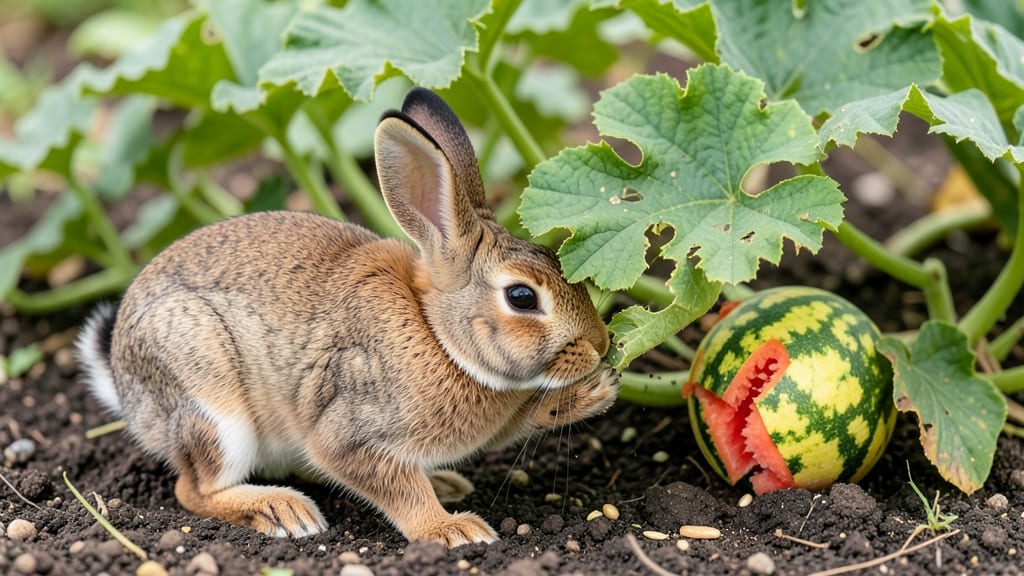
Rabbits do eat watermelon plants, targeting leaves, stems, and young vines due to their tender, nutrient-rich growth. Without protection, they can devastate crops within hours, especially in early planting stages or when fencing is absent.
Watermelon plants are a prime target for rabbits because their young shoots and leaves contain high moisture and easy-to-digest nutrients. 🌱 These garden pests often strike during dawn or dusk when they feel safest, and their appetite for tender growth can strip a vine bare in just a few hours.
The real damage happens early in the season when plants are most vulnerable—once established, watermelons become less appealing as the foliage toughens.
What makes this especially frustrating is how quickly rabbits can turn a promising crop into a loss. Unlike deer or squirrels, rabbits don't just nibble—they systematically remove entire sections of plant, leaving behind jagged edges that stunt growth.
I've seen entire watermelon patches reduced to skeletal remains overnight, particularly in areas where rabbits have easy access to garden edges or wooded areas. The key to protecting your harvest lies in understanding their behavior and acting before they get started.
💡 In This Article
- Why Rabbits Target Watermelon Plants
- Effective Rabbit-Proofing Strategies for Watermelon Gardens
Why rabbits target watermelon plants
Here's what's actually happening in your garden: rabbits are drawn to watermelon foliage because it's a nutritional powerhouse for them. Young watermelon plants contain up to 90% moisture and 15-20% digestible fiber, making them an ideal snack.
The soft, tender leaves provide easy chewing with minimal energy expenditure—critical for rabbits who spend 80% of their day grazing to maintain their high metabolic rate.
Their digestive systems are perfectly adapted to break down fibrous plant material efficiently, which is why they prefer young, succulent growth over mature, woody stems.
The key factor is the plant's growth stage.
New shoots and leaves have thinner cell walls and higher nitrogen content, which rabbits can process more easily than tougher, older foliage. 🌱 Think of it like comparing a fresh carrot to a dried-out one—one is effortless to chew, while the other requires real work.
This preference explains why gardeners often see complete defoliation of young watermelon plants, while established vines with thicker stems get only superficial damage. The damage pattern is so distinctive that wildlife experts use it to identify rabbit activity in agricultural areas.
Seasonal behavior plays a huge role too. Rabbits are most active during spring and summer months when watermelon plants are actively growing, and temperatures are mild (50-75°F). Their foraging instincts kick into high gear during dawn and dusk when they feel safest from predators.
This is why you'll often see the most damage right after planting or during the first 6-8 weeks of growth when the plants are most vulnerable. The combination of high moisture content in the plants and the rabbits' natural crepuscular feeding habits creates a perfect storm for garden destruction.
What most people don't realize is how selective rabbits can be about their meals. While they'll eat watermelon fruit when available, they actually prefer the leaves and stems because they're easier to digest.
The fruit's thicker rind requires more chewing effort, while the foliage provides instant nutrition. 🐇 This explains why you might see watermelon plants completely stripped of leaves while nearby fruits remain untouched.
The science behind this involves their digestive system's need for constant fiber intake to maintain gut health—something young watermelon plants provide in abundance.
Consider these key factors when assessing your garden's vulnerability:
- Plant age: Seedlings (2-4 weeks) are most at risk due to tender growth
- Moisture levels: Well-watered plants are more appealing than drought-stressed ones
- Garden location: Areas near wooded edges or brush piles see 30-50% more rabbit activity
- Time of day: Dawn/dusk damage indicates rabbit activity, while daytime chewing suggests other pests
The most critical window for protection is the first 60 days of plant growth when the foliage is most vulnerable. After this period, the plants develop thicker stems and more fibrous leaves that rabbits find less appealing.
Understanding this growth pattern helps gardeners focus their protective efforts during the most critical periods. 💫