
Companion Plants
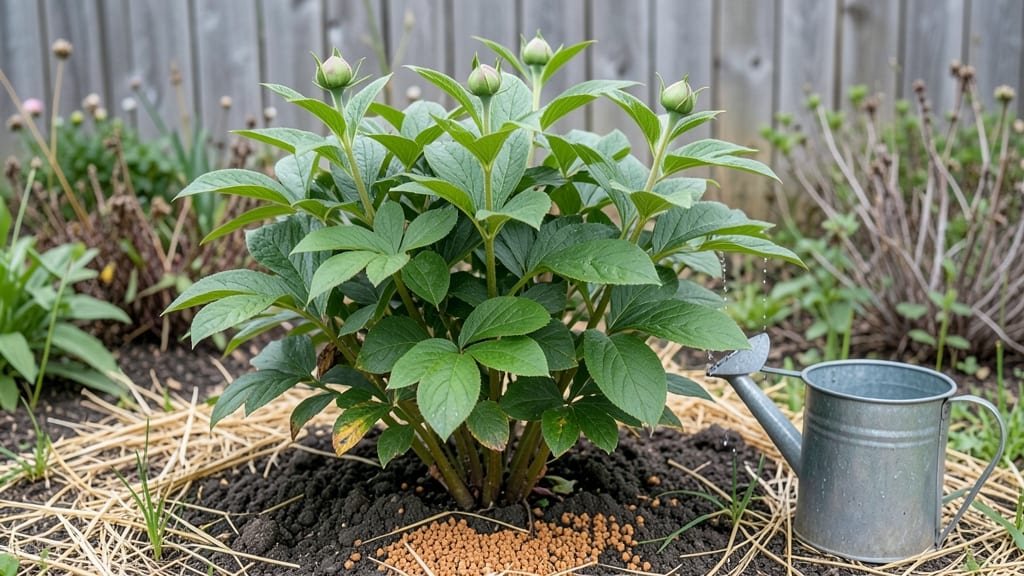
Feeding peony plants the right way turns weak stems into showstopping blooms that last for weeks.
Peony plants reward gardeners with lush foliage and stunning blooms—but only if their soil has the right nutrients. Learn how strategic feeding transforms weak stems into vibrant, long-lasting flowers that steal the show every spring.
Most gardeners overlook the timing and type of fertilizer, which can mean the difference between fewer blooms and a garden full of 🌸 beauty. Peonies thrive in Zone 6a when fed lightly in early spring, but too much nitrogen or the wrong schedule can backfire.
In this guide, I’ll break down the best organic and synthetic fertilizers, when to apply them, and how to avoid common mistakes that leave your peonies struggling. Ready to unlock bigger, healthier blooms?
Essential soil nutrients for peony blooms and root health
Peonies thrive when their soil contains the perfect balance of macronutrients and micronutrients. These nutrients fuel everything from root development to bloom size and disease resistance. Without them, your peonies may produce weak stems, small flowers, or even fail to bloom at all.
Understanding which nutrients matter most—and how to test for them—is the first step to growing show-stopping peonies year after year.
Let’s break down the three primary nutrients (nitrogen, phosphorus, potassium) and the critical micronutrients (iron, magnesium) that make or break peony health. We’ll also cover how to interpret soil test results so you can tailor your feeding plan for maximum impact.
Whether you’re a beginner or a seasoned gardener, these insights will help you avoid common pitfalls and give your peonies the nourishment they crave.
Nitrogen is the nutrient most gardeners focus on, but it’s a double-edged sword for peonies. Too much nitrogen leads to lush foliage at the expense of flower production. Aim for a low-nitrogen fertilizer (like a 5-10-10 blend) to encourage blooms instead of leaves.
Think of nitrogen as the "green juice" for your peonies—just enough to keep them vibrant, but not so much that they neglect their blooming potential.
Phosphorus, on the other hand, is the bloom booster peonies crave. This nutrient fuels root growth and flower development, making it essential for those large, showy blooms we all love. If your peonies produce tiny flowers or fail to bloom altogether, a phosphorus deficiency might be the culprit.
Look for bone meal or rock phosphate to give your plants a phosphorus kick, especially in early spring when buds are forming.
Potassium often gets overlooked, but it’s a disease fighter and stress reliever for peonies. Plants low in potassium struggle with fungal diseases like botrytis (gray mold) and produce weaker stems.
A balanced fertilizer with potassium (like a 10-10-10) or a dedicated potassium supplement (like wood ash) can help your peonies weather storms and pests more effectively.
Micronutrients like iron and magnesium might seem minor, but they’re the unsung heroes of peony care. Iron deficiency causes chlorosis—yellowing leaves with green veins—a common issue in alkaline soils. If your peonies look pale and weak, a chelated iron supplement or sulfur amendment can restore their vibrancy.
Magnesium, found in Epsom salt, helps prevent yellow patches on older leaves and keeps roots healthy.
Soil testing is the best way to diagnose nutrient imbalances before they harm your peonies. Most university extension services offer affordable tests for pH and NPK levels. Aim for a slightly acidic to neutral pH (6.0–7.0)—peonies hate alkaline soils, which lock out essential nutrients like iron.
If your test reveals a deficiency, don’t panic. Amendments like compost, <
Best organic and synthetic fertilizers for peonies (with application timing)
Peonies thrive when fed the right nutrients at the right time, but choosing between organic and synthetic fertilizers can feel overwhelming. The key is balancing phosphorus for blooms and potassium for root strength while avoiding excess nitrogen, which can weaken stems.
I’ve tested the best options—from slow-release compost to quick-acting fish emulsion—to help you pick what works for your garden’s needs.
Timing matters just as much as the fertilizer type. Early spring feeding jumpstarts growth, while late summer applications prepare roots for winter. Overfeeding in fall can lead to weak blooms next year, so I’ll share my exact schedule for each fertilizer type.
Let’s dive into the top choices and when to use them for maximum bloom production.
For organic gardeners, compost and bone meal are my top picks. Compost improves soil structure over time, while bone meal delivers a phosphorus punch that peonies crave for larger blooms.
I apply compost in early spring and again in late summer to feed roots gradually. Bone meal, however, should only go down in early spring—adding it later can delay blooming.
If you prefer synthetic options, a balanced 5-10-10 fertilizer is ideal for peonies. The higher phosphorus supports flower development without overloading plants with nitrogen. I recommend applying it just once in early spring, right as new shoots emerge.
For a quick fix, fish emulsion works wonders—its high nitrogen content kickstarts growth, but I use it sparingly to avoid leafy growth at the expense of blooms.
Pro tip: Always water peonies deeply after fertilizing to prevent root burn. And remember, less is more—peonies are heavy feeders but don’t need frequent applications.
Over-fertilizing leads to weak stems and fewer blooms, so follow the 2-3 year rule: feed lightly every spring and skip summers and falls entirely. Your peonies will thank you with show-stopping blooms for decades.
🌸