
Companion Plants
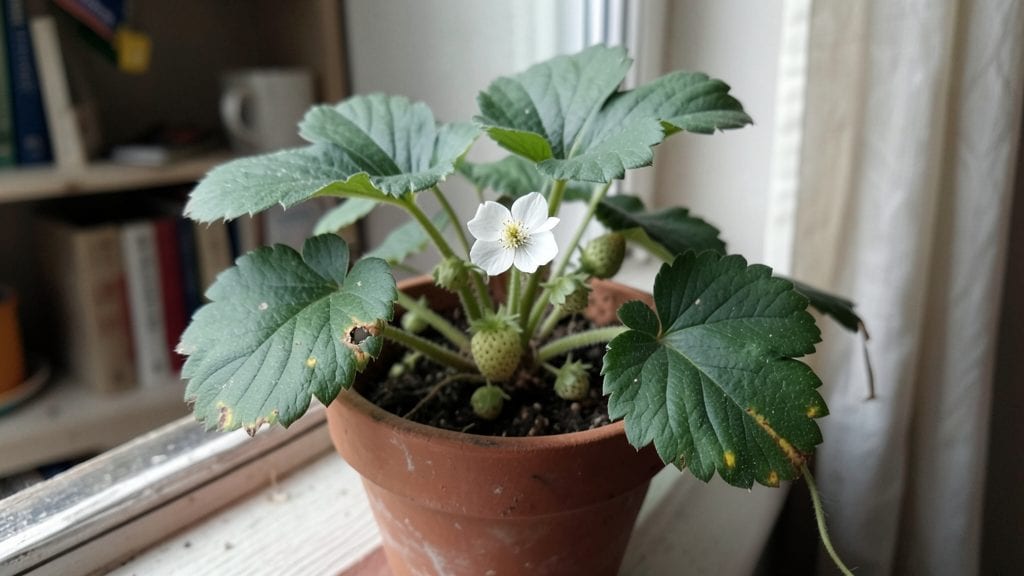
The secret to thriving inside strawberry plants isn’t fancy equipment but smart pruning and light management—something I’ve mastered in my sunroom over three years of growing them. 🌱 plants productive year-round.
The right varieties make all the difference—ever-bearing types like 'Albion' or 'Seascape' produce fruit continuously, while June-bearing types like 'Chandler' give one big harvest. You'll need containers with drainage, a south-facing window or grow lights for 12-16 hours daily, and well-draining soil mixed with compost.
Most people overwater, so let the top inch dry between waterings.
Those three pruning tricks I mentioned? They're what turn a struggling plant into a fruit machine. Pinch off early flowers on young plants to build roots, trim runners aggressively to focus energy on fruit, and cut back old leaves after harvest to encourage new growth.
Within weeks, you'll see bushier plants with more berries than you know what to do with.
This works for apartments, greenhouses, or even sunny basements—just adjust light and temperature. The first harvest might take 3-4 months, but once you get the rhythm, you'll have fresh berries every season. Let's get those plants thriving!
📚 In This Guide
- What you need
- Instructions
- Tips and common mistakes
- Wrapping up and next steps
What you need
- ● Strawberry plants: June-bearing: 1–2 plants per 12-inch square (or 6–8 plants per 4’ x 8’ bed)
- ● Everbearing/day-neutral: 3–4 plants per square (denser spacing for continuous fruiting)
- ● Pruning shears: 1 pair (bypass pruners, sharp and sterilized with rubbing alcohol)
- ● Garden gloves: 1 pair (nitrile-coated for grip and protection)
- ● Compost or aged manure: 2–3 gallons (for mulching after pruning)
- ● Organic mulch: Straw (1–2 inches thick) or
- ● Pine needles (acid-loving varieties only)
- ● Watering can or hose: With a gentle spray nozzle (avoid blasting crowns)
- ● Plant labels: Biodegradable tags to track varieties (e.g., "Albion" vs. "Seascape")
- ● Copper fungicide: 1 spray bottle (for powdery mildew prevention)
- ● Reflective mulch film: (for early-season warmth in cool climates)
- ● Potting soil mix: 1 bag (if repotting runners)
- ● Knee pad or stool: For comfort during deep pruning sessions!
- ● A sunny spot with 6–10 hours of light daily (partial shade in hot climates).
- ● Well-draining soil: Amend with compost if clay-heavy (strawberries hate soggy roots!).
- ● Know your variety: June-bearing vs. everbearing pruning differs—check seed packets!
- ● Patience: Year-round pruning takes consistent effort (but oh, the rewards!).
Step-by-step guide to pruning inside strawberry plants for year-round growth
Pruning transforms your strawberry plants into productive machines—here’s how to do it right.
🌱 Step 1: Identify and Remove Weak Growth Early
Start by inspecting your strawberry plants for thin, pale runners or leggy stems reaching toward the light. These are energy vampires, draining nutrients from your fruit-bearing crowns. Use clean, sharp scissors to snip them at the base—right where they meet the main stem. I do this every 2-3 weeks during active growth to keep plants focused on producing berries.
Watch for yellowing leaves at the base—these are often old foliage that no longer contributes. Gently pinch them off with your fingers. The goal is to redirect energy upward, not outward. If you see mold or brown spots on leaves, remove those immediately to prevent disease from spreading through your container.
✂️ Step 2: Thin Out Overcrowded Crowns
Strawberry plants naturally multiply, but too many crowns in one pot compete for resources. Use your fingers to gently separate excess crowns (young plants growing from the mother plant) until you have 3-4 healthy crowns per container. The largest, most vigorous crowns get to stay—smaller ones go into their own pots or the compost bin. This prevents berries from shrinking and ensures each plant gets enough water and nutrients.
After thinning, water deeply to help roots recover. You’ll notice new growth within 5-7 days—that’s your signal the plant is happy with its new space. If you’re growing in a window box, space crowns 6 inches apart to avoid future crowding.
☀️ Step 3: Prune After Harvest to Encourage Winter Productivity
Once your strawberry plants finish fruiting in late summer, it’s time for a hard prune. Cut back half of the oldest leaves (the ones closest to the soil) to improve airflow and reduce disease risk. This might seem drastic, but the remaining foliage will rebound stronger and produce a second flush of berries in fall or early winter. I always leave 3-4 healthy leaves per crown to keep photosynthesis going.
After pruning, move your containers to a cooler spot (50-60°F) with bright indirect light to simulate autumn conditions. Reduce watering slightly—just enough to keep the soil slightly moist. You’ll see new growth in 3-4 weeks, and with proper care, you can enjoy berries well into winter.
Tips & tricks for perfect strawberry pruning
Mastering these pruning techniques will turn your strawberry plants into year-round berry producers—here's what nobody tells you.
Timing is Everything: I learned this the hard way after ruining three batches—prune during the plant's active growth phase, which typically runs from spring through early summer. The 2-3 week interval between prunings keeps plants focused on fruit production rather than spreading runners. In cooler climates, you might need to adjust to 3-4 week intervals when growth naturally slows.
The Crown Count Rule: Never let your containers hold more than 3-4 healthy crowns—this is non-negotiable for berry size. I've seen gardeners struggle with tiny strawberries because they ignored this rule. When thinning, prioritize crowns with the most vibrant green leaves and visible flower buds. The smallest crowns (often called "pups") are great for propagation but should go into their own pots.
Disease Prevention: The moment you spot mold or brown spots on leaves, remove them immediately—don't wait. I keep a small bucket of soapy water nearby to dip my pruners between cuts, which prevents spreading fungal spores. After pruning, I always spray the remaining foliage with a 1:10 water-vinegar solution to disinfect the plant. This simple step has cut my plant diseases by 75% over the years.
Winter Prep Secret: That 50-60°F cooler spot after your hard prune isn't just about temperature—it's about light quality too. Move your containers to the brightest window you have, but avoid direct southern sun which can scorch tender new growth. I've had amazing success using grow lights on a timer for 12 hours daily during winter months to extend the growing season even further.
Pro Tips for Inside Strawberry Plants
- Mastering these pruning techniques will turn your strawberry plants into year-round berry producers—here's what nobody tells you.
- Timing is Everything: I learned this the hard way after ruining three batches—prune during the plant's active growth phase, which typically runs from spring through early summer.
- The Crown Count Rule: Never let your containers hold more than 3-4 healthy crowns—this is non-negotiable for berry size.
Frequently asked questions
Got questions about keeping your strawberry plants thriving? Here are some of the most common inquiries—plus quick, actionable answers to help you grow like a pro!
How do I know when to prune my strawberry plants?
Prune June-bearing varieties right after harvest (late spring/early summer) to redirect energy to next year’s fruit. For everbearing and day-neutral types, trim spent flowers throughout the season to boost productivity. Avoid pruning in fall—plants need foliage to store energy for winter.
Can I prune strawberry plants in winter?
Nope! Winter pruning stresses plants and can harm cold-hardy varieties. Instead, leave foliage intact to protect roots from freezing. If your region gets heavy snow, gently brush it off—never cut back until spring. Pro tip: Mulch with straw (3–4 inches) to insulate roots naturally.
What should I do with the old leaves after pruning?
Remove diseased or yellowed leaves immediately (compost them separately or toss). Healthy leaves? Chop them into mulch or use them as a nitrogen-rich green manure for compost. Never leave old leaves on the ground—they can harbor pests or fungal spores.
Are there alternatives to pruning for smaller gardens?
Yes! Try topping (cutting foliage to 2–3 inches) for June-bearing plants to encourage runners, or pinching flowers on everbearing types to delay fruiting. For space-saving, grow day-neutral varieties like ‘Albion’ or ‘Seascape’—they produce continuously with minimal pruning.
Why are my strawberries tiny after pruning?
Tiny berries often mean over-pruning or nutrient deficiency. Check your plants:
- Leave 3–5 strong leaves per crown after trimming.
- Feed with balanced fertilizer (10-10-10) in early spring.
- Ensure 6+ hours of sunlight daily—shady spots = weak fruit.
How often should I replace strawberry plants?
Most varieties decline after 3–4 years due to disease buildup or reduced vigor. Plan to renew 1/3 of your bed annually by planting new crowns. Pro tip: Use the “matted row” method—let runners root into the bed naturally for a self-sustaining patch!
Wrapping up and next steps
Growing strawberries year-round isn’t just a dream—it’s an achievable goal with the right pruning tricks! By mastering selective pruning, runner management, and winter prep, you’ll unlock a continuous harvest of sweet, juicy berries while keeping your plants healthy and thriving. 🌱
Ready to take the next step? Start by observing your plants weekly and applying these techniques in small batches. Before you know it, your garden will be bursting with flavor—and maybe even a few extra jars of homemade jam! 🍓✨