Shrubs
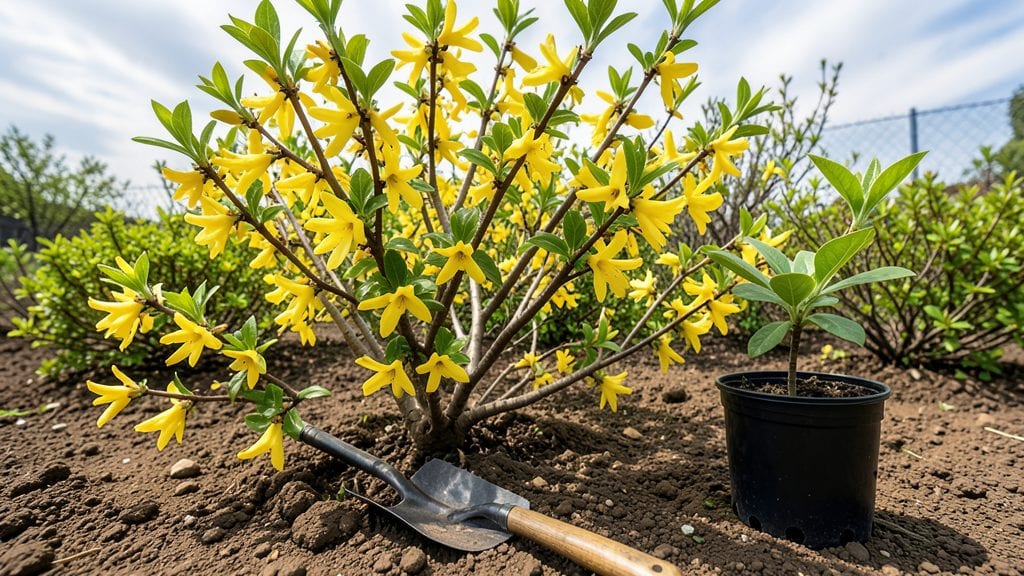
Mastering the forsythia planting distance ensures your shrubs burst into cheerful yellow blooms each spring—no overcrowding, no blocked sunlight. I learned this the hard way when my first two plants fought for space, resulting in fewer flowers and leggy branches.
The secret lies in giving them room to stretch their roots and branches without competing for nutrients.
For most forsythia varieties, 6 to 10 feet apart is ideal, depending on the mature size of your specific cultivar. Smaller types like Forsythia viridissima can handle 5 feet, while standard varieties need the full 8 to 10 feet to thrive.
Plant in full sun—at least 6 hours of direct light daily—and well-draining soil to encourage strong root systems and abundant blooms.
When spaced correctly, your forsythia will reward you with dense, bushy growth and showstopping spring color that lasts for weeks. The key is balancing airflow (to prevent disease) and sunlight (for maximum flowering). Over time, you’ll notice healthier stems, fewer pruning needs, and blooms that arrive earlier each year.
This spacing works for both hedges and standalone shrubs, though hedges may need slightly closer planting—4 to 6 feet apart—if you’re aiming for a uniform look. Just remember: patience pays off. Forsythia planted with care can live for decades, becoming a cherished part of your landscape.
📚 In This Guide
- What you need
- Instructions
- Tips and common mistakes
- Wrapping up and next steps
What you need
- ● Forsythia shrubs: 3–5 healthy nursery-grown plants (depending on desired coverage). Choose Forsythia x intermedia or Forsythia ovata for best results.
- ● Shovel or trowel: A 6-inch garden trowel for small holes or a round-point shovel for larger plantings.
- ● Measuring tape or string & stakes: To mark spacing (3–6 feet apart for mature size, 4–5 feet for standard spacing).
- ● Compost or well-aged manure: 2–3 gallons per plant to enrich soil.
- ○ Mulch (optional but recommended): 2–3 inches of pine bark, shredded leaves, or straw to retain moisture.
- ● Watering can or hose with a gentle spray nozzle: For post-planting hydration.
- ● Garden gloves: To protect hands from thorns and soil.
- ● Pruning shears: For trimming dead branches before planting.
- ● Soil test kit: To check pH (forsythia prefers slightly acidic to neutral, 6.0–7.0).
- ● Fertilizer (balanced 10-10-10 or slow-release): 1–2 tablespoons per plant for extra nutrients.
- ● Plant support stakes (if needed): For young or top-heavy varieties.
Instructions for planting forsythia with optimal spacing
Here’s how to plant these vibrant shrubs for maximum blooms and long-term health.
Choose the Right Planting Location
Forsythia thrives in full sun—select a spot that receives at least 6 hours of direct sunlight daily. The more sun, the more abundant the yellow blooms in early spring. Avoid low-lying areas where cold air settles, as forsythia is sensitive to late frosts that can damage flowers.
Test the site by observing sunlight patterns for a week before planting. If your yard has partial shade, choose a location where the shrub will receive the most sun possible. The ideal spot balances warmth for blooms and protection from harsh afternoon winds.
Dig Holes with Proper Dimensions
Dig planting holes twice as wide as the forsythia’s root ball but only as deep as the container it came in. This encourages roots to spread horizontally rather than settling too deeply, which can lead to poor stability. Use a shovel to loosen the soil at the bottom of the hole to improve drainage.
If your soil is heavy clay or compacted, mix in 2-3 inches of compost into the hole to improve aeration. Avoid amending the entire planting area unless your soil is extremely poor—forsythia prefers well-draining soil but doesn’t need overly rich conditions.
Space Shrubs According to Mature Size
For standard forsythia varieties, plant shrubs 8-10 feet apart to allow for their mature width of 10-12 feet. This spacing ensures they don’t crowd each other, which can reduce flowering and increase disease risk. If you’re planting a hedge, space them 6-8 feet apart for a denser look.
Sketch a rough layout before digging to visualize how the shrubs will fill out over time. Forsythia grows quickly, so proper spacing now prevents pruning headaches later. If your yard is small, consider dwarf varieties like Forsythia viridissima, which mature at 5-6 feet and can be planted 5-6 feet apart.
Plant and Water for Immediate Stability
Place the forsythia in the hole so the top of the root ball sits 1-2 inches above ground level. This prevents soil from settling and suffocating the roots over time. Backfill with native soil, pressing gently to remove air pockets but not compacting too firmly.
Water deeply right after planting to settle the soil and eliminate air gaps. The first watering should deliver 1-2 gallons per shrub, enough to soak the root zone to a depth of 12 inches. Mulch around the base with 2-3 inches of organic mulch, keeping it 3-4 inches away from the trunk to prevent rot.
Monitor Early Growth and Adjust as Needed
In the first growing season, forsythia focuses on root establishment rather than flowering. Water once a week if rainfall is minimal, aiming for 1 inch of water per week. Overwatering can lead to root rot, so always check soil moisture—it should be dry 1-2 inches below the surface before watering again.
Fertilize lightly in early spring with a balanced, slow-release fertilizer (10-10-10) to support new growth. Avoid heavy feeding, as forsythia blooms on old wood—too much nitrogen can reduce flower production. Prune immediately after blooming to shape the shrub, but never cut back into old wood, as this removes next year’s flower buds.
Tips & tricks for perfect forsythia planting spacing
Proper spacing transforms forsythia from a mere shrub into a stunning landscape feature. These insights will help you maximize blooms and avoid common planting pitfalls.
Sunlight Strategy: While Step 1 emphasizes full sun, I recommend observing your yard’s sunlight patterns for a full week before planting. Early morning sun is often gentler, while harsh afternoon rays can stress new plants. Position forsythia to receive morning sun and afternoon shade if your climate gets extremely hot—this balances bloom intensity with plant health.
Root Ball Depth Precision: The instructions specify planting with the root ball sitting 1-2 inches above ground level, but I’ve found this becomes critical when planting multiple shrubs. Use a level to ensure each plant sits at exactly the same height—uneven planting can cause water pooling around some plants while others dry out. This small step prevents future growth inconsistencies.
Spacing Visualization Tool: Before digging, I create a simple sketch of my planting area using graph paper where each square represents 1 foot. This helps me visualize how the 8-10 foot spacing will look when mature. For hedges, I mark the 6-8 foot spacing with stakes first to ensure straight lines. This pre-planning prevents the common mistake of planting too close and having to prune aggressively later.
Mulch Application Technique: The 2-3 inches of organic mulch specified in Step 4 should be applied in two stages. First, spread 1 inch immediately after planting to protect new roots. Then, add the remaining 1-2 inches once the plant shows signs of new growth in spring. This two-step approach prevents mulch from smothering tender new roots while still providing moisture retention.
Pro Tips for Forsythia Planting Distance
- Proper spacing transforms forsythia from a mere shrub into a stunning landscape feature. These insights will help you...
- Sunlight Strategy: While Step 1 emphasizes full sun, I recommend observing your yard’s sunlight patterns for a full w...
- Root Ball Depth Precision: The instructions specify planting with the root ball sitting 1-2 inches above ground level...
Frequently asked questions
Got questions about planting forsythia the right way?
Here are some of the most common concerns—plus expert answers to help you grow a stunning, healthy shrub border.
How close can I plant forsythia shrubs?
For optimal growth and airflow, space forsythia 3 to 6 feet apart, depending on the variety. Dwarf types (like Forsythia viridissima) can go as close as 2–3 feet, while standard shrubs need 4–6 feet. Crowding leads to poor blooms and disease—so give them room to shine!
Can I plant forsythia too far apart?
While spacing is flexible, planting forsythia more than 8 feet apart can create gaps in your landscape. Aim for 4–6 feet for a dense, continuous hedge or border. If you love the look of solitude, consider pairing them with shorter perennials to fill the space.
What’s the best time of year to plant forsythia?
Plant forsythia in early spring or fall for the best results. Spring planting (after the last frost) gives roots time to establish before summer heat, while fall (6–8 weeks before frost) allows them to settle in before winter. Avoid planting in extreme heat or cold.
Can I plant forsythia near other shrubs or trees?
Forsythia thrives in full sun (6+ hours/day), so avoid planting under tall trees that cast shade. However, they can coexist with sun-loving companions like roses, lavender, or ornamental grasses. Just keep roots 3–4 feet away from aggressive spreaders like bamboo.
Why isn’t my forsythia blooming after planting?
Lack of blooms often means poor sunlight, overcrowding, or young age. Forsythia blooms on old wood, so it may take 2–3 years to show off. Ensure it gets full sun, prune lightly after flowering, and avoid heavy fertilizing—too much nitrogen reduces blooms!
Still stumped? Drop your question in the comments—we’re happy to help your forsythia flourish!
Wrapping up and next steps
Planting forsythia with the right spacing ensures vibrant blooms and healthy growth—so don’t overlook this sunshine-loving shrub’s needs! 🌸 Whether you’re lining a border or adding color to your yard, proper distance (typically 3–6 feet) keeps air flowing and prevents overcrowding.
With the right prep, sunlight, and care, your forsythia will reward you with cheerful yellow bursts year after year.
Ready to transform your landscape? Grab your gloves and start digging—your future spring display is just a few feet away! 🌱 Next step: mark your planting spots and dig in!