Size
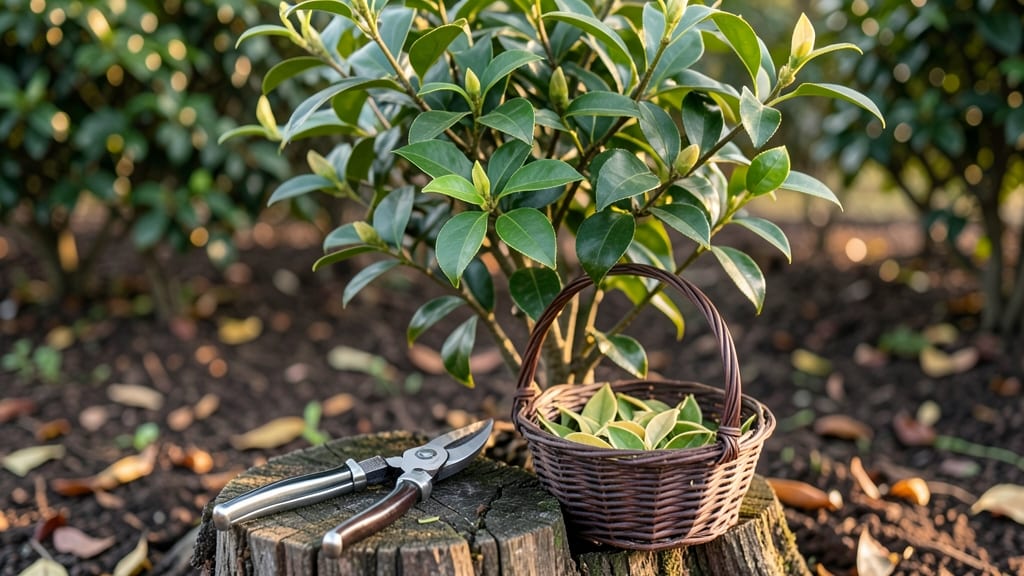
To grow a tea plant successfully, you'll need partial shade, well-draining acidic soil (pH 4.5–5.5), and consistent moisture, with ideal temperatures between 60–80°F. Start from seeds or cuttings, transplant after roots establish, and prune regularly to encourage bushy growth. Patience is key—harvestable leaves take 3–5 years for Camellia sinensis varieties.
Tea plants thrive in conditions that mimic their native subtropical environments, where humidity and gentle shade protect tender leaves. 🌿 The acidic soil requirement isn't just a preference—it prevents nutrient lockout from alkaline minerals, while consistent moisture keeps roots healthy without waterlogging.
Many gardeners swear by using pine bark mulch to maintain the right pH naturally. What's interesting is how these plants respond to seasonal changes: in cooler months, growth slows but the roots continue developing, storing energy for spring's new flush of leaves.
💡 In This Article
- Optimal Conditions for Tea Plant Growth
- Step-by-Step Tea Plant Cultivation Guide
Optimal conditions for tea plant growth
Tea plants, particularly Camellia sinensis, evolved in subtropical climates where they receive dappled sunlight—about 50-70% shade—to prevent leaf scorching while still capturing enough light for photosynthesis. The partial shade mimics their natural understory habitat in forests.
Direct sun exposure can raise leaf temperatures above 90°F, triggering stress responses that reduce growth and flavor development.
This is why tea plants in tropical zones (like Sri Lanka) often grow under taller canopy trees, while temperate varieties (like those in Japan) adapt to 30-50% shade during peak summer months.
The acidic soil requirement (pH 4.5-5.5) isn't just about preference—it's about chemistry. At these pH levels, essential nutrients like iron, manganese, and phosphorus remain soluble and available to the plant's roots.
In alkaline soils (pH 7+), these nutrients bind to soil particles, creating deficiencies that manifest as yellowing leaves or stunted growth.
What's fascinating is how tea plants actually acidify their rhizosphere (the soil zone around roots) by exuding organic acids, which helps maintain this ideal pH even in marginally neutral soils.
This is why gardeners often use pine needles, oak leaves, or sphagnum peat as mulch—they slowly release organic acids as they decompose.
Temperature plays a dual role in tea plant development. While 60-80°F is the ideal range for active growth, the real magic happens at the cellular level. Photosynthesis in tea leaves peaks at 75°F, but the plant's enzymes responsible for flavor compound production (like catechins) thrive between 65-70°F.
This is why high-quality teas often come from regions with cool nights—it slows down metabolic processes, allowing for more complex flavor development. In tropical zones, tea plants grow year-round but with less flavor intensity compared to temperate climates where seasonal temperature fluctuations create more nuanced chemical profiles.
Humidity is another critical factor that often gets overlooked. Tea plants require 70-80% relative humidity to prevent leaf desiccation and maintain proper stomatal function (the tiny pores that regulate gas exchange).
In dry climates, you'll need to mist leaves daily or use humidity trays with sphagnum moss to replicate their natural foggy, coastal environments. The leaves themselves have a waxy cuticle that helps retain moisture, but this adaptation only works optimally within this humidity range.
What's interesting is how tea plants in mountainous regions (like Darjeeling) actually benefit from morning fog, which provides natural irrigation and reduces disease pressure from fungal spores.
Let's compare the growing zones more closely. Tropical varieties (like those in Assam, India) handle year-round warmth but require heavy rainfall (100+ inches annually) and consistent shade from other vegetation.
Temperate varieties (like Japanese matcha plants) can tolerate cooler winters (down to 20°F) but need protected microclimates during frost. The key difference lies in their growth cycles: tropical plants grow continuously, while temperate ones have distinct dormant periods that actually improve leaf quality.
This is why Darjeeling tea (grown in the Himalayan foothills) has such unique flavor characteristics—it benefits from both tropical warmth and temperate cooling effects.
One advanced technique worth mentioning is soil aeration. Tea plants have a fibrous root system that spreads widely but shallowly, making them particularly sensitive to compacted soil.
In containers, you'll want to use a mix that's 40% peat/sphagnum moss, 30% perlite or sand, and 30% compost to maintain proper aeration.
The roots need constant oxygen exchange to prevent root rot, which is why many commercial tea growers use raised beds with drip irrigation—it gives them precise control over both moisture and oxygen levels.
This level of care explains why homegrown tea plants often take longer to mature than their commercially grown counterparts.
The most rewarding aspect of growing tea plants is observing how these conditions work together to create the perfect leaf.
When all factors align—acidic soil, partial shade, proper humidity, and ideal temperatures—you'll see the leaves develop that distinctive dark green color with a slight bluish tint, a sign of optimal chlorophyll production.
The aroma alone, when you first crush a healthy leaf, is enough motivation to maintain these precise growing conditions. It's not just about growing a plant; it's about nurturing a complex biochemical process that will eventually become your morning cup of tea. 🌿