
Plants
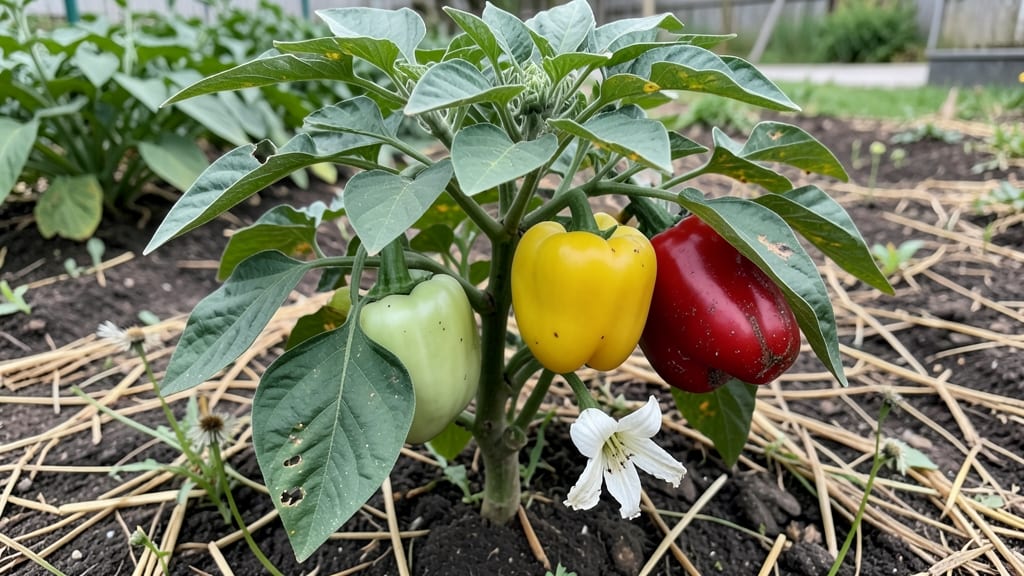
Identifying pepper plants comes down to three key details: leaf shape, spacing between branches, and how the fruit attaches to the stem. 🌱 I’ve spent years mistaking jalapeños for bell peppers in my garden—until I learned these simple tricks that make it foolproof.
The moment you spot the right leaf shape and stem structure, you’ll never second-guess your plants again.
Bell peppers have broad, heart-shaped leaves with smooth edges, while jalapeños and habaneros grow narrower, more pointed leaves with serrated edges. The spacing between branches also tells the story: bell peppers spread wider, while hot peppers stay bushier and tighter.
Even fruit attachment matters—bell peppers attach directly to the stem, while hot peppers often grow in clusters.
Once you recognize these patterns, you’ll spot the differences instantly, even with young seedlings. No more guessing whether that plant will turn into a mild snack or a fiery salsa ingredient. The confidence comes from knowing exactly what you’re growing before the first fruit even appears.
For tricky hybrids or rare varieties, plant ID apps like PictureThis or gardening forums can fill in the gaps. But when in doubt, snap a photo and ask an expert—most will confirm your guess within minutes. The key is starting with these visual clues before digging deeper.
Root Causes of Misidentification
Misidentifying pepper plants can happen for several reasons, often tied to their complex biology and the subtle (or not-so-subtle) differences between varieties. Understanding these causes helps gardeners and plant enthusiasts avoid costly mistakes—whether it’s confusing a bell pepper for a jalapeño or mistaking a pepper for a tomato.
Here’s why it happens, broken down by the most common culprits:
Pepper plants undergo dramatic changes as they mature, and young seedlings can look nothing like their adult selves. Many pepper varieties start with broad, rounded leaves similar to tomatoes or even basil, making them nearly indistinguishable until they develop their signature serrated edges or lobed shapes.
Why it matters:
- Leaf shape shifts: Early leaves may be smooth and heart-shaped, while mature leaves develop jagged edges (e.g., Capsicum annuum varieties like jalapeños).
- Spacing confusion: Seedlings grow compactly, but mature peppers spread widely (up to 2–3 feet apart), mimicking other plants like eggplants or even herbs if pruned heavily.
- Color deception: Young leaves can appear dark green or purple-tinged, while mature leaves often lighten to a glossy green or develop variegation.
Actionable tip: 🔍 Wait for flowering. Peppers reveal their true identity when they bloom—jalapeños and serranos produce small white or green flowers, while bell peppers may have larger, more robust blooms. Snap a photo of the first flower to cross-reference with a plant database.
Modern pepper varieties are often hybrids (crossbred for specific traits like heat tolerance or disease resistance) or grafted onto different rootstocks. This can create plants that don’t match classic descriptions, leading to misidentification.
Why it matters:
- Rootstock vs. scion: Grafted peppers (common in commercial farming) may have leaves that resemble the rootstock plant (e.g., a pepper grafted onto a tomato rootstock might retain some tomato-like foliage).
- Hybrid vigor: First-generation hybrids (F1) can exhibit unpredictable leaf shapes or spacing, blending traits from parent plants (e.g., a habanero-bell pepper cross might have lobed and serrated edges).
- Seed-saving pitfalls: If you grow peppers from saved seeds, the offspring may not resemble the parent plant, especially if pollinated by nearby varieties.
Actionable tip: ✨ Check the label or breeder notes. If you’re unsure, research the specific cultivar—some hybrids (like ‘Carolina Reaper’) have unique leaf characteristics even as adults. For grafted plants, focus on the scion (above-ground) traits.
Pepper plants react to stress (drought, nutrient deficiencies, or pests) by altering leaf shape, spacing, or color—symptoms that can be mistaken for other plant issues or even different species.
Why it happens:
- Nitrogen deficiency: Leaves may become smaller, darker, and more spaced out, resembling stunted seedlings of other plants.
- Overwatering: Yellowing between veins (chlorosis) can make peppers look like they’re suffering from a fungal disease, not just poor drainage.
- Pest damage: Spider mites or aphids can distort young leaves, making them appear lobed or crinkled—similar to genetic mutations in some heirloom varieties.
Actionable tip: 🌡️ Compare to healthy plants. Stress-related changes are usually uniform across the plant, while genetic traits (like serrated edges) are consistent from seedling to maturity. Test soil pH and nutrients if leaves look abnormal.
Many identification guides focus on one feature—like leaf shape or fruit color—ignoring that pepper plants are a mosaic of traits. Relying on a single characteristic (e.g., “all peppers have serrated leaves”) leads to errors.
Why it matters:
- False dichotomies: Some peppers (like Capsicum pubescens, the Peruvian pepper) have smooth, hairy leaves, while others (like Capsicum chinense) may have slightly wavy edges.
- Fruit vs. foliage: A red fruit doesn’t guarantee a bell pepper—many hot peppers turn red at maturity (e.g., cayenne). Conversely, green fruits can belong to any variety.
- Cultural variations: Peppers grown in different climates (e.g., tropical vs. temperate) may develop thicker or thinner leaves, altering their appearance.
Actionable tip: 🎯 Use a multi-trait checklist. Combine leaf shape, flower structure, plant habit (bush vs. vine), and fruit characteristics for accurate ID. For example:
- Bell peppers: Large, blocky leaves; wide spacing; thick stems.
- Habaneros: Narrow, pointed leaves; compact growth; thin stems.
- Poblano: Heart-shaped leaves with slight serrations; medium spacing.
Fixing Common Pepper Plant Issues
Now that you’ve identified potential problems with your pepper plant, it’s time to take action! Below are practical, step-by-step solutions tailored to the most common issues—whether it’s leaf shape anomalies, spacing problems, or environmental stressors. Each fix includes prevention tips to keep your plants thriving long-term.
Cause: Stunted growth, yellowing leaves, or weak stems from lack of airflow or sunlight.
How to Fix It: 🔥 🌿 Prune and Thin Out
- Use clean, sharp scissors to trim crowded stems at the base, leaving only the healthiest ones. Aim for 12–18 inches of space between plants (24 inches for large varieties like bell peppers).
- Remove suckers (small shoots in leaf axils) to redirect energy to fruit production.
🍳 🌱 Rearrange or Repot - If plants are in containers, repot into larger pots (at least 12 inches deep) with fresh well-draining potting mix.
Add a handful of compost or worm castings for nutrients. - For in-ground plants, dig up and transplant overcrowded seedlings to a sunnier spot with better soil.
👨🍳 🌞 Optimize Sunlight
- Move pots to a south-facing window or under grow lights (12–16 hours/day). Use a light meter to ensure 10,000–12,000 lux for optimal growth.
- Rotate pots weekly to prevent lopsided growth.
💡 Prevention Tips:
- Start with the right spacing: Plant seeds ¼ inch deep, 6–12 inches apart, and thin to 18–24 inches as they grow.
- Use raised beds for better drainage and airflow.
- Mulch around plants (2–3 inches of straw or wood chips) to retain moisture and suppress weeds.
Cause: Irregular leaf shapes, yellowing, browning, or curling from pests, disease, or nutrient deficiencies.
How to Fix It: 🔥 🦟 Check for Pests
- Aphids, spider mites, or whiteflies? Spray plants with neem oil (1 tsp per quart of water) or insecticidal soap. Repeat every 5–7 days until pests vanish.
- For fungal issues (like powdery mildew): Apply baking soda spray (1 tbsp baking soda + 1 tsp soap + 1 gallon water) weekly.
🍳 💧 Adjust Watering Habits
- Yellow lower leaves? Overwatering! Let the top 1–2 inches of soil dry out between waterings. Use pots with drainage holes.
- Crispy edges? Underwatering! Water deeply 2–3 times per week (more in heatwaves). Use drip irrigation to avoid wetting leaves.
👨🍳 🌿 Fertilize Correctly
- Pale or small leaves? Needs nitrogen (use a balanced 10-10-10 fertilizer or fish emulsion).
- Purple stems/leaves? Phosphorus deficiency—switch to a 5-10-10 or bloom booster fertilizer.
- Brown spots? Calcium deficiency—add crushed eggshells or calcium nitrate to soil.
💡 Prevention Tips:
- Test soil pH (peppers thrive at 6.0–6.8). Adjust with lime (to raise pH) or sulfur (to lower pH).
- Rotate crops yearly to prevent soil-borne diseases.
- Inspect leaves daily for early signs of pests or disease.
Cause: Heat stress, cold damage, or sudden temperature swings leading to leaf scorch or wilting.
How to Fix It: 🔥 🌡️ Shield from Extreme Heat
- Shade cloth (30–50%) can protect plants during 90°F+ days. Secure it 3–4 feet above plants to avoid blocking airflow.
- Mulch heavily (4–6 inches) to keep roots cool. Use straw or wood chips (avoid plastic, which traps heat).
🍳 🧊 Protect from Cold Snaps
- Move potted peppers to a garage or sunny indoor spot if temps drop below 50°F at night.
- Row covers (lightweight fabric) can raise temps by 5–10°F for in-ground plants.
👨🍳 💨 Improve Airflow
- Space fans near plants to create a gentle breeze (3–5 mph). This mimics natural wind, reducing heat stress.
- Prune lower leaves to allow better airflow at the base.
💡 Prevention Tips:
- Choose heat-tolerant varieties like ‘Carolina Wonder’ or ‘Jalapeño M’ for hot climates.
- Hardening off seedlings gradually (exposing them to outdoor temps for 1–2 weeks) before transplanting.
- Avoid nighttime watering in hot climates—water in early morning to reduce evaporation stress.
✨ Pro Tip: Keep a plant journal! Note watering, fertilizing, and pest events to spot patterns and adjust care for next season. Happy growing! 🌶️🔥
Frequently asked questions
How can I tell if my plant is a pepper vs. tomato or eggplant?
Look at the leaves and flowers first! Pepper plants have hairy stems and white or purple flowers that grow directly from the stem (not leaf axils). Tomato flowers grow in clusters at leaf junctions, while eggplants have large, glossy leaves with a distinct purple tint. Also, peppers produce fruits that grow upright from the stem.
What’s the difference between bell pepper and hot pepper leaves?
Bell pepper leaves are broad, blocky, and smooth-edged, while hot peppers like jalapeños or habaneros have narrower, serrated leaves. Bell peppers also grow more upright with wider spacing between branches, while hot peppers stay bushier. Check the leaf veins too—bell peppers have prominent veins, while hot peppers often have finer, less pronounced ones.
Can I use a plant ID app to confirm my pepper type?
Apps like PictureThis or PlantNet work well for pepper identification. Just snap clear photos of the leaves, flowers, and stems, and the app will compare them to its database. For tricky hybrids, upload multiple angles—especially the flower structure and fruit attachment—to improve accuracy.
Why does my pepper plant look different from the seed packet description?
Hybrids, grafting, or environmental stress can alter leaf shape and spacing. If your plant doesn’t match the packet, check for rootstock influence (common in commercial peppers) or nutrient deficiencies (like nitrogen). Compare your plant to healthy examples of the same variety online—sometimes even the breeder’s notes mention slight variations.