
Watering
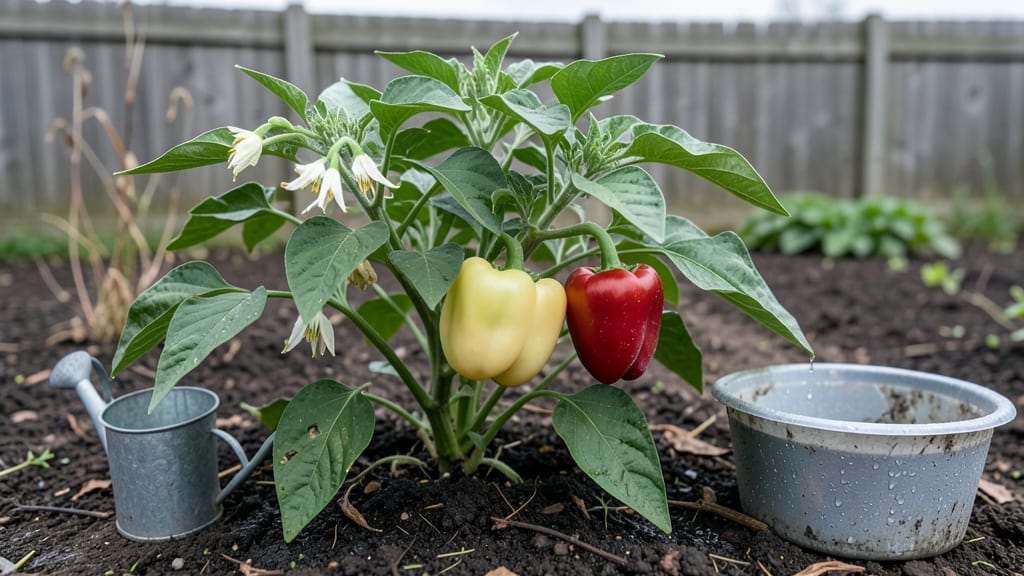
Overwatering pepper plants turns lush vines into sad, yellowing messes—until you try this foolproof water-based system. ✨ I’ve drowned more peppers than I’d like to admit, but after switching to a nutrient-rich water bath, my plants stayed vibrant all season long.
The key isn’t just cutting back on water—it’s giving roots the perfect balance of moisture, oxygen, and food.
This method works in 5-gallon buckets or deep containers, where peppers thrive without soil stress. You’ll need a basic aeration pump (or a simple air stone), a balanced hydroponic nutrient mix, and a way to monitor water levels daily.
No fancy equipment—just a setup that mimics their natural love of damp (but not soggy) conditions. Even my black thumb can’t kill these when done right.
By week 6, you’ll see bold green leaves, thick stems, and flowers forming without the wilting or root rot that plagues traditional watering. The plants grow faster because they’re not struggling to breathe, and you’ll harvest sweeter, more flavorful peppers than ever.
Plus, no more guessing when to water—just top off the reservoir as needed.
Works for bell peppers, jalapeños, or habaneros, whether you’re growing in a sunny windowsill or a backyard container. Here’s how to set it up without the usual headaches—no more drowned roots, just happy, productive plants.
Root Causes Of Overwatered Pepper Plants
If your pepper plants are struggling with soggy roots, yellowing leaves, or stunted growth, overwatering is often the culprit. But why does this happen? Let’s break down the key reasons behind this common issue and how to avoid them.
Pepper plants thrive in well-draining soil, but when containers or garden beds lack proper drainage, water pools at the roots instead of draining away. This creates anaerobic conditions—where roots suffocate from lack of oxygen—and leads to root rot.
Why it happens:
- Clay-heavy soil compacts easily, trapping water and blocking airflow to roots.
- Small or clogged drainage holes in pots prevent excess water from escaping.
- No mulch or landscape fabric can cause water to pool against the container walls.
Actionable fix: Use raised beds, amend soil with perlite or sand, and ensure pots have at least 4–6 drainage holes. Elevate containers to prevent waterlogging.
While pepper plants need regular moisture, overly frequent or heavy watering without letting the soil dry slightly between sessions forces roots to sit in wet conditions. This disrupts nutrient uptake and encourages fungal growth.
Why it happens:
- Automatic timers set to water daily without accounting for humidity or rain.
- Hand-watering without checking soil moisture—guessing instead of testing.
- Large water volumes poured quickly, causing runoff instead of gradual absorption.
Actionable fix: Water deeply but only when the top 1–2 inches of soil are dry. Use a moisture meter or the finger test to avoid overdoing it.
When pepper plants are too close together or planted too deeply, airflow is restricted, and water evaporates slower. This creates a micro-climate where humidity lingers, promoting disease and root stress.
Why it happens:
- Transplanted seedlings buried too deep, suffocating the stem.
- Overcrowded containers limit root access to oxygen and water.
- Thick mulch layers retain excessive moisture near the soil surface.
Actionable fix: Space plants 18–24 inches apart and plant seeds just below the soil line. Use light mulch (1–2 inches) to regulate moisture without smothering roots.
Pepper plants are sensitive to sudden changes in temperature or humidity. Cold nights or high humidity slow evaporation, keeping soil damp longer than ideal, while hot, dry days can mask overwatering by making roots appear "thirsty" when they’re actually suffocating.
Why it happens:
- Greenhouse or indoor growing with poor ventilation traps excess moisture.
- Nighttime watering in cool climates prevents soil from drying.
- Sudden rain after drought shocks roots already stressed from dry conditions.
Actionable fix: Monitor humidity (ideal: 40–70%) and avoid watering in the evening. Use fan circulation in greenhouses to speed evaporation.
By addressing these root causes, you’ll help your pepper plants recover from overwatering and thrive with healthy roots and vibrant growth.
Fixing Over-Watered Pepper Plants
Over-watering can turn your thriving pepper plants into a sad, soggy mess—but don’t worry! With the right adjustments, you can revive them and prevent future stress. Below are practical, step-by-step solutions tailored to common symptoms, plus prevention tips to keep your plants happy and productive.
Before fixing, diagnose the problem:
- Yellowing leaves? → Likely root rot or nutrient leaching.
- Wilted but still soft? → Over-saturation or poor drainage.
- Moldy soil or foul smell? → Fungal issues from excess moisture.
Pro Tip: 💡 Gently tug on the plant—if it pulls out easily, roots are rotting and need immediate attention.
🔥 Fix: Let the soil dry out between waterings.
- For pots: Stick your finger 1–2 inches deep—water only if dry.
- For ground plants: Check the top 3 inches of soil.
- Morning watering > evening to reduce evaporation loss and fungal risks.
Pro Tip: 🌡️ Use a moisture meter for precision, especially in clay pots (they retain water longer).
🍳 Fix: Ensure excess water escapes.
- Potted plants: Add a layer of gravel or perlite at the bottom before soil.
- Ground plants: Amend soil with compost or sand to loosen texture.
- Drainage holes? If missing, drill them or repot.
Pro Tip: ✨ Elevate pots on feet or saucers to prevent waterlogging.
👨🍳 Fix: If roots are rotting:
- Remove the plant gently from the pot.
- Trim black/mushy roots with sterilized scissors.
- Repot in fresh, dry soil with perlite for aeration.
- Hold off on watering for 3–5 days to let roots recover.
Pro Tip: 🎯 Add mycorrhizal fungi (available at garden centers) to help roots rebound faster.
⏰ Fix: Support the plant while it heals:
- Reduce sunlight temporarily (move to partial shade).
- Fertilize lightly with a balanced, water-soluble fertilizer (half-strength).
- Mulch (2–3 inches) to retain moisture without suffocating roots.
Pro Tip: 🔥 Avoid chemical fertilizers—stick to organic options like fish emulsion until the plant stabilizes.
- Water deeply but infrequently—pepper plants hate soggy feet!
- Use self-watering pots (with proper drainage) for consistency.
- Monitor weather—adjust watering during rainy seasons.
- Rotate pots occasionally to ensure even soil drying.
Final Note: Over-watered peppers can bounce back with patience. Focus on drainage, timing, and soil health, and your plants will thrive—no soil stress required! 🌱💚
Frequently asked questions about growing peppers in water
Can I grow peppers hydroponically without soil?
Peppers thrive in water-based systems when given the right balance of nutrients and aeration. Use a 5-gallon bucket with a hydroponic nutrient solution (like General Hydroponics Flora Series) and an air pump to oxygenate the water. Change the water every 1-2 weeks to prevent buildup of salts or bacteria.
What nutrients do peppers need in water?
Peppers require a balanced mix of nitrogen (N), phosphorus (P), and potassium (K)—look for a 5-10-5 or 7-9-5 ratio hydroponic fertilizer. Add calcium and magnesium (like Epsom salt) to prevent blossom-end rot. Test water pH weekly—keep it between 5.8-6.2 for optimal absorption.
How often should I change the water?
Replace the water every 1-2 weeks to avoid nutrient imbalances or algae growth. If you notice cloudy water or a foul smell, change it immediately. For faster growth, consider a drip system that refreshes nutrients daily while maintaining oxygen levels.
Will peppers grow faster in water than soil?
Yes! With perfect nutrient balance and oxygen, peppers grow 20-30% faster in water than in soil. They develop stronger roots and produce more flowers when stress-free. However, flavor may differ slightly—water-grown peppers tend to have a milder taste compared to soil-grown varieties.
What’s the best container for water-growing peppers?
Use food-grade buckets (5+ gallons) with a secure lid to prevent pests. Add a net pot to hold the plant while roots grow into the water. For larger plants, consider a Kratky method (no pump needed) or a deep water culture (DWC) system with an air stone for constant oxygenation.