Diseases
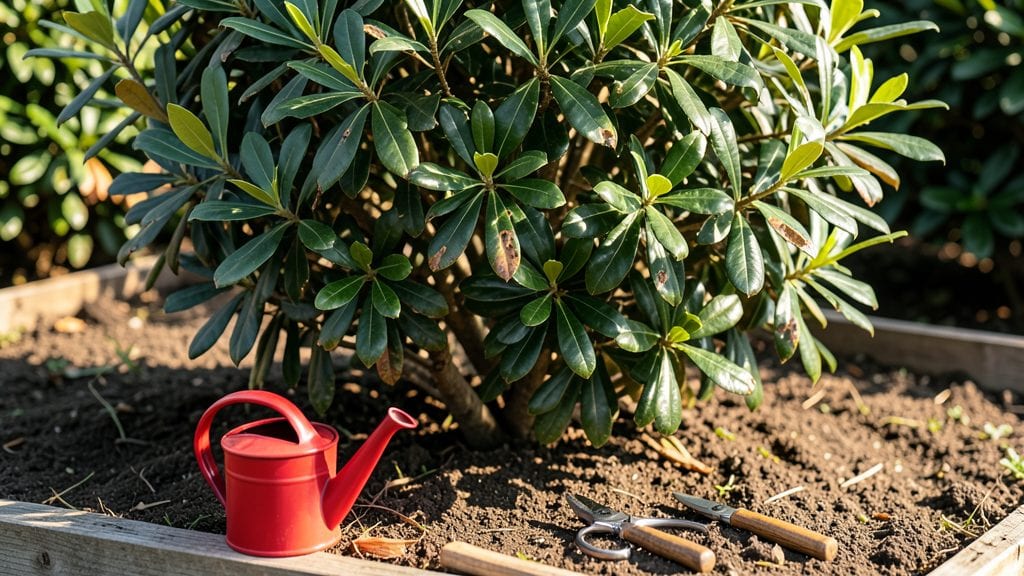
Laurel plant diseases can turn your glossy evergreen from a statement shrub into a sad, spotted mess—unless you catch them early. 🌿 I’ve battled everything from leaf spots to fungal rot on my own laurels, and the key is knowing what you’re dealing with before it spreads.
Most problems start with water issues or poor air circulation, but once you spot the symptoms, you can turn things around.
The most common offenders are fungal infections like laurel leaf spot and anthracnose, which show up as dark, greasy-looking patches on leaves. Bacterial issues, such as bacterial blight, create yellowing and wilting that spreads fast.
The good news? Organic sprays, proper pruning, and adjusting watering habits can often save your plant before it’s too late.
You’ll learn to diagnose each disease by its unique marks—some leave powdery residue, others ooze sap—and how to treat them without harsh chemicals. With the right approach, your laurels can bounce back stronger, keeping those rich green leaves lush and vibrant all season long.
Whether you’re dealing with a single branch or a full shrub, these solutions work for both indoor laurels and outdoor varieties. Let’s get your plants back to their healthy, thriving selves—no more guesswork, just results.
Root Causes Of Laurel Stress
Laurel plants, whether the fragrant Laurus nobilis (bay laurel) or ornamental varieties like Prunus laurocerasus (cherry laurel), are resilient—but not invincible. When they fall prey to diseases, the culprits are almost always environmental stressors, pathogen entry points, or cultural mismanagement.
Understanding why these issues arise is the first step to prevention. Below, we break down the most common triggers, backed by science and actionable insights.
Laurel plants thrive in moderate climates (USDA Zones 7–10), but extremes—whether too cold or too humid—create the perfect storm for fungal and bacterial infections.
- Cold Stress:
Temperatures below 20°F (-7°C) can weaken laurel tissue, making it susceptible to Phytophthora (root rot) and Botrytis (gray mold). Cold snaps also disrupt the plant’s natural defenses, allowing pathogens already present in the soil to explode in activity once conditions warm again.
Why it happens: Cold damages cell membranes, reducing the plant’s ability to produce phenolic compounds—natural antimicrobials. This leaves wounds (like frost cracks) as open invitations for fungi.
- Excessive Moisture:
Laurels hate "wet feet." When humidity hovers above 70% for prolonged periods—especially in shady, poorly ventilated spots—spores of Cercospora (leaf spot) and Septoria (brown spot) germinate rapidly. These fungi love damp foliage because their spores need free water to infect.
Why it happens: High humidity slows evaporation, keeping leaves wet for >12 hours, which is the minimum required for fungal spores to penetrate stomata (leaf pores). Bacterial leaf blight (Xanthomonas) also thrives here, spreading via water splashes during rain or overhead irrigation.
- Heat Stress:
While laurels tolerate heat, sudden spikes above 95°F (35°C) combined with dry soil can cause physiological drought, weakening the plant. This stress makes it easier for Pseudomonas bacteria to enter through hydathodes (leaf tip pores), leading to bacterial ooze.
Why it happens: Heat increases transpiration rates, but if roots can’t absorb enough water, the plant’s cuticle layer (a waxy protective barrier) cracks. These microscopic tears are highway entrances for pathogens.
- Pruning Wounds:
Cutting laurels with dull tools or at the wrong time (during wet seasons) leaves jagged edges that take longer to heal. Fungi like Nectria (canker) enter through these gaps.
- Insect Bites:
Sap-sucking pests like aphids and scale insects don’t just weaken plants—they inject saliva into tissues, creating toxic entry points for bacteria like Pseudomonas syringae.
- Hail or Wind Damage:
Physical trauma from storms crushes cells, exposing inner tissues to Botrytis (gray mold) and Alternaria (black spot).
Laurel roots need well-draining, slightly acidic soil (pH 5.5–6.5). When these conditions are ignored, diseases take hold like weeds.
Problem Why It Happens Pathogen Link Compacted or Clay Soil Poor aeration suffocates roots, reducing their ability to absorb nutrients and water. This leads to waterlogging in heavy rains, as excess moisture can’t drain. Phytophthora cinnamomi (root rot) and Armillaria (shroom root disease) thrive in anaerobic (oxygen-poor) soil. Overwatering Laurels need 1–1.5 inches of water weekly, but many gardeners drown them, especially in containers. Overwatering leaches nutrients and creates anaerobic pockets in the root zone. Pythium (damping-off) and Rhizoctonia (crown rot) multiply in soggy soil, attacking young roots. Underwatering While less common, chronic drought weakens the plant’s vascular system, making it more susceptible to vascular wilt diseases like Verticillium or Fusarium. Weakened xylem vessels allow fungi to colonize and block water transport, leading to sudden wilting. Alkaline Soil (pH >7.0) High pH locks out essential micronutrients like iron and manganese, causing chlorosis (yellowing). This stress makes leaves more vulnerable to fungal spores. Septoria leaf spot and anthracnose exploit nutrient-deficient plants more easily. Pro Tip: 🌡️ Test your soil’s moisture content before watering—stick your finger 2 inches deep. If it’s dry, water; if it’s damp, wait. Use a moisture meter for accuracy.
Diseases don’t just appear—they invade. Laurels get infected through wounds, natural openings, or weak spots created by poor care.
#### 🔪 Physical Damage: The Backdoor for FungiAny break in the plant’s epidermis (outer layer) is a pathogen’s VIP pass. Common entry points include:
Why it happens: The plant’s cutin layer (a waxy barrier) is disrupted, and phenolics (natural healers) can’t seal the wound quickly enough if conditions are humid or wet.
🚪 Natural Openings: Leaves and Stomata
Laurel leaves have stomata (pores) and hydathodes (water-exuding glands) that are designed to open and close. But when stressed, they stay open longer, inviting trouble:
- Pruning Wounds:
Quick Fixes for Laurel Plant Ailments
Reviving a struggling laurel plant starts with identifying the root cause—but once you know what’s ailing it, action is key. Below, we’ve mapped out practical, step-by-step solutions for the most common laurel plant diseases, from fungal infections to bacterial blights.
Each fix includes prevention tips to keep your greenery thriving long-term.
Fungal diseases thrive in damp, poorly ventilated conditions. Here’s how to stop the spread and restore your plant’s health.
🔥 Powdery Mildew: The White Fluffy Coat
Fix:
- Prune infected leaves 🔪—Remove heavily affected foliage with sterilized scissors (dip in rubbing alcohol).
- Apply fungicide 🧴—Use a sulfur-based spray or neem oil solution (1 tbsp neem oil + 1 tsp mild soap per quart of water).
Spray both sides of leaves and stems. 3. Boost airflow 🌬️—Space plants apart and trim nearby foliage to improve circulation. 4. Repeat every 7–10 days until symptoms vanish.
Prevention Tips: ✅ Water at the base (avoid overhead spraying). ✅ Space plants 2–3 feet apart for airflow. ✅ Avoid dense mulch near the stem (keep it 2–3 inches away).
💀 Root & Stem Rot: The Silent Killer
Fix:
- Stop watering immediately 🚰—Let the soil dry out completely for 3–5 days.
- Repot the plant 🏺—Remove it from the pot, trim blackened roots with clean shears, and replant in fresh, well-draining soil (mix in perlite or sand).
- Disinfect the pot 🧼—Wash with 10% bleach solution (1 part bleach to 9 parts water) before reuse.
- Adjust watering habits 💧—Water only when the top 1–2 inches of soil are dry.
Prevention Tips: ✅ Use pots with drainage holes—No exceptions! ✅ Water deeply but less often—Laurels hate soggy roots. ✅ Avoid over-potting—Too much soil retains moisture.
Bacterial infections often cause yellowing, oozing lesions, or sudden wilting. These are trickier to cure but not hopeless.
🌡️ Bacterial Leaf Spot: Yellow Pustules
Fix:
- Remove infected leaves ASAP 🗑️—Dispose of them in the trash (don’t compost!).
- Apply copper fungicide 🛡️—Spray with a fixed copper solution (like Copper Soap) every 10–14 days for 3 weeks.
- Sterilize tools 🧼—Wipe pruners with rubbing alcohol between cuts.
- Improve sanitation 🚿—Clean up fallen leaves and debris around the plant.
Prevention Tips: ✅ Water early in the day—Leaves should dry quickly. ✅ Avoid overhead irrigation—Use drip systems or soaker hoses. ✅ Rotate plants seasonally—Prevents soil-borne bacteria buildup.
😵💨 Sudden Wilting: Bacterial Blight
Fix:
- Isolate the plant immediately 🚫—Move it away from other laurels to prevent spread.
- Prune infected stems ⚔️—Cut back all wilting or oozing branches (sterilize tools!).
- Apply antibiotic spray 💊—Mix 1 tsp streptomycin (or copper fungicide) with 1 gallon of water and spray thoroughly.
- Monitor for 2–3 weeks—If wilting persists, the plant may be beyond saving.
Prevention Tips: ✅ Avoid wounding plants—Handle laurels gently to prevent bacterial entry. ✅ Disinfect tools after each use—Even a small nick can invite infection. ✅ Test soil pH—Bacterial blight thrives in alkaline soil (pH >7.0). Amend with sulfur if needed.
No matter the issue, these universal fixes help stressed laurels bounce back:
- Fertilize lightly 🌱—Use a balanced, low-nitrogen fertilizer (10-10-10) to strengthen recovery.
- Boost humidity (if needed) 💦—Mist leaves daily or place a pebble tray under the pot.
- Provide bright, indirect light ☀️—Move the plant to a sunny window (but avoid harsh afternoon sun).
- Check for pests 🐜—Spider mites or scale can weaken plants, making them susceptible to disease.
💡 Pro Tip: If your laurel is severely infected, don’t hesitate to propagate healthy cuttings. Many laurels root easily in water or perlite!
By acting fast and following these targeted fixes, your laurel can make a full recovery—and with the right prevention, it’ll stay disease-free for years. 🌿✨
Frequently asked questions
What are the first signs of fungal diseases on my laurel?
Watch for dark, greasy spots on leaves (like laurel leaf spot) or white powdery residue (powdery mildew). Bacterial issues often show as yellowing edges or ooze from leaf tips. Check both sides of leaves—spots often start on undersides first.
Can I save a laurel with root rot?
Yes, but act fast! Trim all blackened roots, repot in fresh, well-draining soil (mix in perlite), and stop watering for 3–5 days. Disinfect the pot with bleach to prevent reinfection. If roots smell foul or are mushy beyond saving, propagate healthy cuttings instead.
Why does my laurel keep getting leaf spots even after treatment?
This usually means poor air circulation or overhead watering keeps leaves damp too long. Space plants 2–3 feet apart, water at the base, and prune dense foliage. Fungal spores need 12+ hours of moisture to infect—break that cycle!
Are chemical treatments safe for ornamental laurels?
Most copper-based fungicides or neem oil sprays are safe for ornamental varieties like cherry laurel. Avoid harsh chemicals near edible bay laurels (Laurus nobilis). For severe cases, try baking soda spray (1 tsp baking soda + 1 quart water + drop of soap) as a gentle organic option.
How often should I inspect my laurels for diseases?
Check your plants every 7–10 days, especially after rain or humidity spikes. Focus on new growth and undersides of leaves—these are prime spots for early symptoms. Spring and fall are high-risk seasons for outbreaks.