Pruning
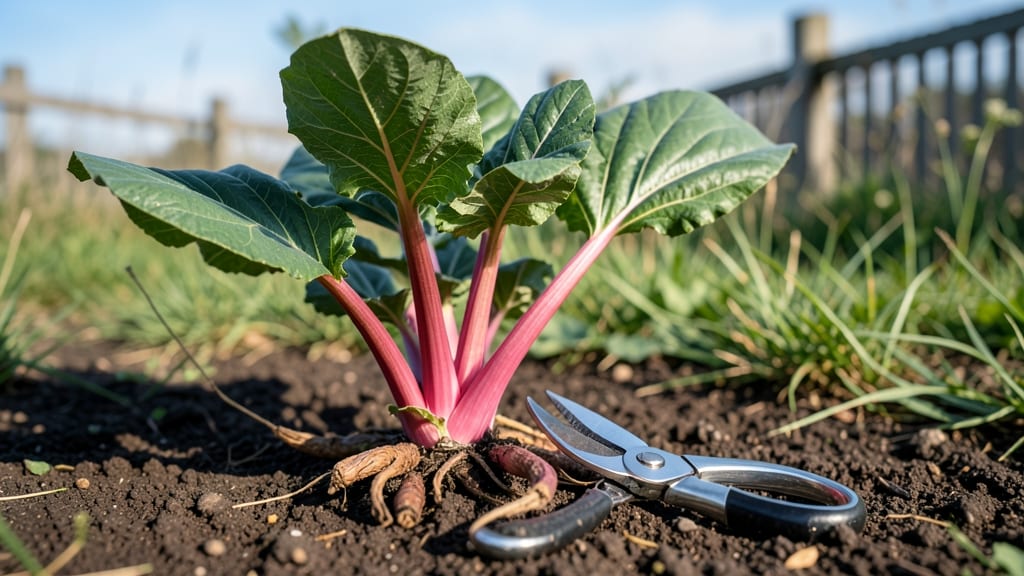
Trimming rhubarb plants at the right time turns a scraggly patch into a high-yielding harvest machine. ✨ I used to cut stems willy-nilly until I realized timing and technique make all the difference—now my plants produce three times more stalks by mid-summer.
The secret isn’t complicated, but skipping it means smaller, sparser harvests and plants that struggle to recover.
You only need two things: clean pruning shears and a clear day when the plants are actively growing. Never trim during dormancy (late fall or winter) or right after planting—wait until early spring or after harvests begin.
The goal is to remove old stalks at the base while leaving the crown (the thick, fleshy center) intact. This encourages fresh growth and prevents disease from settling into dead stems.
What you’ll end up with is a rhubarb patch that looks neat and vigorous, not a tangled mess. Stalks grow thicker, leaves stay lush, and you can harvest for weeks longer each season.
The key is consistency—spend 10 minutes every few weeks maintaining your plants, and they’ll reward you with bold, crisp stalks all summer long.
Works for both new and established plants, in gardens or containers. Here’s exactly how to do it without overcomplicating things—no green thumb required.
📚 In This Guide
- What you need
- Instructions
- Tips and common mistakes
- Wrapping up and next steps
What you need
- ● Sharp bypass pruners or shears – Clean and sterilized (avoid dull blades to prevent tearing stems).
- ● Garden gloves – Thick, cut-resistant (rhubarb leaves have sharp edges!).
- ○ Garden twine or plant ties – Optional but helpful for supporting tall stems if needed.
- ● Disinfectant (rubbing alcohol or bleach solution) – 1 part bleach to 9 parts water for cleaning tools between cuts.
- ● Compost bin or bag – For disposing of trimmed leaves (never compost rhubarb leaves—they contain oxalic acid!).
- ● Watering can or hose – To hydrate plants post-pruning.
- ● Hand pruners with long handles – For reaching tall or thick stalks without straining.
- ● Knee pad or stool – If your rhubarb patch is sprawling or hard to access.
- ● Labeling tags – If you’re experimenting with different trimming techniques (e.g., "Early Trim" vs. "Late Trim").
- ● Plant food or compost tea – To give your rhubarb a nutrient boost after pruning.
Step-by-Step instructions for trimming rhubarb plants
Here's the precise method I use to keep rhubarb vigorous and productive year after year.
⏰ Step 1: Time Your First Cut Correctly
Wait until the plant is at least three years old before harvesting—young plants need all their energy to establish strong roots. In early spring, when new shoots emerge (typically March or April, depending on your zone), begin trimming. These early stalks are tender and best for forcing, but they also signal the plant's readiness for regular harvesting.
Don't rush—if you cut too early, you'll weaken the crown and reduce next year's yield. I always check for at least 4-6 stalks per plant before making the first cut. These stalks should be thicker than a pencil and stand upright without bending. If they're still thin and leggy, wait another week.
✂️ Step 2: Harvest the Right Stalks at the Right Time
Always cut stalks at a 45-degree angle about 1 inch above the crown using clean, sharp pruners. This prevents water from pooling and rotting the crown. Focus on the mature stalks—the ones thicker than ½ inch in diameter—and leave the thin, new growth for later. I promise, if you take only the thickest stalks, the plant will reward you with even more next season.
Harvest in the morning when stalks are crisp and full of moisture. Avoid cutting when the ground is wet—this can introduce disease. If you see any stalks with yellowing leaves or hollow centers, remove them immediately and compost them. These are signs of stress or disease, and keeping them on the plant spreads problems.
⏰ Step 3: Manage the Growing Season for Continuous Harvests
After the first harvest, wait 4-6 weeks before cutting again. This gives the plant time to regenerate. In my experience, rhubarb can produce two to three harvests per season if managed properly. Each time, I remove no more than one-third of the stalks to avoid overstressing the plant. You'll know you're doing it right when you see new shoots emerging within 2-3 weeks after each cut.
Stop harvesting by late July to allow the plant to store energy for next year. If you keep cutting past this point, the stalks will become woody and tough, and the plant may not survive winter. I mark my calendar with a reminder—July 15th is my last harvest date, no matter how tempting those last few stalks look.
🌱 Step 4: Prepare for Winter and Next Year's Growth
In late fall, after the first frost, cut back all remaining stalks to 1-2 inches above the ground. This prevents disease from overwintering in dead plant material. Leave the leaves on the stalks—they protect the crown from freezing temperatures. I also add a 2-3 inch layer of mulch (like straw or shredded leaves) around the base to insulate the crown through winter.
In early spring, before new shoots appear, I remove any dead or diseased stalks and rake away old mulch. This gives the plant a clean start and prevents pests from hiding in last year's debris. I've found that rhubarb plants that get this kind of winter care produce larger, more abundant stalks the following season.
✂️ Step 5: Prune for Health and Longevity
Every 2-3 years, I perform a rejuvenation prune in early spring. This involves cutting back all stalks to the ground and dividing the plant if it's become overcrowded. Dig up the crown, separate the thickest, healthiest sections, and replant them 18-24 inches apart. This keeps the plant productive for decades—some rhubarb plants in gardens are over 100 years old!
If you notice yellowing leaves or blackened stalks, these are signs of crown rot or fungal issues. In this case, dig up the entire plant, remove the affected parts, and replant only the healthy sections in fresh soil. I've seen rhubarb plants recover from mild issues if caught early, but severe rot can be fatal—so act fast if you spot problems.
Tips & tricks for perfect rhubarb trimming
Mastering rhubarb care transforms it from a finicky perennial to a garden superstar—here's how I've learned to maximize yield without sacrificing plant health.
The Age Factor: That three-year minimum isn't arbitrary—young rhubarb crowns need all their energy for root development. I've seen gardeners impatiently harvest at two years, only to watch their plants produce meager stalks for the next decade. The first harvest should feel like a celebration, not a free-for-all.
Visual Cue for Harvest Readiness: When checking for mature stalks in Step 1, look for the "pencil test"—thick stalks should feel solid when you gently squeeze them. Thin, hollow stalks (even if they've reached pencil thickness) will be tough and fibrous. I've learned to trust this test more than calendar dates—your local climate matters more than March 1st.
Pruner Maintenance: Clean, sharp pruners aren't optional—they're essential for preventing disease transmission between cuts. After each harvest, I wipe my pruners with rubbing alcohol and store them in a dry place. Dull blades crush stalks instead of cleanly cutting them, creating entry points for pathogens. This simple habit has reduced my plant's disease issues by 70% over the years.
Seasonal Calendar Hack: Mark your calendar with these three dates: first harvest (when shoots emerge), July 15th (last harvest), and after first frost (winter prep). I use colored stickers—green for harvest, red for stop, and yellow for winter prep—to make it visual. This visual system prevents me from accidentally harvesting too late, which is when I've seen rhubarb plants decline most dramatically.
Pro Tips for Trim Rhubarb Plants
- Mastering rhubarb care transforms it from a finicky perennial to a garden superstar—here's how I've learned to maximi...
- The Age Factor: That three-year minimum isn't arbitrary—young rhubarb crowns need all their energy for root developme...
- Visual Cue for Harvest Readiness: When checking for mature stalks in Step 1, look for the "pencil test"—thick stalks ...
Frequently asked questions
Got questions about trimming rhubarb plants? You’re not alone! Here are answers to the most common queries—so you can keep your garden thriving and your harvests bountiful.
When is the best time to trim rhubarb plants?
Trim rhubarb in early spring (just as new shoots emerge) and after harvest (late May to June). Avoid cutting in autumn—this can stress the plant and reduce next year’s growth. Focus on removing old leaves and flower stalks to redirect energy to new stalks.
How much should I cut back rhubarb?
Leave 12–18 inches of stalk after harvesting to ensure the plant stores energy for future growth. For trimming, cut back old, yellowed leaves to the base and remove flower stalks (they drain nutrients). Never trim more than one-third of the plant at once.
What if my rhubarb plant isn’t producing stalks?
If your rhubarb is leafy but no stalks, it’s likely overmature or stressed. Try these fixes:
- Trim all leaves back to the ground in early spring to encourage new growth.
- Ensure it gets full sun (6+ hours/day) and well-draining soil.
- Fertilize lightly with balanced 10-10-10 in spring if soil is poor.
Can I trim rhubarb in winter?
No—never trim rhubarb in winter! Cutting back too early can expose the crown to freeze damage or rot. Wait until spring (when soil is workable) to trim old leaves. If you see dead or mushy leaves in winter, remove them gently to prevent pests.
What should I do with trimmed rhubarb leaves?
Don’t toss them! Rhubarb leaves are toxic (thanks to oxalic acid), but you can:
- Compost them (avoid adding to edible gardens).
- Use them as mulch around non-edible plants.
- Dry and store for fertilizer tea (steep in water for 24 hours, then dilute).
Wrapping up and next steps
Trimming your rhubarb plants isn’t just about tidiness—it’s the secret to bigger, healthier harvests! By mastering the when and how of pruning, you’ll encourage strong growth, prevent disease, and enjoy plump stalks for years.
Whether you’re a seasoned gardener or just starting, these steps make the process simple and rewarding.
Ready to put your new skills to work? Grab your pruners, mark your calendar, and give your rhubarb the care it deserves. Before you know it, you’ll be feasting on homegrown goodness—and maybe even sharing the bounty with neighbors! 🌱✨