
Trees
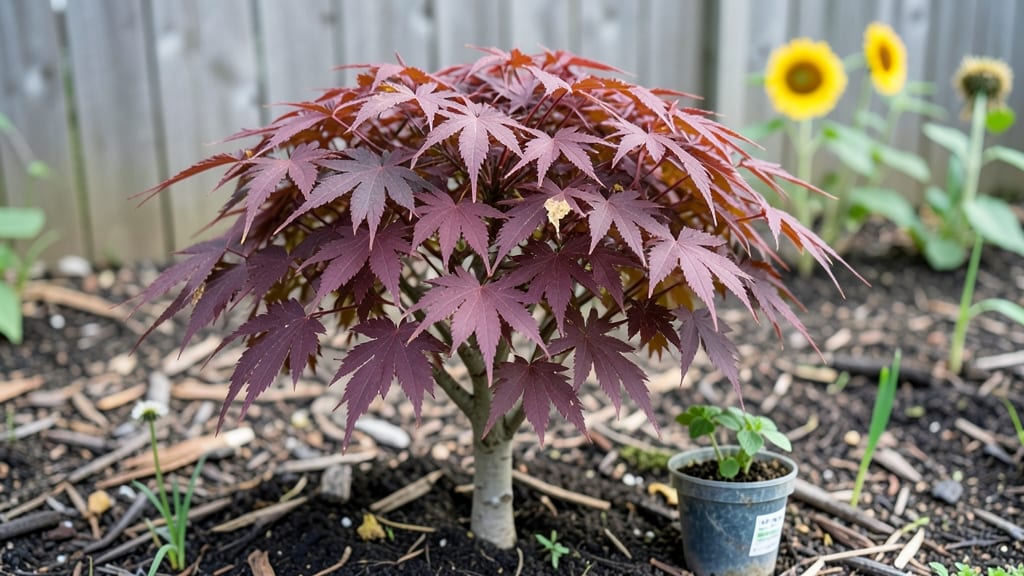
Planting a Japanese maple near your house can turn your yard into a serene retreat with its delicate foliage and graceful form. I learned the hard way that placement matters—too close, and roots can stress your foundation; too far, and it loses its impact.
The key is finding that sweet spot where it thrives without becoming a nuisance.
Start by checking your tree’s mature size—some varieties like 'Bloodgood' grow up to 20 feet wide, while dwarf types stay compact. Plant it at least 10 feet from your house (15 feet for larger varieties) to give roots room to spread without competing with your foundation.
Well-draining soil and morning sun with afternoon shade will keep its leaves vibrant year-round.
Once established, you’ll love how it frames patios, softens entryways, or anchors a courtyard with its seasonal color shifts. Just watch for signs of stress—yellowing leaves or stunted growth—and adjust watering or mulch as needed. A little planning now means decades of beauty with minimal fuss.
For extra protection, add a root barrier if space is tight or pair it with drought-tolerant ground covers to keep moisture consistent. The payoff? A tree that feels like part of the house, not just another plant in the yard.
📚 In This Guide
- What you need
- Instructions
- Tips and common mistakes
- Wrapping up and next steps
What you need
- ● Japanese maple tree (choose a size based on your space: 1-3 gallon container for small yards, 5+ gallon for mature growth).
- ● Shovel or digging spade (wide, 12–18" blade for easy soil removal).
- ● Garden gloves (heavy-duty, water-resistant for comfort).
- ● Mulch (2–3 cubic feet of wood chips or pine bark to retain moisture).
- ● Watering can or hose (with a gentle spray nozzle for delicate roots).
- ● Pruning shears (sterilized, sharp blades for trimming).
- ○ Staking kit (optional but recommended) (2–3 5-foot bamboo stakes + soft ties for windy areas).
- ● Soil amendments (1–2 bags of peat moss or compost if your soil is clay-heavy).
- ● Tree guard or protective wrap (to shield from sunburn or pests in the first year).
- ● Slow-release fertilizer (balanced 10-10-10 for young trees).
- ● pH testing kit (to ensure soil is slightly acidic (5.5–6.5)).
- ● Decorative rocks or edging (for a polished look around the base).
Step-by-Step instructions for planting Japanese maple near your house
Here’s how to plant your Japanese maple for years of shade and beauty while keeping it healthy and safe from your home.
Choose the Perfect Location and Dig the Hole
Japanese maples thrive in partial shade, so pick a spot near your house that gets 4-6 hours of morning sun but afternoon shade. Avoid south-facing walls—too much heat stresses the tree. The hole should be twice as wide as the root ball but only as deep. This gives roots room to spread without settling too low.
I like to loosen the soil at the bottom of the hole with my hands or a trowel. This prevents compaction and helps roots establish faster. If your soil is heavy clay, mix in 2-3 inches of compost from the ingredients list to improve drainage. Never amend the entire hole—just the bottom layer.
Position the Tree and Backfill Carefully
Place the Japanese maple in the hole so the top of the root ball sits 1-2 inches above ground level. This prevents water from pooling around the trunk later. Check the direction the tree faced in its nursery pot—keep it consistent to avoid stress. Gently spread the roots outward if they’re circling.
Backfill with the native soil you removed, tamping lightly as you go. Don’t pack it down hard—just firm it enough to eliminate air pockets. Water deeply after filling half the hole, then finish backfilling. This keeps the soil settled around roots without displacing them.
Mulch and Water for Establishment
Spread 2-3 inches of mulch from the ingredients list over the root zone, keeping it 6 inches away from the trunk. Mulch retains moisture and regulates soil temperature, which Japanese maples love. Use shredded bark or pine needles—they break down slowly and won’t mat like straw.
Water immediately after planting to help the soil settle. Then, keep the soil consistently moist for the first 2-3 weeks, which is critical for root development. You’ll know it’s right when water drains through the top inch of soil within 10-15 minutes—not soggy, not bone-dry. Avoid overhead watering to prevent fungal diseases on delicate leaves.
Provide Support and Monitor Growth
If your Japanese maple has a narrow trunk or is in a windy spot, install a stake and tie system from the ingredients list. Drive the stake 3-4 inches from the trunk and use soft fabric ties to secure the tree without girdling it. Remove ties after 1 year to avoid permanent damage.
Watch for new growth in 4-6 weeks—this is your sign the tree is settling in. If leaves yellow or drop, it’s often overwatering or poor drainage. Japanese maples hate soggy roots, so adjust your watering if the soil stays wet longer than 2 days after watering. Prune only to remove dead branches in late winter.
Tips & tricks for perfect Japanese maple planting near your house
Planting a Japanese maple near your home requires careful attention to detail—here are the key strategies that'll ensure your tree thrives for decades.
Location is Everything: The 4-6 hours of morning sun mentioned in Step 1 is crucial because Japanese maples need gentle light to develop their stunning foliage colors. I've seen trees planted too close to south-facing walls wilt within months—the afternoon heat creates stress they can't handle. If you must plant near a wall, choose an east-facing location instead. Also, measure the mature height of your specific variety before planting—most need at least 10 feet of clearance from structures to prevent root competition.
Root Ball Preparation Matters: When you're loosening the soil at the bottom of the hole in Step 1, go beyond just the bottom layer. Use your hands or a trowel to create a loose, almost sponge-like texture in the lower 6 inches of the hole. This helps roots establish more quickly. For container-grown trees, gently tease apart the roots if they're circling—this prevents girdling as the tree matures. I've had to replace trees where this step was skipped, and the roots eventually strangled themselves.
Watering Wisdom: The 2-3 week consistent moisture period in Step 3 is non-negotiable, but how you water makes all the difference. Instead of daily light watering, give your tree a thorough soaking every 3-4 days that penetrates 6-8 inches deep. You'll know you're doing it right when water drains through the top inch of soil within 10-15 minutes—this prevents both drought stress and waterlogged roots. Use a moisture meter if you're unsure about soil conditions.
Mulching Magic: That 2-3 inches of mulch in Step 3 isn't just decoration—it's a protective blanket. Apply it immediately after planting to prevent soil temperature fluctuations that shock young roots. I recommend using shredded bark mulch because it breaks down slowly and improves soil structure over time. Just remember to keep it 6 inches away from the trunk to prevent moisture buildup that can cause rot. Refresh the mulch annually in early spring to maintain its protective qualities.
Pro Tips for Planting Japanese Maple Near House
- Planting a Japanese maple near your home requires careful attention to detail—here are the key strategies that'll ensure your tree thrives for decades.
- Location is Everything: The 4-6 hours of morning sun mentioned in Step 1 is crucial because Japanese maples need gentle light to develop their stunning foliage colors.
- Root Ball Preparation Matters: When you're loosening the soil at the bottom of the hole in Step 1, go beyond just the bottom layer.
Frequently asked questions
about planting Japanese maples near your home—because every tree lover deserves clarity! Here are answers to the most common queries, from spacing to care tips.How far from the house should I plant a Japanese maple?
A mature Japanese maple typically grows 15–25 feet wide, so plant it at least 10–15 feet from your foundation to avoid root intrusion or foundation stress. Smaller varieties (like ‘Bloodgood’) can be planted closer (8–10 feet), but always check your local building codes for setback requirements!
When is the best time to plant a Japanese maple near my home?
Spring (after last frost) or early fall (4–6 weeks before frost) are ideal. Avoid planting in extreme heat or freezing temps—root establishment is critical! If you’re in a mild climate, late winter (before bud break) also works. Pro tip: Water deeply after planting to reduce transplant shock.
Can a Japanese maple damage my house or driveway over time?
Not if planted correctly! Japanese maples have non-invasive roots, but their branches can grow heavy. Prune annually to keep limbs 10+ feet from roofs or power lines. If your soil is clay-heavy, ensure proper drainage to prevent root-related foundation issues.
What’s a good alternative if my yard is too small for a Japanese maple?
Consider dwarf varieties like ‘Emperor I’ (6–8 ft tall) or ‘Shishigashira’ (compact, 8–10 ft). For even smaller spaces, try ‘Little Princess’ (3–4 ft tall)—perfect for containers or tight patios! Just ensure they still get 4–6 hours of sunlight daily.
Why are my Japanese maple leaves turning yellow/brown after planting?
Common causes include overwatering, poor soil drainage, or transplant shock. Check the soil—it should stay moist but not soggy. If leaves curl or drop, trim affected branches and adjust care. Fun fact: Yellowing can also signal iron deficiency—try a chelated iron supplement if needed!
Wrapping up and next steps
Planting a Japanese maple near your home can transform your outdoor space into a serene, sun-dappled retreat—if you prioritize the right location and care. Remember, its delicate roots and mature size demand thoughtful spacing (aim for 15–25 feet from structures) and well-draining soil to thrive.
With patience and attention, your tree will reward you with vibrant foliage and seasonal magic for decades.
Ready to get started? Mark your spot, gather your supplies, and plant with confidence! 🌿 For extra peace of mind, consult a local arborist to tailor the plan to your yard’s unique needs.