
Pruning
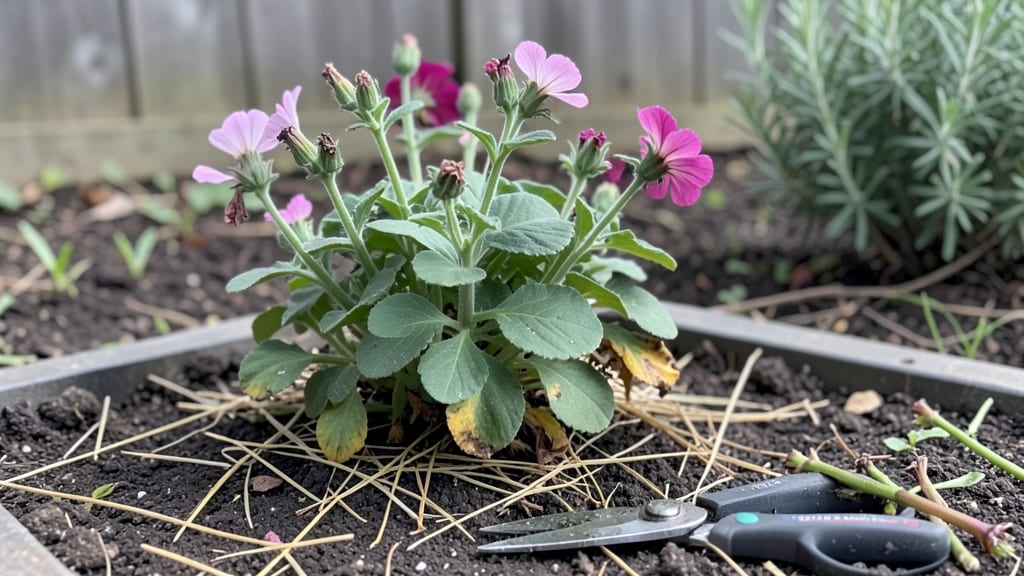
Pruning geranium plants transforms them from one-season wonders into year-round blooming powerhouses. 🌸 I’ve seen geraniums go from leggy and bare to bursting with flowers by simply cutting them back at the right times—it’s like hitting the reset button on their growth.
Most gardeners wait too long, but timing is everything for keeping those blooms coming.
The key is three precision trims: a light cleanup in early spring, a mid-season hard cut to encourage bushiness, and a final trim in late summer to extend fall blooms. You’ll need sharp bypass pruners and a clean workspace—no rusty shears or dirty surfaces.
Geraniums are tough, but they respond best to clean cuts just above a leaf node or outward-facing bud.
After pruning, you’ll notice new growth within days—bright green stems and fresh buds forming where you made your cuts. The plants stay compact, shade their own roots better, and keep flowering until frost.
It’s not just about more blooms; it’s about healthier plants that bounce back from heat and pests too.
Works for both container geraniums and those in garden beds, and the same principles apply to zonals, ivy, and regal geraniums. Here’s how to time those cuts and avoid the mistakes that leave plants looking sad instead of spectacular.
📚 In This Guide
- What you need
- Instructions
- Tips and common mistakes
- Wrapping up and next steps
What you need
- ● Sharp pruning shears (bypass or anvil type, sterilized with rubbing alcohol or bleach solution—1 pair). Pro tip: Dull blades crush stems, inviting disease! 🔪
- ● Clean, sharp garden scissors (for smaller trims—1 pair).
- ● Rubbing alcohol (70% or higher) or bleach solution (1 part bleach to 9 parts water) (for sterilizing tools).
- ● Gloves (nitrile or leather, to protect hands from thorns—1 pair).
- ○ Disposable gloves (optional, for handling diseased plant debris—1-2 pairs).
- ● Pruning saw (only if dealing with thick, woody stems—1).
- ● Plant ties or twine (for supporting stems after pruning—small roll).
- ● Horticultural oil (for treating tools between uses—small bottle).
- ● Plant food or fertilizer (balanced, 10-10-10 or 20-20-20, to revive plants post-prune).
- ● Compost or mulch (to replenish soil after pruning—small bag).
- ● Spray bottle with water (to mist cut stems and encourage healing—1).
- ● Disposable tray or bucket (for collecting pruned debris—1).
- ● Choose the right time: Prune geraniums in early spring (before new growth), mid-summer (to encourage fall blooms), or late fall (light trim to shape). Avoid pruning during active flowering unless deadheading.
- ● Weather check: Prune on a dry, cloudy day or early morning to reduce stress on the plant. 🌡️
- ● Healthy plant: Only prune vigorous, pest-free geraniums. Skip if leaves show signs of disease (yellowing, spots, or wilting).
- ● Safety first: Wear gloves—geraniums can have sharp thorns!
Instructions for pruning geranium plants
Here's my foolproof method for keeping geraniums blooming like crazy all season long.
✂️ Step 1: First Trim After Initial Blooms
Wait until your geraniums finish their first flush of flowers and the stems begin looking tired. You'll notice the blooms slowing down and leaves looking a bit sparse. Grab your clean, sharp pruners and cut back each stem by about one-third just above a set of healthy leaves.
I always make my cuts at a 45-degree angle to help water run off better. This first trim encourages fresh, bushier growth and sets up your plant for a second round of blooms. If you're growing in containers, this is also a great time to check for any leggy stems that need extra attention.
✂️ Step 2: Mid-Season Maintenance Trim
About 6-8 weeks after your first trim, you'll see new growth appearing. This is your cue for the second pruning. Look for any stems that have grown too long or are looking woody—these are the ones to cut back. Again, aim for removing about one-third of the plant's height.
Here's the thing—I never cut into old wood. If you see stems that are thick and woody with no leaves, leave them alone. Focus only on the newer, green growth. This keeps your geraniums looking full and prevents them from becoming leggy. After trimming, give your plants a light feeding with a balanced fertilizer to encourage that lush new growth.
✂️ Step 3: Late Season Renewal Cutback
As summer winds down and temperatures start to cool, give your geraniums one final trim. This time, you're not just shaping—you're preparing them for winter. Cut back all the stems by about half their height, but leave at least 2-3 inches of growth above the soil line.
This late-season trim helps your geraniums focus their energy on root development rather than maintaining foliage. You'll see new growth starting in early spring, and with this method, your plants will be ready to bloom again by late spring or early summer. Don't forget to clean up any fallen leaves or debris around the base to prevent disease.
💧 Step 4: Post-Pruning Care
After each major trim, your geraniums will need consistent watering to recover. Water deeply every 2-3 days until you see new growth emerging. The soil should feel moist but not soggy—you can check this by sticking your finger about 1 inch into the soil.
I like to water in the morning so the leaves have time to dry out during the day. This helps prevent fungal issues that can pop up after heavy pruning. If you're growing in containers, make sure they have good drainage—geraniums hate wet feet. A light application of mulch around the base helps retain moisture and keeps the roots cool.
Tips & tricks for pruning geranium plants
These precision pruning tips will help you keep your geraniums thriving and blooming all season long.
The Angle Matters: When you make those one-third cuts in Step 1, that 45-degree angle isn't just for looks—it's functional. The slanted cut helps water run off the leaves instead of pooling at the stem, which dramatically reduces fungal diseases. I've seen geraniums develop powdery mildew after heavy rains when people skip this detail. Trust me, it makes a difference!
Timing is Everything: Those 6-8 weeks between your first and second trim in Step 2 are crucial. If you trim too early, you'll cut back new growth that could have become sturdy stems. If you wait too long, the stems become woody and won't respond well. I've learned this the hard way—wait until you see at least 2-3 inches of fresh green growth before reaching for the pruners again.
Winter Prep Secret: During that late-season renewal cutback in Step 3, focus on creating a sturdy base for spring. The 2-3 inches you leave above the soil line should be the healthiest, newest growth possible. This is your plant's foundation for next year's blooms. I always remove any yellow or diseased leaves at this stage too—it's like giving your geraniums a fresh start before winter.
Post-Trim Recovery: That every-2-3-days watering in Step 4 isn't just about keeping soil moist—it's about establishing a routine. Geraniums need consistent moisture after pruning to recover, but they hate soggy roots. I check soil moisture by sticking my finger in about 1 inch deep. If it feels damp but not wet, I wait another day. This balance prevents both underwatering and overwatering, which can both stress your plants.
Pro Tips for Pruning Geranium Plants
- These precision pruning tips will help you keep your geraniums thriving and blooming all season long.
- The Angle Matters: When you make those one-third cuts in Step 1, that 45-degree angle isn't just for looks—it's functional.
- Timing is Everything: Those 6-8 weeks between your first and second trim in Step 2 are crucial.
Frequently asked questions
Got questions about pruning geraniums? You’re not alone!
Here are answers to the most common concerns—so you can keep those blooms coming all season long.
When is the best time to prune geraniums for maximum blooms?
Prune geraniums three times a year for best results: early spring (to shape and remove dead growth), mid-summer (to encourage a second flush of blooms), and late fall (to prepare for winter). Avoid heavy pruning during cold snaps or extreme heat.
Can I prune geraniums too much? What are the signs?
Yes! Over-pruning—cutting back more than 1/3 of the plant at once—can stress geraniums, leading to stunted growth, fewer blooms, or leggy stems. If you see bare stems, yellowing leaves, or no new growth after pruning, you’ve likely pruned too aggressively. Slow down next time!
Do I need to sterilize my pruners between cuts?
Sterilizing pruners with rubbing alcohol (70% or higher) or a 10% bleach solution prevents spreading diseases like powdery mildew or bacterial leaf spot. Wipe blades before and after each plant—especially if you’re pruning multiple geraniums or other garden plants.
What should I do if my geraniums stop blooming after pruning?
If your geraniums refuse to rebloom after pruning, check these fixes:
Container geraniums follow the same pruning rules, but watch for root-bound stress—overcrowded roots can weaken the plant. After pruning, check roots: If they’re circling or packed tightly, repot into a slightly larger container with fresh potting mix. Also, water more frequently since containers dry out faster!
Can I prune geraniums in containers differently than in-ground plants?
Wrapping up and next steps
Mastering the art of pruning your geranium plants is your ticket to vibrant, long-lasting blooms that brighten up your garden all year round! 🌸 With just three precision trims—spring, summer, and fall—you can keep your geraniums thriving, encourage bushier growth, and enjoy a continuous display of color.
Remember, the key is consistency and confidence: grab your shears, follow the steps, and watch your plants reward you with lush, healthy foliage.
Ready to put your new skills into action? Pick a sunny day, gather your tools, and give your geraniums the care they deserve. Happy pruning—your garden will thank you! 🌿✂️