Diseases
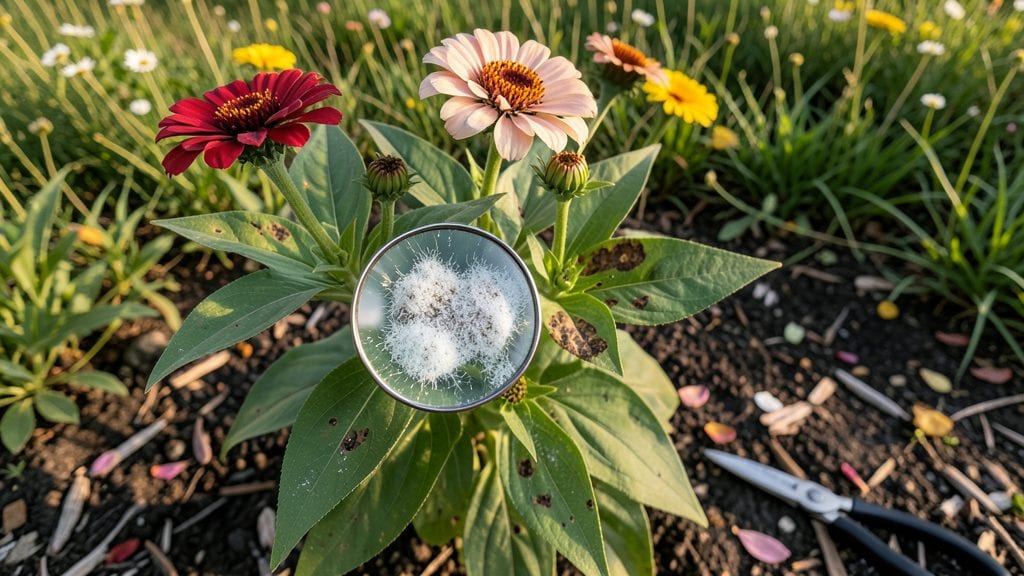
Zinnia plant diseases can turn your brightest blooms into a sad, spotted mess—unless you catch them early. I’ve watched powdery mildew creep across my zinnias like frosting a cake, and once it starts, it’s a battle to save the plants.
The good news? Most fungal threats share the same warning signs, and with the right moves, you can stop them before they ruin your season.
Powdery mildew, rust, and bacterial leaf spot are the usual suspects, and they all love crowded plants with poor airflow. My zinnias thrive when I space them right and water at the base—not overhead.
A quick spray of neem oil or baking soda mix (1 teaspoon per quart of water) keeps mildew at bay, while removing infected leaves stops rust from spreading. It’s all about staying one step ahead.
You’ll spot the first signs in late summer when humidity spikes—white powder, orange rust spots, or dark splotches on leaves. The key is acting fast: prune infected stems, improve airflow, and treat with organic fungicides. With these steps, your zinnias stay vibrant and disease-free, turning heads instead of turning brown.
Works for garden beds, containers, or cut-flower patches—just adapt the spacing and watering. Here’s how to keep your zinnias looking their best all season long.
Understanding the Root Causes
Zinnia plants, with their vibrant blooms and cheerful presence, can quickly become a gardener’s nightmare when disease strikes. But why do these issues pop up in the first place? The answer lies in a mix of environmental stress, microbial activity, and sometimes even our own gardening habits.
Let’s break down the key triggers behind the most common fungal threats to zinnias—and how they create the perfect storm for trouble.
Fungi thrive in damp, stagnant environments, and zinnias are no exception. When humidity levels rise or water lingers on leaves and soil, fungal spores get the green light to germinate and spread. Here’s why it happens:
- Poor Airflow: Dense plantings or crowded garden beds trap moisture, creating a sauna-like atmosphere. Fungi like Alternaria and Septoria love this environment, as stagnant air prevents water evaporation and keeps leaves damp for extended periods.
- Overwatering: Zinnias prefer well-drained soil, but excessive watering—especially late in the day—leaves foliage wet overnight. This is a red flag for Powdery Mildew, which spreads rapidly when leaves stay moist for more than 6–8 hours.
- Rain or Irrigation Splash: Water droplets can carry fungal spores from the soil onto leaves, kickstarting infections. This is particularly risky in Botrytis Blight (gray mold), which often starts at the base of the plant and spreads upward.
Pro Tip: 💡 Aim for morning watering to allow foliage to dry by evening. Space plants 12–18 inches apart to improve airflow, and avoid overhead sprinklers—drip irrigation or soaker hoses are your best friends here!
Healthy soil is the foundation of disease-resistant zinnias. When drainage is poor or nutrients are out of whack, plants become stressed and more susceptible to fungal invaders. Here’s the science:
- Waterlogged Soil: Compacted or clay-heavy soil prevents excess water from draining, leading to root rot (often caused by Phytophthora or Pythium). Weak roots can’t support the plant, making it an easy target for secondary infections like Alternaria leaf spot.
- Nitrogen Deficiency: Zinnias need a balanced diet, but too little nitrogen weakens their cell walls, making them vulnerable to fungal penetration. Over-fertilizing with phosphorus or potassium can also disrupt the plant’s natural defenses.
- Organic Debris Buildup: Old plant matter, mulch, or fallen leaves harbor fungal spores. If not removed, they provide a constant source of reinfection, especially for Botrytis and Powdery Mildew.
Pro Tip: ✨ Test your soil’s pH (zinnias prefer 6.0–7.0) and amend with compost or perlite to improve drainage. Rotate crops annually to break the cycle of soil-borne pathogens.
Zinnias aren’t just fighting fungi—they’re also battling pests and physical stress, which open doors for infections. Here’s how damage weakens their defenses:
- Insect Feeding: Aphids, spider mites, and Japanese beetles don’t just eat leaves—they create wounds. These tiny openings let fungal spores slip in, often leading to Alternaria or Septoria infections.
- Mechanical Injury: Rough handling during transplanting, hail, or even enthusiastic pruning can damage plant tissues. Fungi like Botrytis exploit these wounds, especially if the plant is already stressed.
- Heat or Drought Stress: While zinnias tolerate heat, extreme conditions can weaken their cuticles (the plant’s protective skin). This makes them more susceptible to Powdery Mildew, which thrives on stressed, dry-looking foliage.
Pro Tip: 🎯 Monitor plants regularly for pests and treat infestations early with neem oil or insecticidal soap. Avoid pruning in wet conditions to minimize wound infections.
Even the cleanest garden can become a hotspot for fungal spread if tools or new plants are the culprits. Here’s how contamination happens:
- Dirty Pruners or Shears: Fungal spores hitchhike on unsterilized tools, spreading from infected plants to healthy ones. Botrytis and Septoria are notorious for this mode of transmission.
- Infected Seedlings or Cuttings: Buying or trading contaminated plant material is like inviting trouble to your garden. Fungi like Fusarium wilt can lie dormant in seeds or roots until conditions are right.
- Cross-Contamination in Greenhouses: If you’re growing zinnias in a greenhouse, poor ventilation or reused growing medium can amplify fungal spores, creating an epidemic.
Pro Tip: 🔥 Sterilize pruning tools with rubbing alcohol (70% or higher) between uses. Inspect new plants for signs of disease before adding them to your garden.
By addressing these root causes—humidity, soil health, stress, and contamination—you’ll disrupt the fungal lifecycle and give your zinnias the fighting chance they deserve. Stay proactive, and those vibrant blooms will be back in no time! 🌸
Quick Fixes for Zinnia Troubles
Zinnias are tough little flowers, but even they need a helping hand when fungal foes strike. The good news? Most issues can be tackled with simple, garden-friendly solutions—no fancy tools or toxic chemicals required.
Below, we’ve mapped out practical fixes for each common zinnia disease, along with prevention tips to keep your blooms thriving. Think of this as your DIY zinnia first-aid kit!
Problem: White, powdery coating on leaves (like dust, but not dust). Fix: 🔥 Remove Infected Foliage – Snip off heavily mildewed leaves with clean pruners and dispose of them in the trash (not compost). Why? Mildew spreads via spores, and composting can recycle the problem.
🍳 Homemade Spray Mix – Combine 1 tsp baking soda + 1 tsp vegetable oil + 1 tsp dish soap + 1 gallon water in a spray bottle.
Shake well and apply to both sides of leaves in the early morning (when humidity is lower). Reapply every 5–7 days until symptoms fade.
👨🍳 Boost Airflow – Thin out crowded plants by 1/3 to improve circulation. Stake tall zinnias to prevent them from flopping into damp soil.
🌡️ Prevent Recurrence – Water at the base (not overhead) and avoid late-day watering (wet leaves overnight = mildew party). If mildew returns, try a neem oil spray (1 tbsp neem oil + 1 tsp soap per quart of water).
Problem: Brown, target-like spots on lower leaves (often with yellow halos). Fix: 🔪 Prune and Destroy – Cut off infected leaves 1 inch below the spot and toss them in the trash. Never compost diseased plant debris!
⏰ Fungicide Schedule – Apply a copper fungicide (like copper soap) or baking soda spray (recipe above) every 10–14 days during wet seasons. For severe cases, use a fixed-copper product (e.g., Bonide Copper Fungicide).
🌱 Soil Sanitation – Remove all plant debris from the garden bed at season’s end. Solarize the soil in late summer by covering it with clear plastic for 4–6 weeks to kill fungal spores.
🎯 Crop Rotation – Don’t replant zinnias (or tomatoes/peppers) in the same spot next year. Wait at least 3 years before returning to the area.
Problem: Wilting, yellowing leaves; mushy stems; foul-smelling soil. Fix: 💡 Emergency Drainage – If your zinnias are in pots, poke holes in the bottom and repot in well-draining soil mix (add perlite or sand). For in-ground plants, amend the soil with compost and raise beds slightly.
🌡️ Water Wisely – Stop watering until the top 2 inches of soil are dry. Then, water deeply but infrequently (zinnias hate soggy feet!). Use a moisture meter or the "knuckle test" (stick your finger in the soil—if it’s damp past 1 inch, wait).
🔥 Fungicide Rescue – Drench the soil with hydrogen peroxide (3%) (1 part H₂O₂ to 10 parts water) or a beneficial fungus like Trichoderma to outcompete root rot pathogens.
🏥 Save the Plant? – If stems are mushy, the zinnia may not recover. Pull and replace with a healthy plant, but sterilize tools with rubbing alcohol first.
Problem: Orange pustules on leaf undersides (like tiny blisters). Fix: 🍅 Remove Rusty Leaves – Strip off all infected leaves and bag them (don’t compost!). Rust spores can linger in soil.
🍳 Copper or Sulfur Spray – Use a copper fungicide or wettable sulfur (follow label rates) every 7–10 days until new growth is rust-free. Avoid sulfur if temps exceed 85°F—it can burn leaves!
🌱 Clean Up – Sterilize tools with 70% isopropyl alcohol after pruning. Remove all plant debris from the garden area.
💡 Prevent Spread – Avoid overhead watering and space plants 12–18 inches apart for airflow. If rust appears yearly, replace susceptible varieties with rust-resistant zinnias like ‘Benary’s Giant’ or ‘Crystal’.
Problem: Gray mold on flowers/stems; wilting buds. Fix: ✂️ Deadhead Daily – Snip off dead or dying flowers immediately to starve the fungus. Why? Botrytis thrives on decaying plant matter.
🌡️ Reduce Humidity – Space plants to improve airflow and water early in the day so foliage dries quickly. Use a fan on low near plants if humidity is high.
🔥 Fungicide Barrier – Spray with neem oil or baking soda mix (recipe above) every 5–7 days during blooming season. For severe cases, use potassium bicarbonate (2 tbsp per gallon of water + a drop of soap).
🧼 Sterilize Everything – Disinfect pruners between cuts with rubbing alcohol or a 10% bleach solution. Clean greenhouse tools weekly if botrytis is a repeat offender.
- 💡 Choose Resistant Varieties – Opt for zinnias like ‘Profusion,’ ‘Benary’s Giant,’ or ‘Crystal’ (bred for disease resistance). - 🌡️ Plant in Full Sun – Zinnias need 6+ hours of sunlight daily to stay dry and strong. - 🍅 Mulch Smartly – Use straw or gravel (not wood chips) to keep soil moist but not soggy. - 🧪 Test Your Soil – Aim for a pH of 6.0–7.0.
Adjust with lime (to raise pH) or sulfur (to lower it) if needed. - 🌱 Rotate Crops – Never plant zinnias in the same spot two years in a row.
Pro Tip: 🌿 Companion Plants Help! Interplant zinnias with marigolds, nasturtiums, or basil—these act as natural pest/fungus deterrents.
With these fixes, your zinnias should bounce back faster than a jackrabbit on espresso. Act fast at the first sign of trouble, and your garden will stay vibrant and disease-free! 🌸💪
Frequently asked questions about zinnia plant diseases
Why do my zinnias develop white powdery spots even with regular watering?
That’s likely powdery mildew, which thrives when humidity stays high overnight. The issue isn’t just watering frequency—it’s wet leaves at night. Switch to drip irrigation or water at the base in the morning only. Spacing plants 12–18 inches apart also improves airflow, which mildew hates. A baking soda spray (1 tsp baking soda + 1 tsp oil + 1 gallon water) helps too.
Can I still use zinnias from my garden for cut flowers if they have rust?
Yes, but remove all rusty leaves first—they’re highly contagious. Cut flowers with healthy stems only, and bag the infected foliage (don’t compost). Rust spores spread via wind and water, so avoid placing bouquets near other plants. For next year, choose rust-resistant varieties like ‘Crystal’ or ‘Benary’s Giant.’
How do I tell if my zinnias have bacterial leaf spot or just sunburn?
Bacterial leaf spot shows as dark, water-soaked spots with yellow halos, often on lower leaves. Sunburn appears as bleached, crispy patches on edges or tops of leaves. Check the leaf undersides—bacterial spots may ooze when wet. Prune infected leaves immediately and use copper fungicide every 10–14 days to prevent spread.
Will neem oil work for all zinnia diseases, or just mildew?
Neem oil is broad-spectrum but works best for powdery mildew, rust, and Botrytis. It won’t cure bacterial infections (like leaf spot), which need copper-based treatments. Mix 1 tbsp neem oil + 1 tsp soap per quart of water and spray every 5–7 days at dawn. Always test a small leaf first—neem can burn if overused.
Can I save a zinnia plant with root rot, or should I pull it?
If stems feel mushy and soil smells foul, the plant is likely beyond saving. Pull it immediately to prevent spread. For nearby healthy zinnias, improve drainage (add perlite to pots or raise garden beds) and water only when the top 2 inches of soil are dry. Sterilize tools with rubbing alcohol after removing the rotten plant.