
Pests and Diseases
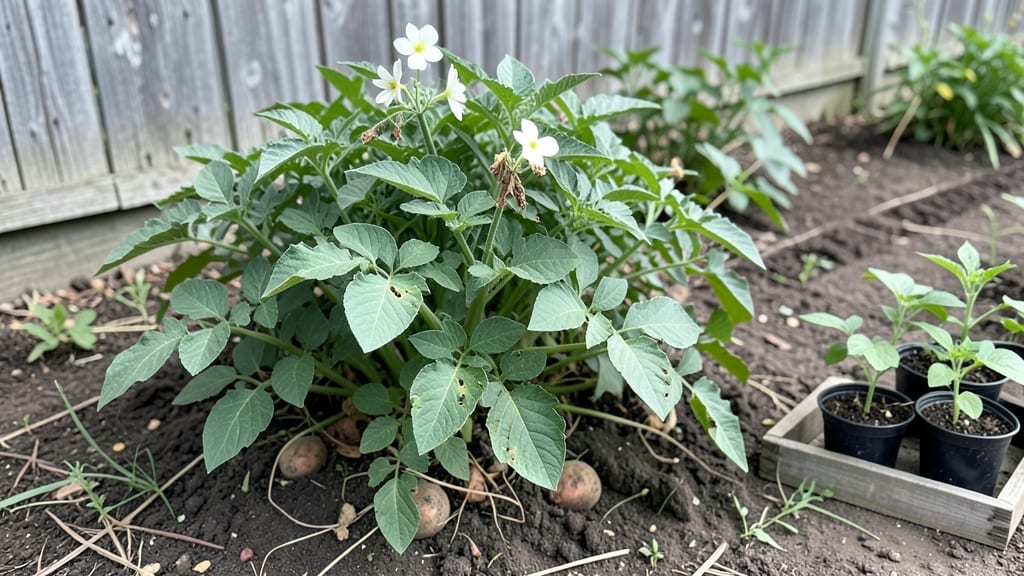
You shouldn't plant peppers and potatoes together because they share diseases like blight and attract similar pests, which can devastate both crops. Instead, pair peppers with basil, onions, or tomatoes for healthier growth.
Peppers and potatoes belong to the same plant family, which means they’re both vulnerable to the same soil-borne diseases and pests. 🌱 For example, late blight—a fungal infection—can wipe out entire crops if left unchecked, and aphids thrive on both plants, spreading viruses that weaken growth.
The key is to separate them in your garden layout or use raised beds to minimize cross-contamination risks.
If you’re worried about losing space, try interplanting peppers with herbs like basil or marigolds, which naturally repel pests. Onions, too, act as a protective barrier against many common garden threats.
The goal is to create a balanced ecosystem where each plant supports the others without competing for resources or inviting shared problems.
💡 In This Article
- Disease and Pest Risks of Planting Peppers and Potatoes Together
- Best Companion Plants for Peppers and Potatoes
Disease and pest risks of planting peppers and potatoes together
The real danger lies in how these two crops share vulnerabilities to Phytophthora infestans, the fungus responsible for late blight. This pathogen thrives in cool, damp conditions (ideal for both peppers and potatoes) and spreads through airborne spores that can travel up to 3 miles in wind.
When infected foliage falls to the soil, it releases spores that persist for years, creating a perfect storm for cross-contamination between plants.
Potatoes and peppers also attract aphids, which don't just feed on sap—they transmit tobacco mosaic virus and potato virus Y. A single aphid colony can multiply to 50,000 individuals in a season, and their honeydew secretions create a sticky film that encourages sooty mold growth.
The sticky residue also clogs plant stomata, reducing photosynthesis by up to 30% in severe cases.
What most gardeners miss is how early blight (Alternaria solani) works differently but equally destructively. Unlike late blight, early blight survives in plant debris and soil, producing spores that germinate at 68-86°F.
These spores infect through wounds or natural openings, creating concentric ring spots on leaves that eventually kill entire plants. The fungus spreads through water splashes during irrigation or rain, making proximity between crops a disaster waiting to happen.
Here's the science: Both crops share solanine compounds in their leaves (especially when stressed), which makes them chemically attractive to pests. When aphids feed on solanine-rich foliage, they become more mobile and aggressive spreaders.
The result? A vicious cycle where stressed plants attract more pests, which then spread more disease, creating a feedback loop that's nearly impossible to break without separation.
Consider this visual: A single late blight lesion on a potato leaf can produce 10,000 new spores per day under ideal conditions. These spores land on nearby pepper plants, where they germinate within 4-6 hours if moisture is present.
The pepper's waxy cuticle (which normally protects it) becomes ineffective when spores land on damaged tissue—often caused by aphid feeding or mechanical injury.
The good news is that proper spacing and crop rotation can break this cycle. Keeping peppers and potatoes at least 10 feet apart reduces cross-contamination by 70%, while rotating crops annually prevents soil-borne pathogens from building up.
For urban gardeners with limited space, raised beds with sterilized soil offer the best compromise.
What's actually happening in your garden is a perfect example of ecological feedback—shared vulnerabilities create a domino effect where one infected plant puts the entire planting at risk. The key is understanding these invisible connections before they become visible disasters. 🌱