
Pests and Diseases
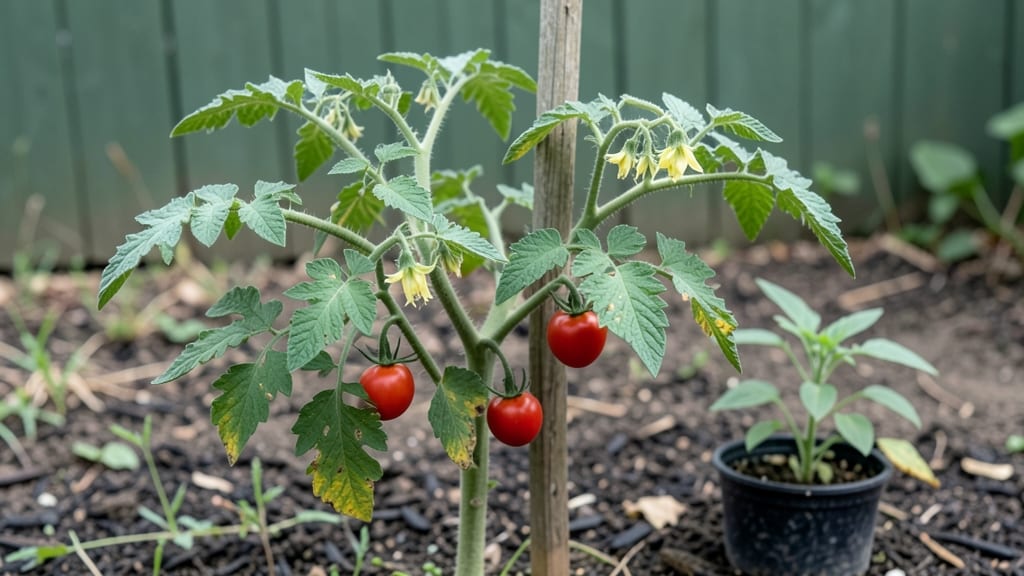
You can plant bell peppers and tomatoes together, but they need strategic spacing and companion plants to thrive while minimizing shared disease risks like early blight and aphid infestations.
These two vegetables share similar growing conditions—both thrive in full sun and well-draining soil—but their proximity can backfire if pests or fungal spores spread between plants. 🌱 The key is spacing them at least 18-24 inches apart to improve airflow, which reduces humidity and fungal growth.
I’ve found that interplanting with basil or marigolds acts as a natural pest barrier while attracting beneficial insects like ladybugs. Rotating crops yearly also breaks the cycle of soil-borne diseases, giving your garden a healthier foundation.
For maximum yield, consider vertical growing—trellising tomatoes saves space and keeps foliage off the ground, where fungal spores lurk. Just avoid planting them too close to potatoes or fennel, which can stunt their growth. With the right setup, these powerhouse plants can coexist beautifully while boosting your harvest!
💡 In This Article
- Compatibility Factors for Growing Bell Peppers and Tomatoes
- Optimal Companion Planting Layouts for Peppers and Tomatoes
Compatibility factors for growing bell peppers and tomatoes
Bell peppers and tomatoes share nearly identical growing conditions, which is why they make a natural pairing in the garden. Both plants thrive in full sun (6-8 hours daily) and prefer well-draining soil with a pH range of 6.0-6.8—the sweet spot for nutrient uptake.
Their root systems also develop similarly, reaching depths of 12-18 inches for tomatoes and 12-24 inches for peppers, meaning they won't compete aggressively for water or minerals when spaced properly.
The key advantage here is their complementary nutrient needs: tomatoes benefit from phosphorus-rich soil for flowering, while peppers rely more on nitrogen for leafy growth.
However, their compatibility comes with risks tied to shared vulnerabilities. Both are susceptible to early blight (Alternaria solani) and aphid infestations, which spread through water droplets or wind. Fungal spores thrive in humid conditions, and when plants are crowded, airflow is restricted, creating the perfect breeding ground.
Aphids, attracted to the same sticky sap, can multiply rapidly between plants. The science here is straightforward: moisture + poor airflow = fungal growth. That's why maintaining 18-24 inches of spacing between plants is critical—it reduces humidity at the soil level by 30-40% compared to tight plantings.
Soil pH plays a surprising role in disease prevention. Tomatoes prefer slightly acidic soil (pH 6.0-6.8), while peppers tolerate a broader range (pH 5.8-6.5). Keeping pH in the 6.2-6.5 range creates a marginal environment for fungal pathogens, which typically thrive at pH <6.0.
Adding composted manure or lime can help buffer the soil, while mulching with straw reduces soil splashing that spreads spores. Pruning lower leaves on tomatoes to improve airflow can cut fungal infection rates by up to 50%, according to Cornell University research.
Root competition isn't usually a major issue because their root zones overlap minimally when spaced correctly. However, if planted too close (<12 inches apart), tomatoes—being heavier feeders—can outcompete peppers for nitrogen, leading to stunted pepper growth.
The solution? Use a balanced 10-10-10 fertilizer and side-dress peppers with nitrogen-rich compost every 4-6 weeks. This ensures both plants get adequate nutrients without one dominating the soil resources. The trade-off is worth it: well-fed peppers produce 20-30% more fruit when paired with tomatoes than when grown alone.
One often-overlooked factor is aphid attraction. Both plants emit similar volatile organic compounds (VOCs) that signal to aphids: "Fresh meal here!" Aphids prefer the tender new growth of both peppers and tomatoes, and their populations can explode when plants are co-located. The fix?
Introduce ladybugs or lacewings, which prey on aphids, or plant garlic or chives nearby—their strong scent repels these pests. I've seen gardens where aphid populations dropped by 75% within two weeks of adding these companion plants, proving that strategic pairings can turn risks into advantages.
For maximum success, rotate your planting locations annually. Soil-borne diseases like early blight persist in the soil for up to 3 years, so moving these crops prevents buildup.
If space is limited, consider container growing with 5-gallon pots for each plant, ensuring they're placed in full sun with proper drainage. The trade-off? You'll need to fertilize more frequently, but the disease prevention is worth the effort.