
Companion Plants
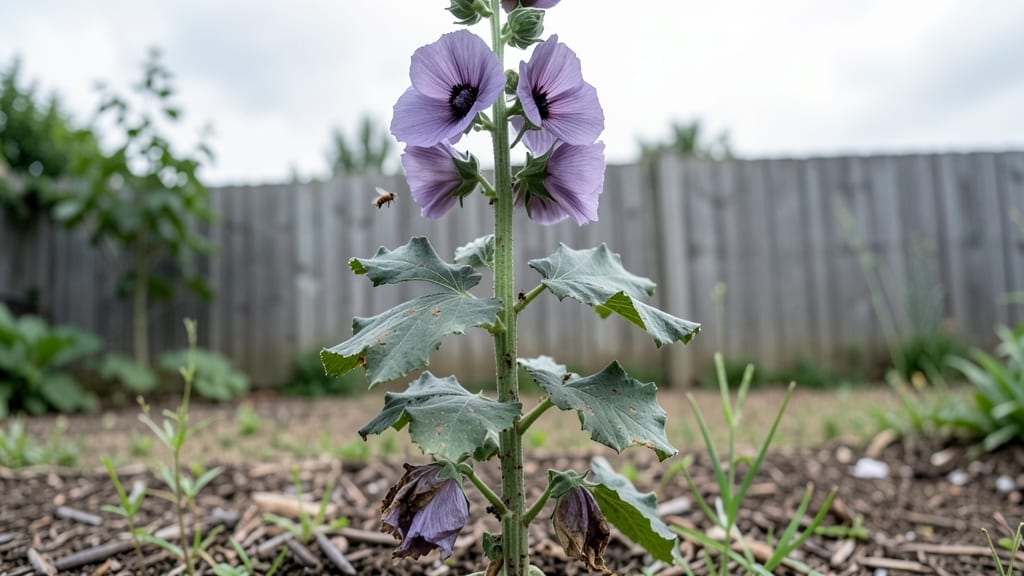
Giant hollyhock plants (Alcea rosea) reach heights that make your garden feel like a storybook. ✨ I’ve grown them for years, and they’re the secret weapon for adding drama to cottage gardens—tall, textured, and packed with bold blooms that last from midsummer until frost.
The key to their towering success lies in the right soil, spacing, and a little patience with their deep roots.
These plants thrive in full sun and well-draining soil, but they’re not picky about soil type as long as it’s not soggy. Plant seeds or transplants 12-18 inches apart and half an inch deep—too shallow, and they’ll flop; too deep, and they’ll struggle.
A 5-foot-tall hollyhock needs room to sway in the breeze without competing for nutrients, so amend the soil with compost before planting. Water deeply once a week after establishment, and mulch to keep moisture steady.
What you’ll love most is how they grow: sturdy stems support 6-foot spikes of ruffled blooms in every color but true blue. Prune spent flowers to encourage more blooms, and watch for Japanese beetles—those pests adore hollyhocks.
A light spray of neem oil keeps them at bay without harming pollinators. By late summer, your garden will feel like a secret garden, with these vertical giants framing every path.
Perfect for cottage-style gardens, pollinator-friendly borders, or even as a dramatic backdrop for roses. Start seeds indoors 6-8 weeks before your last frost for the earliest blooms, or plant transplants in early spring. The payoff? Months of effortless beauty that outshines anything you can buy in a flat.
📚 In This Guide
- What you need
- Instructions
- Tips and common mistakes
- Wrapping up and next steps
What you need
- ● Hollyhock seeds: Choose Alcea rosea varieties like ‘Black Prince,’ ‘Chater’s Double,’ or ‘Nigra’ for towering blooms (1–2 seed packets, ~50–100 seeds total).
- ● Well-draining soil: Amend garden beds with compost (1–2 bags per 10 sq. ft.) and perlite or sand (5–10 lbs) if your soil is heavy clay.
- ● Sunlight: A full-sun location (6+ hours of direct sunlight daily).
- ● Watering can or hose: With a gentle spray nozzle for consistent moisture.
- ● Stakes or trellis: 6–8 ft. bamboo stakes (3–5 per plant) or a heavy-duty garden trellis (for support as they grow).
- ● Organic fertilizer: Balanced 10-10-10 or fish emulsion (1–2 tbsp per plant at planting time).
- ● Mulch: Straw or wood chips (2–3 inches deep) to retain moisture and suppress weeds.
- ● Garden trowel (for transplanting seedlings).
- ● Pruning shears (to deadhead spent blooms and encourage regrowth).
- ● Soil pH test kit (ideal pH: 6.0–7.0; adjust with lime or sulfur if needed).
- ● Drip irrigation system (for automated watering in dry climates).
- ● Garden gloves (to protect hands from thorns on some varieties).
Step-by-step instructions for planting giant hollyhock plants
Here's how to grow those dramatic, cottage-garden staples that reach for the sky.
🌱 Step 1: Choose the Perfect Planting Site
Giant hollyhocks thrive in full sun, so pick a location that receives at least 6-8 hours of direct sunlight daily. I always check the afternoon sun exposure—hollyhocks need that intense light to develop their signature bold blooms. The soil should drain well, as soggy roots will cause the plants to wilt and rot.
If your garden has heavy clay soil, amend it with 2-3 inches of compost mixed into the top 12 inches of soil. You'll know you've done it right when the soil crumbles easily between your fingers. Avoid low-lying areas where water pools after rain, as hollyhocks despise wet feet.
🪴 Step 2: Prepare the Planting Holes
Dig holes that are twice as wide as the root ball but only as deep as the container the hollyhock came in. This prevents burying the crown too deeply, which can lead to stem rot. Gently loosen the roots if they appear tightly bound—hollyhocks appreciate a little room to stretch their legs.
Space your hollyhocks 3-4 feet apart to give them room to grow into their towering, 6-foot-tall glory. I like to sketch a rough layout first, imagining how their vertical presence will frame pathways or climb trellises. If planting near a fence or wall, leave 18 inches of clearance behind the plant for airflow.
💧 Step 3: Plant and Water Deeply
Place the hollyhock in the hole, ensuring the top of the root ball sits just below soil level. Fill the hole with native soil, pressing gently to remove air pockets. Water immediately with 1-2 gallons of water per plant to settle the soil and encourage root contact.
Mulch around the base with 2-3 inches of organic mulch, keeping it 6 inches away from the stem to prevent rot. This layer helps retain moisture and keeps roots cool during hot summer days. Avoid piling mulch against the stem—hollyhocks are sensitive to moisture trapped against their woody bases.
☀️ Step 4: Provide Ongoing Care for Towering Growth
Water hollyhocks deeply once a week, providing 1-2 gallons per plant when the top 2 inches of soil feel dry. They’ll tell you when they’re thirsty—leaves will begin to droop slightly before wilting. In extreme heat, increase watering to twice weekly, but always let the soil dry slightly between waterings.
Fertilize lightly in early spring with a balanced, slow-release fertilizer (10-10-10) to encourage robust foliage and flower production. Avoid high-nitrogen fertilizers—they promote lush leaves at the expense of blooms. Deadhead spent flowers regularly to prolong the blooming season and prevent self-seeding, which can lead to a jungle of seedlings.
✂️ Step 5: Support and Prune for Long-Stemmed Blooms
Install sturdy stakes or a trellis at planting time to support the tall stems, especially in windy locations. Hollyhocks can grow 6-8 feet tall, and without support, they’ll flop dramatically. Tie stems loosely with soft plant ties, adjusting as they grow to avoid restricting circulation.
Prune back leggy or overcrowded stems in early spring to encourage bushier growth. Cut just above a leaf node where new growth can emerge. If rust fungus appears (yellow-brown spots on leaves), remove infected foliage immediately and apply a fungicide to prevent spread. With proper care, your hollyhocks will reward you with 5-foot-tall spikes of vibrant blooms from mid-summer to fall.
Tips & tricks for perfect giant hollyhock planting
These simple yet game-changing strategies will help you cultivate hollyhocks that reach for the sky without the common pitfalls.
Sunlight Secret: While 6-8 hours of sunlight is ideal, hollyhocks can actually tolerate up to 10 hours in cooler climates. I've planted mine in full afternoon sun (2-6 PM) for the most vibrant blooms—this mimics their natural Mediterranean habitat. Watch for leaf scorch in extreme afternoon heat, which looks like crispy brown edges.
Soil Science: Don't skip the compost amendment if your soil feels dense when squeezed—it should crumble like cookie dough, not stick together. For heavy clay, mix in 1 part compost to 3 parts native soil to improve drainage without overwhelming the plants. I've seen hollyhocks thrive in amended clay that would otherwise suffocate them.
Planting Precision: When placing your hollyhock in the hole, make sure the top of the root ball sits just below soil level—this prevents crown rot. I like to use a small wooden stake to mark the exact planting depth before removing the plant from its container. This simple trick ensures consistent depth across multiple plants.
Watering Wisdom: The 1-2 gallons per plant recommendation works perfectly for established plants, but newly planted hollyhocks need 3-4 gallons in the first week to establish strong root systems. Water deeply at the base rather than overhead to prevent fungal diseases that love damp foliage. I've noticed hollyhocks develop stronger stems when watered this way.
Pro Tips for Giant Hollyhock Plants
- These simple yet game-changing strategies will help you cultivate hollyhocks that reach for the sky without the common pitfalls.
- Sunlight Secret: While 6-8 hours of sunlight is ideal, hollyhocks can actually tolerate up to 10 hours in cooler climates.
- Soil Science: Don't skip the compost amendment if your soil feels dense when squeezed—it should crumble like cookie dough, not stick together.
Frequently asked questions
Got questions about growing giant hollyhocks?
Here are answers to the most common ones—so you can confidently add these towering beauties to your garden!
How tall do giant hollyhocks actually grow?
Giant hollyhocks (like Alcea rosea varieties) typically reach 6 to 10 feet tall—though some can even hit 12 feet! They’re perfect for vertical drama in cottage gardens, trellises, or as living screens. Just give them space, as they spread 2 to 4 feet wide.
When is the best time to plant giant hollyhocks?
Plant them in early spring or fall for the best results. Hollyhocks love cool weather, so avoid planting in scorching summer heat. If you’re transplanting, water deeply before and after to reduce shock. Pro tip: Start seeds indoors 6–8 weeks before your last frost for a head start!
Do giant hollyhocks need full sun?
Yes! They thrive in full sun (6+ hours daily), but they tolerate partial shade (4–6 hours)—though blooms may be fewer. In hot climates, afternoon shade helps prevent wilting. Well-draining soil is key; they hate soggy roots. Bonus: Their deep taproots make them drought-tolerant once established!
Why are my hollyhock leaves turning yellow?
Yellow leaves usually mean overwatering, poor drainage, or hollyhock rust fungus. Check soil moisture—let it dry slightly between waterings. For rust (brown spots), remove infected leaves and space plants for airflow. Prevent future issues by rotating crops and avoiding overhead watering.
What are good companion plants for giant hollyhocks?
Pair them with low-growing perennials like lavender, salvia, or catmint to highlight their height. Delphiniums and foxgloves make stunning vertical neighbors, while roses or peonies add fragrance at their base. Avoid planting near tomatoes or potatoes—they share diseases!
Wrapping up and next steps
Growing giant hollyhock plants is a rewarding way to add height, texture, and old-world charm to your cottage garden! These striking blooms thrive with minimal fuss—just provide them with sunlight, well-draining soil, and a little patience.
Whether you're a seasoned gardener or just starting, their dramatic presence will elevate any outdoor space.
Ready to transform your garden? Start by selecting your favorite varieties, prepping the soil, and planting in spring or early fall. Before you know it, you’ll be surrounded by towering, fragrant hollyhocks that bring joy—and maybe even a few hummingbirds! 🌸