
Diseases
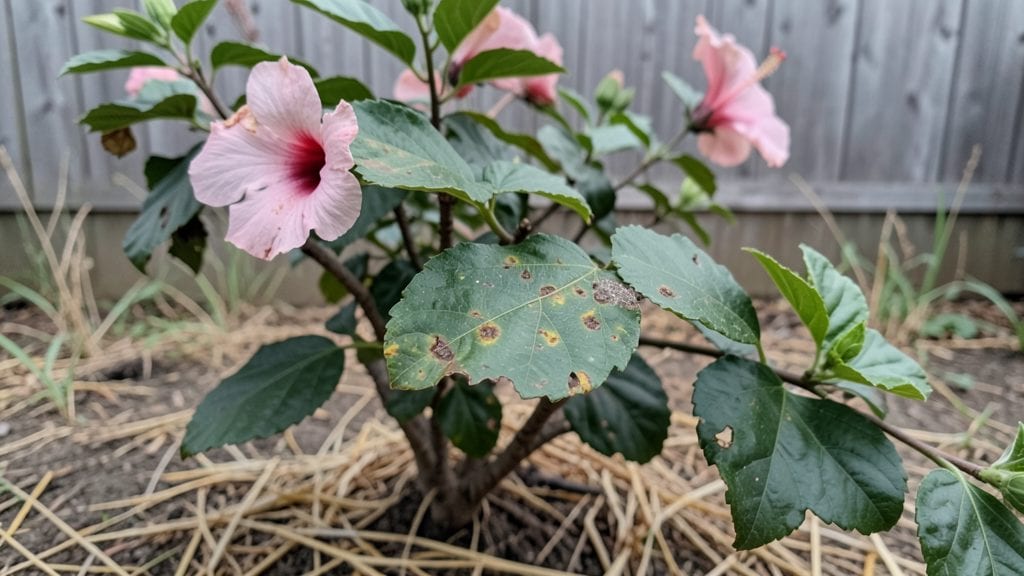
Hibiscus plant diseases can turn your showstopping blooms into a sad, spotted mess if you don’t catch them early. 🌿 I’ve watched my own hibiscus go from lush and vibrant to wilted in weeks because I ignored the first signs—yellowing leaves, sticky residue, or weird spots.
The good news? Most problems have simple fixes once you know what to look for.
Common culprits include fungal infections like anthracnose or rust, which thrive in damp conditions, and pests like aphids or whiteflies that suck the life out of leaves. Bacterial blight can also creep in, especially after rain or overhead watering.
The key is acting fast—once these issues spread, recovery gets a lot harder. I’ll show you how to spot them early and stop them before they ruin your plant.
With the right organic sprays, pruning techniques, and preventive care, you can keep your hibiscus thriving. Think crisp, healthy leaves and bold blooms all season long—no more panicking over mysterious spots or wilting. Let’s get your hibiscus back to its best in no time.
We’ll cover everything from quick fixes for pests to long-term strategies for fungal resistance, so you’re ready for whatever Mother Nature throws your way. Your hibiscus will thank you with bigger, brighter flowers all summer.
Root Causes Of Hibiscus Woes
Hibiscus plants, with their vibrant blooms and lush foliage, can quickly become a gardener’s pride—until disease strikes. But why do these tropical beauties fall victim to infections, pests, or decline? The answer lies in a mix of environmental stress, poor care habits, and biological invaders.
Understanding the root causes of hibiscus plant diseases helps you take preventive action before problems escalate. Let’s break down the science behind the suffering.
Hibiscus plants thrive in well-draining soil but hate soggy roots. When soil stays too wet for too long, it creates the perfect breeding ground for fungal pathogens like Phytophthora and Pythium. These water-loving microbes thrive in anaerobic (oxygen-deprived) conditions, leading to:
- Root rot: Roots suffocate, turn brown/mushy, and die back. The plant weakens, making it susceptible to secondary infections.
- Fungal leaf spots: Excess moisture on foliage (from overhead watering) encourages Alternaria or Cercospora, causing dark, crinkled lesions.
- Stunted growth: The plant diverts energy to survival instead of flowering, leaving you with a leggy, sad-looking shrub.
Why it happens: Hibiscus roots need 1–2 inches of water per week but must dry out between waterings. Clay or compacted soil holds too much moisture, while containers without drainage holes trap excess water. Even well-meaning gardeners can overwater, especially in humid climates or during rainy seasons.
Fungal diseases like Anthracnose and Powdery Mildew don’t just appear—they hitchhike on wind, rain, or even your gardening tools. Spores land on hibiscus leaves, where they germinate if conditions are right:
- High humidity (above 75%) keeps spores damp and active.
- Poor air circulation (e.g., crowded plants or dense foliage) traps moisture near leaves.
- Stressed plants (from drought, nutrient deficiency, or physical damage) have weaker defenses.
Why it happens: Fungal spores are everywhere in gardens, but hibiscus plants become vulnerable when their natural cuticle (waxy leaf coating) is compromised. Overhead irrigation, for example, splashes spores directly onto leaves, while tight plant spacing creates a microclimate that fuels outbreaks.
Some hibiscus diseases aren’t caused by microbes—they’re spread by pests. Insects like aphids, whiteflies, and scale don’t just sap plant sap; they also transmit viruses (e.g., Hibiscus Chlorotic Ringspot Virus) and leave behind honeydew, a sticky residue that fosters sooty mold.
- Aphids: Inject toxins while feeding, causing curled leaves and stunted growth.
- Whiteflies: Excrete honeydew, which attracts mold and clogs leaf pores, reducing photosynthesis.
- Mealybugs: Their woolly secretions trap moisture, creating ideal conditions for fungal growth.
Why it happens: Pests thrive in warm, dry conditions and stressed plants. A hibiscus struggling from drought or poor nutrition becomes an easy target. Once pests establish a colony, they weakened the plant’s immune response, making it easier for diseases to take hold.
Hibiscus plants are tropical at heart—they despise sudden temperature swings, frost, or scorching heat. When conditions stray from their ideal range (60–85°F), their defenses falter:
- Cold stress: Frost or chilly nights (<40°F) can cause bacterial leaf spot or Fusarium wilt by damaging cell membranes, allowing pathogens to enter.
- Heat stress: Drought-like conditions force plants to close stomata (leaf pores), reducing transpiration and trapping humidity—perfect for fungal growth.
- Rainy seasons: Prolonged wet weather washes away protective waxes on leaves, leaving them vulnerable to Botrytis (gray mold).
Why it happens: Extreme temperatures disrupt the plant’s natural chemical defenses, like phenolic compounds that repel pathogens. Additionally, heat waves can burn leaves, creating open wounds where bacteria or fungi can invade.
A hibiscus plant’s health is only as strong as its diet. Too little or too much of certain nutrients can weaken its resistance to disease:
- Nitrogen deficiency: Leads to yellowing leaves (chlorosis), reducing the plant’s ability to produce disease-fighting compounds.
- Phosphorus deficiency: Slows root growth, making the plant more susceptible to root rot.
- Potassium deficiency: Weakens cell walls, making them easier targets for fungal penetration.
- Over-fertilization (especially with salt): Burns roots, stressing the plant and inviting Fusarium or Verticillium wilt.
Why it happens: Hibiscus plants need a balanced fertilizer (e.g., 10-10-10 or 6-12-6) but are sensitive to salt buildup from synthetic fertilizers. Poor soil structure (lack of organic matter) also hinders nutrient uptake, leaving the plant malnourished and defenseless.
Pro Tip: 💡 Conduct a soil test every 2–3 years to check pH (ideal: 6.0–6.5) and nutrient levels. Amend soil with compost or well-rotted manure to improve structure and microbial activity.
Quick Fixes for Common Hibiscus Woes
Now that you’ve identified the trouble, let’s roll up our sleeves and get your hibiscus back to its vibrant best! Below are targeted solutions for the most common ailments, paired with prevention tips to keep future problems at bay.
Think of this as your hibiscus plant’s first-aid kit—simple, effective, and easy to follow.
🔥 How to Treat Fungal Infections
Fungi thrive in damp, shady conditions, so act fast to starve them out and restore airflow.
- Prune Like a Pro 🔪
- Snip off infected leaves and stems (about ½ inch below the damage) using sterilized pruners (wipe with rubbing alcohol between cuts).
- Dispose of debris in the trash—do not compost—to prevent reinfection.
- Fungicide Spray Attack 💦 - Mix 1 tsp baking soda + 1 quart water + a few drops of dish soap (the soap helps it stick).
Spray early morning or evening to avoid leaf burn. - For stubborn cases, use a copper-based fungicide (follow label instructions). - Reapply every 7–10 days until the problem clears.
- Boost Airflow & Light 🌞
- Space plants 3–4 feet apart and avoid overcrowding.
- Move pots to a sunnier spot (hibiscus loves 6+ hours of direct sun).
- If growing in the ground, thin out nearby plants or trim back foliage blocking airflow.
- Soil Reset 🌱
- Fungi love soggy soil. Amend the top 2–3 inches with perlite or coarse sand to improve drainage.
- If the soil is consistently waterlogged, consider raising the pot or adding a gravel layer at the bottom.
💡 Prevention Tips
- Water at the base (avoid wetting leaves) and early in the day so foliage dries quickly.
- Avoid overhead irrigation—drip systems or soaker hoses are your best friends.
- Clean up fallen leaves regularly to remove fungal spores.
- Rotate fungicides if you use them often to prevent resistance.
🍳 How to Kick Out Unwanted Guests
Pests weaken hibiscus by sucking sap, leaving behind sticky residue (honeydew) and stunted growth. Here’s how to evict them for good.
- Blast Them Off 💦 - Strong water spray: Direct a hose nozzle (not too forceful) at infested areas to knock off aphids and whiteflies. - Neem oil solution: Mix 1 tbsp neem oil + 1 tsp mild soap + 1 quart water.
Spray every 5–7 days until pests vanish. - Insecticidal soap: Follow package directions—reapply every 3–5 days for severe infestations.
- Introduce Beneficial Buddies 🐞
- Ladybugs and lacewings love aphids. Buy them online or attract them with dill or fennel plants nearby.
- Parasitic wasps (like Encarsia formosa) target whiteflies—check garden centers for releases.
- Prune & Destroy 🔪
- Clip off heavily infested branches and soak them in soapy water for 24 hours before tossing.
- Quarantine New Plants 🚫
- Always inspect new hibiscus (or any plant) for pests before bringing them home.
🌡️ Prevention Tips
- Inspect leaves weekly—catch pests early before they multiply.
- Yellow sticky traps can monitor whitefly populations.
- Encourage diversity in your garden—pests are less likely to overrun a varied plant community.
- Avoid over-fertilizing with nitrogen—soft, new growth attracts pests.
📊 How to Fix Nutrient Imbalances
Yellowing leaves or slow growth often mean your hibiscus is hungry or thirsty. Let’s diagnose and feed it right.
| Symptom | Likely Cause | Solution |
|---|---|---|
| Yellow lower leaves | Nitrogen deficiency | Feed with a balanced fertilizer (10-10-10) or fish emulsion every 4–6 weeks. |
| Yellow edges (chlorosis) | Iron or magnesium deficiency | Apply chelated iron or Epsom salt (1 tbsp/gallon water, spray or water). |
| Purple stems/leaves | Phosphorus deficiency | Use a phosphate-rich fertilizer (like bone meal) or compost tea. |
| Stunted growth | Potassium deficiency | Feed with potassium sulfate or wood ash (sprinkle lightly around roots). |
✨ Prevention Tips
- Test your soil every 2–3 years (or if plants look sickly).
- Mulch with compost (2–3 inches) to slowly release nutrients.
- Water deeply but less often—hibiscus hate soggy roots but need consistent moisture.
- Avoid over-potting—root-bound plants can’t access nutrients efficiently.
👨🍳 How to Cool Down Your Hibiscus
If your hibiscus is drooping, crispy, or bleached, it’s crying out for shade and hydration.
- Gradual Acclimation 🌞
- If moving from shade to sun, harden off plants over 1–2 weeks by slowly increasing sunlight exposure.
- Shade Cloth Savior 🛡️
- Install 30–50% shade cloth during peak afternoon sun (12 PM–4 PM).
- For potted hibiscus, move them to a morning sun/afternoon shade spot.
- Hydration Boost 💧
- Water deeply (1–2 gallons per large plant) every 2–3 days in extreme heat.
- Mulch with straw or wood chips to retain moisture and cool roots.
- Mist Lightly 🌧️
- On very hot days, mist leaves early morning to raise humidity (avoid evening misting to prevent fungal growth).
🎯 Prevention Tips
- Choose heat-tolerant varieties like ‘Dwarf Red’ or ‘Tropical White’ if you live in a hot climate.
- Avoid pruning during heatwaves—stressed plants recover slower.
- Group plants together to create a microclimate with higher humidity.
🔪 How to Save a Dying Hibiscus
These are serious issues—act fast or your plant may not survive.
- Root Rot Rescue 🌱
- Remove the plant from the pot/ground and rinse roots gently with water.
- Trim black, mushy roots with sterilized shears—keep only firm, white/light tan roots.
- Repot in fresh, sterile potting mix (add perlite or vermiculite for drainage).
- Water lightly only when the top inch of soil is dry.
- Bacterial Blight Treatment 🛡️
- Prune infected leaves/stems (sterilize tools between cuts!).
- Spray with copper fungicide (like Copper Soap) every 5–7 days.
- Avoid overhead watering and sterilize tools to prevent spread.
💡 Prevention Tips
- Never let hibiscus sit in saucers of water—empty saucers after watering.
- Use raised beds or containers if your soil drains poorly.
- Rotate crops if growing hibiscus in the same spot yearly (bacteria build up).
Before problems escalate, check your hibiscus weekly with this quick routine:
- Ins
Frequently asked questions about hibiscus plant diseases
What are the first signs my hibiscus has a fungal infection?
Look for dark spots with yellow halos on leaves (anthracnose) or white powdery patches (powdery mildew). Leaves may also crinkle or drop prematurely. Check the undersides of leaves too—rust-colored pustules indicate leaf rust. Act fast by pruning infected areas and improving airflow.
How do I tell if my hibiscus has aphids or whiteflies?
Aphids cluster on new growth and leave sticky honeydew, while whiteflies flutter when you disturb leaves. Check leaf undersides with a magnifying glass—aphids are tiny green/black bugs, while whiteflies are tiny white moth-like insects. Both weaken plants by sucking sap, so treat with neem oil or insecticidal soap.
Why do my hibiscus leaves turn yellow even with regular fertilizing?
Yellowing leaves often signal nutrient deficiencies or overwatering. Check the pattern: Lower leaves yellowing = nitrogen deficiency; yellow edges = iron/magnesium deficiency. If soil stays soggy, roots may be rotting. Test soil pH (6.0–6.5 ideal) and adjust with chelated iron or Epsom salt for yellowing.
Can I save a hibiscus with bacterial blight?
Bacterial blight causes water-soaked spots that ooze and spread quickly. Prune infected areas immediately with sterilized tools, then spray with copper fungicide every 5–7 days. Avoid overhead watering and remove fallen leaves. Severe cases may require total plant removal to prevent spread to other plants.
How often should I spray my hibiscus with neem oil?
Apply neem oil every 5–7 days for 2–3 weeks to control pests like aphids or whiteflies. Mix 1 tbsp neem oil + 1 tsp mild soap + 1 quart water and spray early morning or late evening to avoid leaf burn. Stop after pests disappear, then reapply only if new infestations appear.