
Pruning
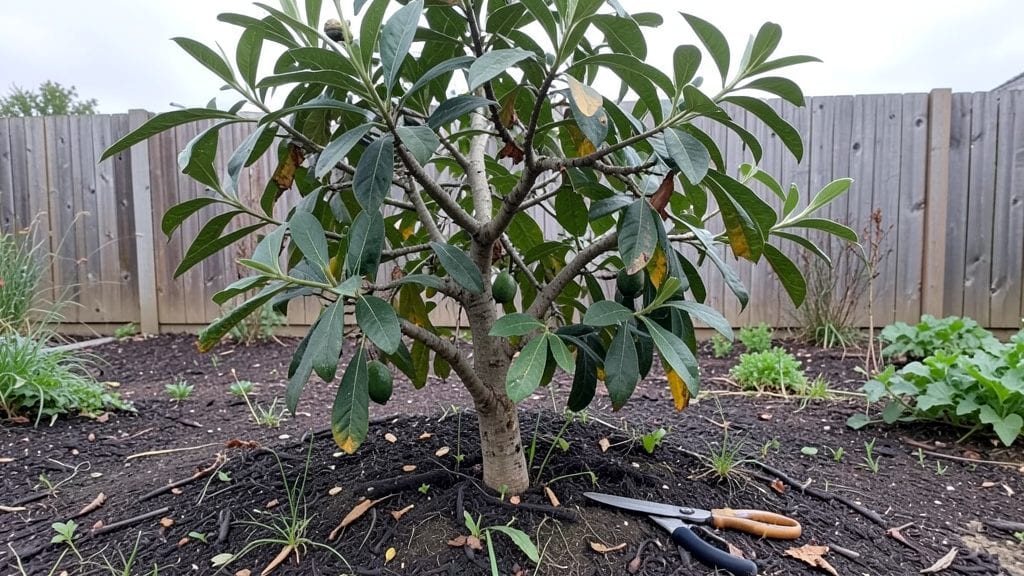
Cutting back your avocado plant isn't just about trimming—it's about unlocking healthier growth and bigger fruit. 🌿 I learned the hard way that aggressive pruning too early can stunt your tree, but the right cuts at the right time transform it from scraggly to sturdy.
The key is timing: late winter or early spring when new growth is about to burst, or after harvest when the plant has stored energy.
You only need three tools: sharp bypass pruners for small branches, loppers for thicker stems, and rubbing alcohol to sterilize cuts. Look for branches that cross or rub against each other, dead wood, or any that grow straight up instead of outward—these are your targets.
The goal is to open up the canopy so sunlight reaches the center, which is where fruit sets and where pests hide.
After each cut, you'll notice new shoots emerging within 2-4 weeks, and those become your future harvest branches. The plant rewards precision with thicker trunks, more air circulation (fewer fungal issues), and fruit that ripens evenly.
Even if you've never pruned before, this method works—just avoid cutting more than 25% of the foliage in one session.
This technique works for both container-grown avocados and in-ground trees, though container plants need slightly more frequent trimming. The same rules apply whether you're shaping a dwarf variety or a mature tree—just adjust the scale. Once you see the difference, you'll wonder why you waited so long to try it.
📚 In This Guide
- What you need
- Instructions
- Tips and common mistakes
- Wrapping up and next steps
What you need
- ● Pruning shears or bypass pruners – Choose sharp, sterilized tools with a 4- to 6-inch blade for clean cuts. Avoid dull or rusty blades to prevent tearing.
- ● Garden gloves – Opt for cut-resistant, breathable gloves (e.g., leather or reinforced fabric) to protect your hands from thorns and sap.
- ● Disinfectant (70% isopropyl alcohol or bleach solution) – Mix 1 part bleach to 9 parts water to sterilize tools between cuts and avoid disease spread.
- ● Rubbing alcohol or hand sanitizer – For cleaning hands before and after pruning to prevent contamination.
- ● Sharpie or permanent marker – A fine-tip marker for labeling cuts (e.g., "top," "side") if you’re doing a structured prune.
- ○ Pruning saw (optional but helpful) – For thicker branches (½-inch diameter or larger). A bow saw or felco pruning saw works best.
- ● Bucket or trash bag – To collect pruned branches and debris. A 5-gallon bucket is ideal for small to medium plants.
- ● Rooting hormone – If you plan to propagate cuttings, use a gel or powder to boost success rates.
- ● Plastic wrap or humidity dome – For creating a mini greenhouse for propagated cuttings.
- ● Hose or spray bottle – To rinse off sap and clean tools post-pruning.
- ● Compost bin or mulch – To recycle pruned branches into nutrient-rich soil amendments.
- ● Camera or phone – Snap before-and-after photos to track your avocado’s growth progress!
How to cut back an avocado plant: year-round health with precision trims
Here's the straightforward method I use to keep my avocado plants thriving indoors—no fancy tools, just smart cuts.
✂️ Step 1: Identify the Right Time to Trim
Avocados respond best to trimming in early spring, just as new growth begins. This is when the plant has energy to recover quickly. You can also do light maintenance trims in late summer to shape the plant before dormancy. Avoid heavy cuts in fall or winter—the plant needs all its resources to survive cooler temperatures.
Look for these visual cues: healthy new leaves emerging from the center of the plant or along branches. This signals the plant is ready to redirect energy. If you see leggy growth reaching toward a window, that’s your plant begging for a trim to encourage bushier, stronger branches.
✂️ Step 2: Gather Your Tools and Prepare the Plant
You’ll need sterilized pruning shears (clean them with rubbing alcohol first) and a sharp knife for any thicker stems. Avocado wood is tough, so dull tools tear instead of cleanly cutting. Wipe down the tools after each cut to prevent spreading disease between branches.
Place your plant in a well-lit area before trimming. The brighter the light, the easier it is to spot where branches are growing too close or crossing. Remove any dead, yellowed, or diseased leaves first—they’re just taking up energy. This also gives you a clear view of the plant’s structure.
✂️ Step 3: Cut Back Leggy or Overgrown Branches
Focus on branches that are longer than 12 inches or growing in one direction (leggy). Cut these back to a leaf node—the small bump where leaves attach—about ¼ inch above it. This encourages new growth from that node. Avoid cutting into the center of the plant; avocados grow best with an open, airy shape.
If a branch is thicker than a pencil, make a clean cut at a 45-degree angle just above a node. For thinner branches, a straight cut works fine. Never leave stubs—this invites rot and weakens the plant. After each cut, step back to check the plant’s balance. You’re aiming for a shape that lets light reach all leaves.
✂️ Step 4: Shape the Plant for Better Airflow
Trim any branches that are rubbing against each other or growing inward. These create dark, damp spots where fungus loves to hide. Cut back to the nearest outward-facing node. You’ll also want to remove any suckers—those small, weak shoots growing from the base or along the trunk. These drain energy from your main plant.
Pay attention to the top of the plant. If it’s growing too tall for your space, cut back the main stem to just above a strong side branch. This forces the plant to bush out instead of stretching upward. After shaping, your avocado should look like a rounded bush, not a lopsided tower.
💧 Step 5: Care for the Plant After Trimming
Water the plant deeply right after trimming to help it recover. The roots need moisture to support new growth, but don’t overdo it—let the top inch of soil dry out between waterings. Place the plant in the brightest light you have (south-facing window or grow light) for 2-3 weeks to encourage strong regrowth.
You’ll see new leaves emerging from the cut nodes within 3-4 weeks. This is your reward for trimming! If no new growth appears after 6 weeks, check your light—avocados need 6+ hours of direct sun daily to thrive. A little patience here pays off with a fuller, healthier plant.
Tips & tricks for perfect avocado plant trimming
Here's what I've learned after years of trimming my own avocado plants—these tricks will help you avoid common mistakes and get the best results.
Timing is Everything: I can't stress enough how important the early spring timing is. Your plant needs that burst of energy from new growth to recover from cuts. If you're unsure about the season, check for those fresh leaves emerging—this is your green light to trim. In late summer, only do light maintenance; heavy cuts can stress the plant before dormancy.
Tool Prep Saves Your Plant: Don't skip sterilizing your tools! I've seen pruning shears spread fungus between plants when they weren't cleaned properly. Wipe down your tools with rubbing alcohol before and after each cut, especially if you're working with multiple plants. A sharp knife is also crucial—dull tools tear the wood instead of making clean cuts, which invites infections.
Visual Cues Over Guesswork: When cutting back those leggy branches in Step 3, look for the leaf nodes—they're those little bumps where leaves attach. Cutting just above these (about ¼ inch) is key because it's where new growth will sprout. I always step back after each cut to check the plant's balance—this helps me visualize if I'm creating an open, airy shape that lets light reach all leaves.
Post-Trim Recovery Strategy: After trimming, I always give my plants a deep watering to help them recover, but I never overdo it. Let that top inch of soil dry out between waterings—this prevents root rot while still keeping the roots hydrated enough to support new growth. The 2-3 weeks in brightest light is non-negotiable; I've seen plants that didn't get enough light after trimming struggle to regrow properly.
Pro Tips for Cut Back Avocado Plant
- Here's what I've learned after years of trimming my own avocado plants—these tricks will help you avoid common mistakes and get the best results.
- Timing is Everything: I can't stress enough how important the early spring timing is.
- Tool Prep Saves Your Plant: Don't skip sterilizing your tools!
Frequently asked questions
Got questions about trimming your avocado plant?
You’re not alone—pruning can feel tricky! Here are answers to the most common concerns to help you cut back with confidence.
When is the best time of year to prune an avocado tree?
The ideal time is late winter or early spring (just before new growth starts). This gives your tree time to recover before summer heat. Avoid heavy pruning in fall—it can stress the plant before dormancy. Light maintenance (like removing dead branches) is fine year-round!
How much can I cut back without harming the plant?
Never remove more than 25-30% of the canopy in one session. Avocados are sensitive to over-pruning. Focus on shaping, thinning dense areas, and removing dead/diseased wood. If you’re unsure, start small—you can always trim more later!
What if my avocado plant doesn’t have many branches to prune?
If your tree is young or leggy, prioritize removing water sprouts (fast-growing vertical shoots) and thinning crowded foliage. Use the open-center method to encourage a bushier shape. Avoid topping (cutting the main stem)—it can stunt growth. Patience is key!
Why is my avocado plant leaking sap after pruning?
Sap oozing is normal! Avocados produce latex when cut. To minimize mess, prune on a dry day and seal cuts with pruning sealant (optional). If sap turns black or smells foul, it could signal disease—inspect the wound and trim further if needed.
Can I prune an avocado tree in hot or cold weather?
Avoid pruning during heatwaves (above 90°F) or freezing temps (below 40°F). Extreme temps stress the plant and slow healing. Early morning or late afternoon on mild days is best. If you must prune in heat, water the tree thoroughly before and after.
Wrapping up and next steps
Cutting back your avocado plant doesn’t have to be intimidating—with the right tools, timing, and technique, you can promote healthier growth, more fruit, and a lush, well-shaped tree.
Whether you’re pruning for maintenance, shaping, or rejuvenation, remember that confidence comes with practice! Start small, observe your plant’s response, and adjust as needed.
Now that you’re armed with knowledge, grab those shears and get trimming! 🌿✂️ Need more inspiration? Check out our guide on identifying avocado plant diseases to keep your tree thriving year-round.