
Watering
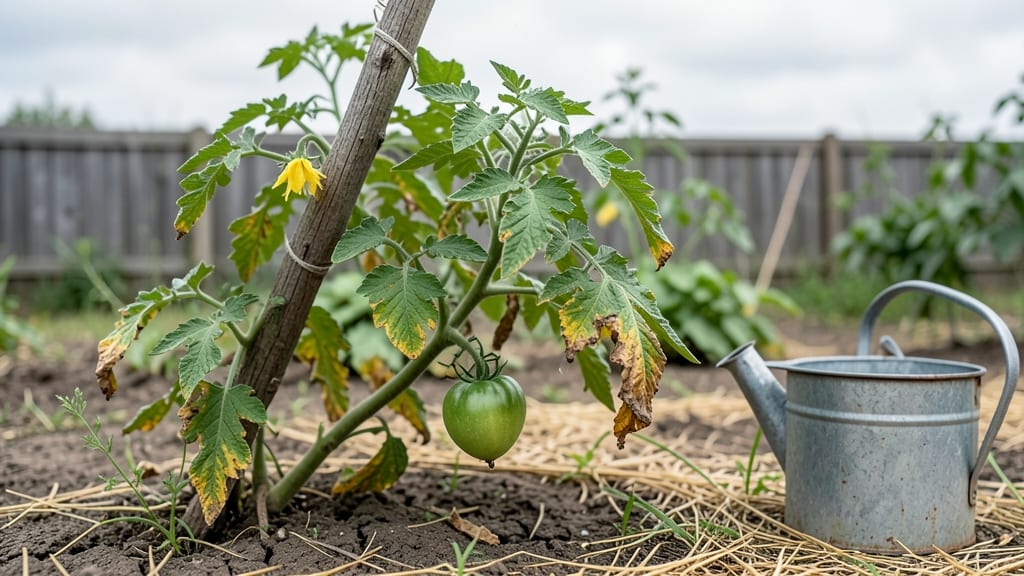
Fixing overwatered tomato plants starts with stopping the water flow—right now. 🌱 I’ve salvaged more tomato vines than I’d like to admit by catching this too late, and the key is acting fast before root rot sets in.
The moment you see yellowing leaves, drooping stems, or soil that smells sour, you’ve got a waterlogged disaster on your hands.
First, drain the excess water immediately by letting the soil dry out. Move potted plants to a shaded spot and avoid watering for at least 3-5 days, even if the plants look miserable.
For in-ground tomatoes, improve drainage by adding 2-3 inches of coarse sand or perlite to the soil around the roots—this helps oxygen reach the roots again. The goal is to shock the plant into recovery, not suffocate it further.
Once the soil feels dry to the touch, resume watering only when the top 1-2 inches feel bone-dry. Use a moisture meter or stick your finger in—if it’s damp past your first knuckle, wait another day.
Over time, amend the soil with compost or aged manure to improve structure, and consider mulching to regulate moisture. Your plants will bounce back with stronger stems and deeper green leaves within 1-2 weeks if you catch it early.
To keep this from happening again, water deeply but only 1-2 times per week (depending on heat), and always check soil moisture before adding more. Tomato plants are tough—they’ll forgive mistakes if you act fast and adjust your habits. Now go save those vines!
Root Causes of Overwatering
Overwatering tomato plants might seem like a harmless mistake—after all, who doesn’t want their plants to drink up? But when roots drown in excess moisture, a cascade of problems follows, from stunted growth to disease.
Understanding the why behind overwatering is the first step to preventing it. Let’s break down the key culprits:
🌱 Compacted or clay-heavy soil holds water like a sponge, suffocating roots and cutting off oxygen.
Without proper aeration, roots can’t absorb nutrients efficiently, leading to: - Yellowing leaves (chlorosis) due to nutrient starvation. - Blackened stems at the base, a sign of root rot. - Stunted growth as the plant struggles to support itself.
Actionable fix: Amend soil with organic matter (compost, perlite, or coconut coir) to improve drainage. A quick test? Grab a handful of moist soil—if it forms a tight clump, it’s too dense.
💦 Frequent shallow watering tricks plants into thinking they’re thirsty, prompting them to drink more than they need.
This is especially true for: - Drip irrigation systems left running on autopilot (check for leaks or misaligned emitters). - Hand-watering without checking soil moisture—just because the surface feels dry doesn’t mean the roots are.
Science behind it: Roots need oxygen to function. Overwatering displaces air pockets in soil, forcing roots to "drown" and triggering anaerobic conditions, where harmful bacteria thrive.
🏺 If you’re growing tomatoes in pots without drainage holes, water has nowhere to go but up—literally. Even "self-watering" containers can become death traps if:
- The reservoir overflows during heavy rain.
- Evaporation rates don’t match plant needs (common in small pots).
Pro tip: Use terracotta pots (they breathe better than plastic) and elevate containers to prevent waterlogging at the bottom.
🌧️ Heavy rainfall + poor soil = a double whammy. Even well-drained soil can’t handle:
- Sudden downpours (especially in tropical or monsoon climates).
- Low-lying garden beds where water pools instead of draining.
Solution: Raise beds slightly or install swales (shallow trenches) to redirect excess water.
🌿 Too much nitrogen (common in synthetic fertilizers) encourages lush, weak foliage that drinks more water. Meanwhile, salt buildup from fertilizers can:
- Repel water from soil particles, making it harder for roots to absorb moisture.
- Burn roots, reducing their ability to regulate hydration.
Fix: Flush soil with clean water after fertilizing and opt for slow-release organic fertilizers (like worm castings) to avoid spikes in salinity.
🚨 Wilting leaves aren’t always a sign of thirst—sometimes they’re screaming for help from overwatering. Other red flags:
- Mushy, dark roots when pulled from soil (root rot).
- Foul-smelling soil (a sign of bacterial/fungal growth).
- Leaves curling inward (a stress response to oxygen deprivation).
Key takeaway: Stick your finger 1–2 inches into soil—if it’s soggy, hold off on watering. If it’s dry, your plant might be thirsty or struggling to recover from past overwatering.
Bottom line: Overwatering is rarely about too much love—it’s about misunderstood science. By tackling drainage, watering habits, and soil health, you’ll give your tomatoes the just-right conditions they crave. 🍅💧
Revive Your Tomato Plants Now
Overwatered tomato plants can feel like a gardener’s worst nightmare—wilting leaves, yellowing foliage, and a sad, soggy mess. But don’t toss those vines just yet! With the right steps, you can nurse them back to health and salvage your harvest.
Below, we’ll break down the fixes based on the root causes (literally!) of overwatering, plus tips to keep your tomatoes thriving long-term.
If your tomato leaves are turning yellow or drooping, the soil is likely waterlogged, suffocating roots and blocking oxygen. Here’s how to turn things around:
🔥 Step 1: Stop Watering Immediately
- Why? More water = more stress. Let the soil dry out slightly before intervening.
- How? Pause watering for 24–48 hours to allow excess moisture to evaporate.
🍳 Step 2: Improve Soil Drainage
- Dig in coarse sand or perlite (1–2 inches mixed into the top 6 inches of soil) to break up compacted earth.
- Add organic matter: Work in compost or coconut coir to loosen the soil and improve aeration.
- For containers: Repot if drainage holes are clogged or the soil is permanently soggy.
👨🍳 Step 3: Prune Damaged Leaves
- Snip off yellow or mushy leaves with clean pruners to redirect energy to healthy growth.
- Focus on lower leaves first—they’re most vulnerable to rot.
⏰ Step 4: Monitor & Adjust Watering
- Water deeply but less often: Aim for 1–1.5 inches per week (adjust for rain).
- Use the finger test: Stick your finger 1–2 inches into the soil.
If it’s damp, wait; if dry, water slowly at the base. - Morning watering is key: Wet leaves in the evening can invite fungal diseases like blight.
If stems feel soft or black, root rot may have set in. Act fast—this is a silent killer!
🔪 Step 1: Remove Affected Plants (If Severe)
- Dig up the plant and inspect the roots. If they’re black, mushy, or smell foul, sadly, it’s time to compost it (don’t reuse the soil—it’s contaminated).
- Save the plant? If roots are mostly firm, proceed to Step 2.
🌡️ Step 2: Disinfect & Repot (For Salvageable Plants)
- Rinse roots gently with water to remove excess soil.
- Soak in a fungicide solution (1 tbsp hydrogen peroxide per gallon of water) for 10 minutes to kill pathogens.
- Repot in fresh, sterile soil with perlite or vermiculite (50/50 mix) for better drainage.
🎯 Step 3: Adjust Care Routine
- Water only when the top 2 inches of soil are dry.
- Avoid mulch near the stem—keep it 2–3 inches away to prevent moisture buildup.
- Consider a raised bed or container if your garden soil drains poorly.
Once your tomatoes are back on track, keep these habits to avoid overwatering disasters:
- 💡 Invest in a moisture meter ($10–$20) to track soil moisture accurately.
- ✨ Use drip irrigation or soaker hoses to deliver water directly to roots, reducing waste and leaf wetness.
- 🌡️ Mulch wisely: Use straw or wood chips (not plastic) to retain moisture without smothering the soil.
- 🎯 Choose the right pot: Containers must have drainage holes and be at least 12 inches deep for tomato roots.
- 🔥 Watch the weather: Adjust watering during heavy rain or humidity—tomatoes hate soggy feet!
With these fixes, your tomato plants should perk up within 3–7 days. Keep an eye on their progress, and soon you’ll be back to enjoying juicy, homegrown tomatoes—no soggy surprises included! 🍅🌿
Frequently asked questions
How do I know if my tomato plant is overwatered vs. underwatered?
Check the soil first: stick your finger 1-2 inches deep. If it's soggy and smells foul, you're overwatering. Look for yellowing leaves (especially lower ones), wilting despite wet soil, or stems that feel soft/black at the base. Underwatered plants have crispy brown edges and dry, pulling soil. The key difference? Overwatered plants can't breathe—roots suffocate.
Can I save a tomato plant with root rot?
Maybe! If roots are only slightly mushy, rinse them gently, soak in 1 tbsp hydrogen peroxide per gallon of water for 10 minutes, then repot in fresh, sterile soil with perlite for drainage. For severe cases, compost the plant and sterilize containers. Prevention is key—never let soil stay soggy for more than 24 hours.
What's the best way to fix soggy soil in containers?
Drain excess water immediately, then mix 1 part perlite or coarse sand into the top 6 inches of soil to improve aeration. Elevate containers on pot feet to prevent water pooling. For future growth, use terracotta pots (they breathe better than plastic) and ensure multiple drainage holes. Avoid "self-watering" systems that can trap moisture.
How often should I water tomatoes after fixing overwatering?
Wait until the top 1-2 inches of soil feel bone-dry—usually every 3-5 days in hot weather, but check first. Water deeply at the base (not leaves) in the morning only. Use a moisture meter for accuracy. Over time, tomatoes thrive on 1-1.5 inches per week, adjusting for rain and temperature.
Will my tomatoes still produce fruit after overwatering?
Yes, but recovery depends on how quickly you act. If you catch it early (yellowing leaves only), plants often bounce back in 1-2 weeks and continue fruiting. Severe cases (black stems, root rot) may lose current flowers/fruit, but new growth can still produce. Focus on drainage fixes to prevent future issues—healthy roots = more tomatoes!