
Companion Plants
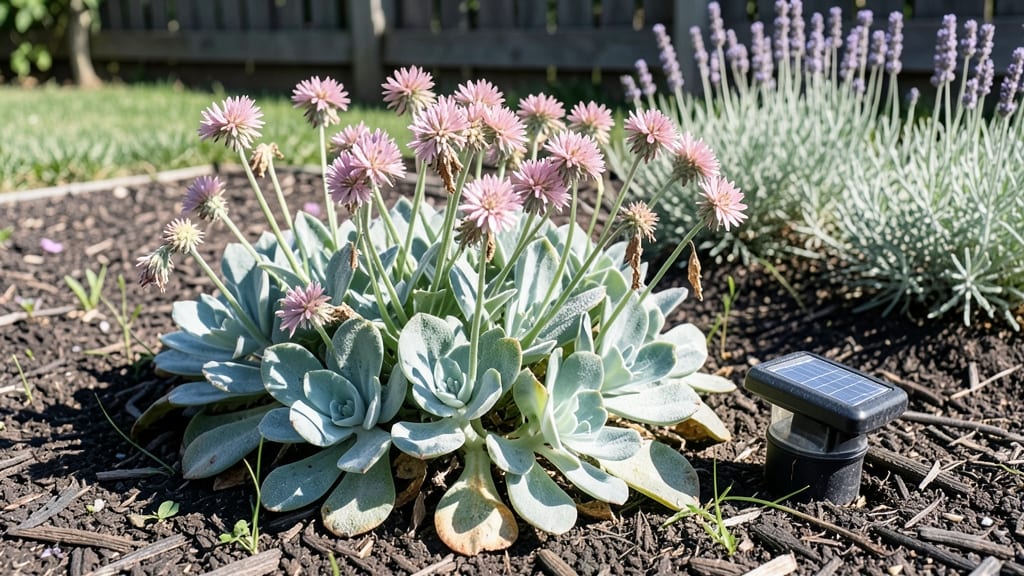
Outdoor solar plants harness sunlight to fuel growth, featuring hardy varieties like sunflowers, lavender, and succulents that thrive with minimal water. Their efficient energy conversion makes them ideal for low-maintenance sunny gardens.
These plants excel because their leaves are specially adapted to absorb maximum sunlight—sunflowers, for example, track the sun throughout the day, while succulents store water to survive dry spells. 🌞 The key to their success lies in their ability to convert solar energy into sugars without overheating, making them perfect for hot, sunny climates.
When designing your garden, group them with other drought-resistant plants like rosemary or thyme to create a self-sustaining ecosystem that thrives with minimal intervention.
For best results, focus on well-draining soil and full sun exposure. This combination ensures your solar-powered garden stays lush and vibrant year-round while reducing water usage. The right pairings can also enhance growth—lavender, for instance, repels pests that might harm sunflowers, creating a natural defense system.
💡 In This Article
- How Solar-Loving Plants Convert Sunlight into Growth
- Best Companion Plants for Sunny Garden Beds
How solar-loving plants convert sunlight into growth
Sun-adapted plants have evolved sophisticated mechanisms to capture and utilize solar energy efficiently. Their leaves contain high concentrations of chlorophyll, the green pigment that absorbs light most effectively in the blue and red wavelengths (400-700 nanometers).
These plants often have thicker cuticles or reflective leaf surfaces to prevent overheating while maximizing light absorption. For example, sunflowers can absorb up to 80% of available sunlight during peak hours, converting it into chemical energy through photosynthesis at rates 2-3 times faster than shade-tolerant species.
The key difference lies in their photosynthetic pathways. C3 plants like sunflowers and lavender use the standard Calvin cycle, which works best in moderate temperatures but can overheat under intense sun. CAM plants (like most succulents) take a smarter approach: they open their stomata at night to absorb CO₂, then store it until daylight when they can photosynthesize without losing water.
This adaptation lets them thrive in desert conditions where temperatures can exceed 100°F during the day and drop to 40°F at night. 🔥 The trade-off? CAM plants grow more slowly because their energy conversion happens in two stages rather than continuously.
What makes these plants so resilient is their ability to regulate internal temperatures. Many sun-loving species have specialized structures called hairs or waxy coatings that reflect excess heat.
For instance, the reflective surface of a sunflower leaf can bounce back 15-20% of incoming sunlight, preventing the leaf from cooking itself. Meanwhile, succulents store water in their thick leaves, creating a built-in cooling system that releases moisture slowly through transpiration.
This water evaporation process can lower leaf temperatures by 5-10°F compared to surrounding air.
Not all plants handle sunlight the same way. Shade-tolerant plants typically have larger, thinner leaves with less chlorophyll to avoid sunburn, while solar plants develop smaller, darker leaves packed with protective pigments called carotenoids.
These pigments not only absorb additional light but also act as antioxidants, protecting the plant from photooxidative damage. For example, the deep purple hues in some lavender varieties come from anthocyanins that shield leaf cells from UV radiation while enhancing light absorption.
Here's what this means for your garden: When selecting solar plants, consider both their photosynthetic pathway and your climate. In hot, dry regions, CAM plants like agave or sedum will outperform C3 plants, while in temperate zones, sunflowers or marigolds will flourish with regular watering.
The secret to their success lies in matching the plant's natural adaptations to your growing conditions. 💫
One fascinating example is how sunflowers use heliotropism—their flowers track the sun's movement throughout the day, maximizing energy capture. Young sunflowers face east in the morning, then rotate westward as the day progresses, a process driven by growth hormones that adjust the stem's curvature.
This behavior can increase their photosynthetic efficiency by up to 30% compared to stationary flowers.
The takeaway? Solar plants aren't just surviving—they're engineering their own microclimates. By understanding these adaptations, you can create garden spaces where these plants thrive with minimal water and maintenance, turning your sunny areas into self-sustaining energy hubs. ✨