Watering
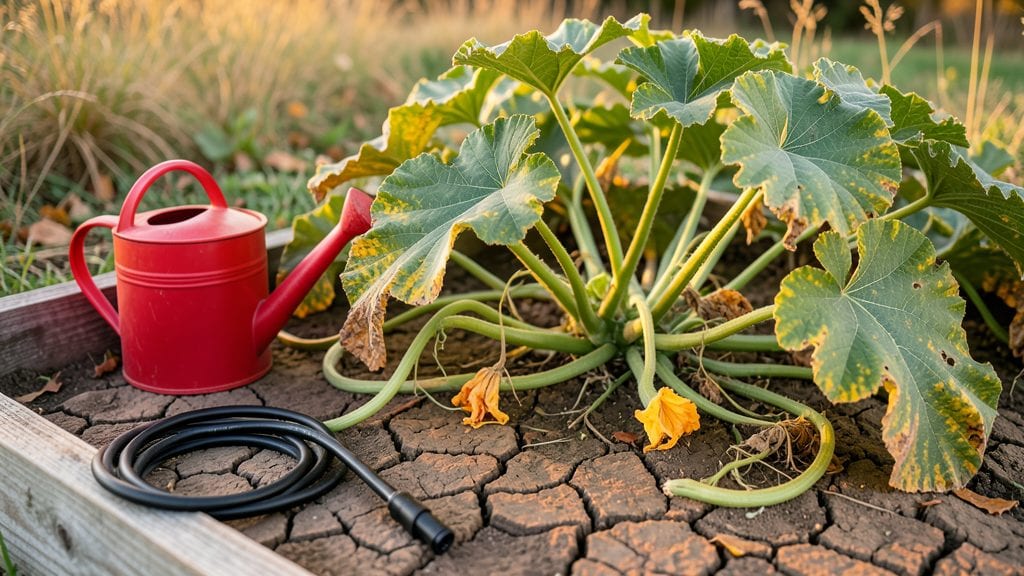
Your pumpkin vines are wilting faster than a summer storm rolls in—this is the underwatered pumpkin plant crisis I’ve fixed more times than I can count. The telltale signs? Leaves curling like parchment, dry soil that crumbles like dust, and vines that sag like overcooked noodles.
But here’s the good news: with the right fix, you can revive them in 24 hours and keep them thriving for the harvest.
Pumpkins need 1–2 inches of water per week, but their sprawling vines drink more than they let on—especially in heat. The roots spread wide, not deep, so shallow watering just stresses them.
I’ve learned the hard way that quick fixes (like a single deep watering) won’t cut it; you need consistent moisture to coax those vines back to life. Start by soaking the soil around the base until water runs out the sides of the bed.
Within hours, you’ll see the difference: leaves plumping up, new growth pushing out, and that stubborn wilting reversing. For long-term health, add 2–3 inches of mulch to lock in moisture and shade out weeds.
Your pumpkins will reward you with vibrant green foliage and the promise of those big, heavy fruits by fall.
This works for both backyard patches and container-grown pumpkins—just adjust water volume to match your space. The key? Stay ahead of the thirst. Once you master this, your vines will stay strong enough to support those 20-pound gourds without a struggle.
Root Causes Of Wilting Pumpkins
Understanding why your pumpkin plant is thirsty—and how to fix it—starts with identifying the real culprits behind its drooping leaves and stunted growth. Pumpkins, like all plants, rely on a delicate balance of water, soil, and environmental factors.
When this balance tips, the consequences can be visible in just days. Below, we break down the most common reasons your pumpkin vines might be underwatered, with science-backed explanations to help you diagnose and act fast.
Pumpkin plants have shallow, sprawling root systems that absorb moisture quickly, especially in loose or sandy soil. Unlike deep-rooted crops, they can’t store large reserves of water, meaning they need consistent moisture—not just occasional deep soaks.
- Why it happens: When soil dries out, the plant’s vascular system (xylem) struggles to transport water from roots to leaves, causing wilting (a temporary response) or permanent leaf scorch if severe. - Key red flags: - Soil pulls away from the pot edges or feels dry 1–2 inches below the surface. - Leaves curl or develop crispy edges by midday. - Vines grow slower or stop extending entirely. - Actionable fix: Water deeply 1–2 times per week (more in extreme heat), ensuring the top 4–6 inches of soil stay moist.
Use a moisture meter or the "finger test" to check—if your finger comes out clean, it’s time to water.
Even if you’re watering regularly, clay-heavy, compacted, or poorly amended soil can trap air pockets, preventing roots from accessing moisture efficiently. Pumpkins thrive in loose, well-draining soil with organic matter (like compost) to retain water without suffocating roots.
- Why it happens: Compacted soil reduces aeration, forcing roots to work harder to absorb water.
Overwatering in heavy soil can also lead to root rot, but underwatering is more common in sandy or rocky beds where water drains too fast. - Key red flags: - Water pools on the soil surface instead of soaking in. - Roots look dark, mushy, or tangled (signs of both over- and underwatering stress). - Vines grow weakly or develop yellowing leaves (chlorosis) from nutrient deficiencies. - Actionable fix: - Amend soil with 2–3 inches of compost or aged manure before planting. - Avoid walking on garden beds to prevent compaction. - If in containers, use a 50/50 mix of potting soil and perlite to improve drainage.
Pumpkins are heat-loving plants, but when temperatures soar above 90°F (32°C), they lose moisture through transpiration (water evaporation from leaves) at an alarming rate. Low humidity (common in arid climates or indoor grows) accelerates this process, leaving roots unable to keep up.
- Why it happens: High temperatures increase stomatal opening (pores on leaves), causing rapid water loss.
If the soil can’t replenish this loss quickly enough, the plant wilts—even if the soil appears moist at the surface. - Key red flags: - Wilting occurs daily in the afternoon, even after watering. - Leaves feel dry or papery to the touch. - New growth is sparse or deformed. - Actionable fix: - Mulch heavily (3–4 inches of straw or wood chips) to retain soil moisture and cool roots. - Water early morning or late evening to reduce evaporation. - Use shade cloth (30–50%) if temperatures exceed 95°F (35°C). - For container grows, raise pots off the ground and place them in a shaded area during peak heat.
Pumpkin roots are fragile and sensitive to disturbance. If they’re damaged (from transplant shock, weeds, or pests) or confined (in small pots or root-bound conditions), they can’t absorb enough water to sustain the plant’s needs.
- Why it happens: Roots need space to spread—pumpkins can grow roots 12+ feet long in ideal conditions.
Restricted roots lead to poor nutrient/water uptake, mimicking underwatering symptoms. - Key red flags: - Roots circle the pot or break easily when handled. - Vines grow slowly despite regular watering. - Leaves yellow along the veins (a sign of nutrient starvation). - Actionable fix: - Repot if using containers—choose a minimum 5-gallon pot per plant (bigger is better for vining varieties). - Loosen soil around roots at planting time to encourage spread. - Avoid overcrowding—space pumpkins 4–6 feet apart in gardens.
Too much nitrogen-heavy fertilizer (like fresh manure or synthetic blends) can burn roots, reducing their ability to absorb water. While pumpkins need nutrients, imbalanced feeding stresses the plant, making it more susceptible to drought-like symptoms.
- Why it happens: Excess salts from fertilizers disrupt osmosis—the process that allows roots to pull water from the soil.
This creates a physiological drought, even if the soil is wet. - Key red flags: - White crust on soil surface (fertilizer salt buildup). - Leaf tips turn brown or black (fertilizer burn). - Wilting persists even after watering. - Actionable fix: - Flush soil with water if you’ve over-fertilized. - Switch to a balanced, organic fertilizer (like 5-5-5 or compost tea). - Side-dress with compost instead of liquid feeds during flowering/fruiting stages.
Pumpkins aren’t just affected by what’s below ground—their environment plays a huge role. Wind, salt spray (near coastal areas), or air pollution can damage leaves, increasing water loss and mimicking underwatering.
- Why it happens: Damaged leaf surfaces lose moisture faster, while salt buildup (from hard water or fertilizers) creates a hypertonic soil environment, making it harder for roots to absorb water.
- Key red flags:
- Leaves have brown edges or stippled patterns (windburn or salt damage).
- Wilting is worse on exposed sides of the plant.
- Soil has a white residue (salt accumulation).
- Actionable fix:
- Protect plants from wind with windbreaks (burlap screens or tall plants like corn).
- Use rainwater or filtered water if your tap water is hard.
- Rinse soil occasionally with distilled water to reduce salt buildup.
💡 Pro Tip: Keep a watering journal to track when and how much you water. Note soil conditions, weather, and plant responses—this helps you spot patterns (e.g., "Wilting always happens after 3 days without rain"). Adjust your routine based on real-time data, not guesswork!
Revive Your Pumpkin Plant Fast
If your pumpkin plant is looking wilting, yellowing, or just plain sad, don’t panic—it’s often a sign of underwatering, and the good news is you can turn things around quickly!
Below, we’ll break down the most common causes of an underwatered pumpkin plant and give you practical, step-by-step fixes to bring it back to life. Plus, we’ll share some prevention tips to keep your vines thriving long-term.
Cause: Shallow watering or infrequent hydration leaves roots thirsty, causing drooping leaves and stunted growth.
How to Fix It:
- 🔥 Step 1: Soak the Soil Thoroughly Grab a watering can or hose with a gentle spray nozzle and water until the soil is completely saturated—about 1–2 inches deep. Let the water drain freely; soggy roots are just as bad as dry ones! Pro Tip: If the soil feels dry more than 1 inch below the surface, your plant has been underwatered for a while and needs extra attention.
- 👨🍳 Step 2: Water at the Base, Not the Leaves Avoid wetting the foliage to prevent fungal diseases. Direct the water right at the soil near the stem for maximum absorption.
- 🥘 Step 3: Mulch to Retain Moisture Spread a 2–3 inch layer of organic mulch (straw, wood chips, or grass clippings) around the base (but not touching the stem). This keeps soil cool and locks in moisture for days.
Cause: Inconsistent watering—either too little or too much—throws off your pumpkin’s hydration balance.
How to Fix It:
- ⏰ Step 1: Water Early in the Day Pumpkins need 1–2 inches of water per week, but morning watering (before 10 AM) reduces evaporation and gives roots time to absorb moisture.
- 📊 Step 2: Check Soil Moisture Daily Stick your finger 1–2 inches into the soil. If it’s dry, water deeply. If it’s damp, wait another day. Overwatering is just as harmful as underwatering!
- 🌡️ Step 3: Adjust for Weather & Growth Stage
- Hot/Dry Days? Water every 2–3 days.
- Cooler Weather? Every 4–5 days may suffice.
- Flowering/Fruiting? Increase water slightly—pumpkins need extra hydration when setting fruit.
Cause: Compacted, poor-quality, or nutrient-deficient soil struggles to hold water, leaving roots parched.
How to Fix It:
- 🔪 Step 1: Loosen Compacted Soil Gently rake or fork the top 4–6 inches of soil around the plant to improve drainage and root access to water.
- 💡 Step 2: Amend the Soil Mix in compost or aged manure to improve water retention and nutrient availability. Aim for a 50/50 blend of existing soil and organic matter.
- ✨ Step 3: Use a Moisture-Retaining Additive Products like hydrogel crystals or coco coir can be worked into the soil to help it hold water longer.
Cause: Extreme thirst causes leaves to curl, yellow, or drop—often a sign of root stress or shock.
How to Fix It (Emergency Mode!):
- 🌊 Step 1: Submerge the Pot (If Potted) Place the entire pot in a tub of water for 10–15 minutes to fully rehydrate the roots. Empty excess water afterward to avoid rot.
- 🍳 Step 2: Trim Damaged Foliage Snip off any mushy, brown, or crispy leaves to redirect the plant’s energy to recovery.
- 🥗 Step 3: Provide Shade & Humidity Move the plant to a shady spot for 24–48 hours to reduce stress. If outdoors, use a light shade cloth or mist the leaves (avoid wetting them at night).
Once your plant is back in shape, prevent future underwatering with these habits:
- 💡 Install a Drip Irrigation System for consistent, deep watering.
- 🌡️ Monitor Weather Forecasts and adjust watering before heatwaves.
- 🎯 Use a Soil Moisture Meter for precise readings (no more guessing!).
- 🌱 Plant in Well-Draining, Fertile Soil to support strong root growth.
- ✨ Group Plants Together to create a microclimate that retains moisture longer.
With these fixes, your pumpkin plant should perk up within 24–48 hours—just give it time and consistent care! Remember, healthy roots = happy vines, so don’t skip the deep watering or soil checks. Now go revive that thirsty pumpkin and watch it flourish! 🎃💦
Frequently asked questions
How do I tell if my pumpkin plant is truly underwatered?
Check the soil 1-2 inches deep—if it's dry, that's your first clue. Look for wilted leaves that don't spring back when watered, crispy edges, or leaves curling upward like parchment. The vines may also feel limp to the touch. Pro tip: Compare healthy leaves (dark green, firm) with affected ones to spot differences.
Can I overwater a pumpkin plant while trying to fix underwatering?
Yes, absolutely! Pumpkins hate soggy roots. After giving them a deep drink, let the top 2-3 inches of soil dry slightly before watering again. Test by sticking your finger in—if water drips out, you've overdone it. Yellowing leaves or mushy stems signal overwatering. The goal is consistent moisture, not a swampy base.
What's the fastest way to revive a severely wilted pumpkin plant?
For emergency recovery, submerge the pot in water for 10-15 minutes (if potted) or soak the garden bed until water runs out the sides. Trim any crispy or brown leaves to reduce stress, then move to partial shade for 24 hours. Within 12-24 hours, you should see leaves perking up if the roots are still healthy.
Should I fertilize my pumpkin plant if it's underwatered?
Wait until the plant shows signs of recovery—2-3 days after proper watering. Then use a balanced organic fertilizer (like 5-5-5) or compost tea. Avoid nitrogen-heavy feeds, which can burn stressed roots. Focus first on rehydration, then nutrients. Too much fertilizer while underwatered just accelerates leaf burn.
Will mulch really help my underwatered pumpkin plant?
A 2-3 inch layer of straw or wood chips around the base (not touching the stem) locks in moisture, cools roots, and blocks weeds. For container plants, use coco coir or hydrogel crystals mixed into soil. Mulch can cut watering needs by 30-50% while preventing soil evaporation. Just reapply every 2-3 weeks as it breaks down.