
Companion Plants
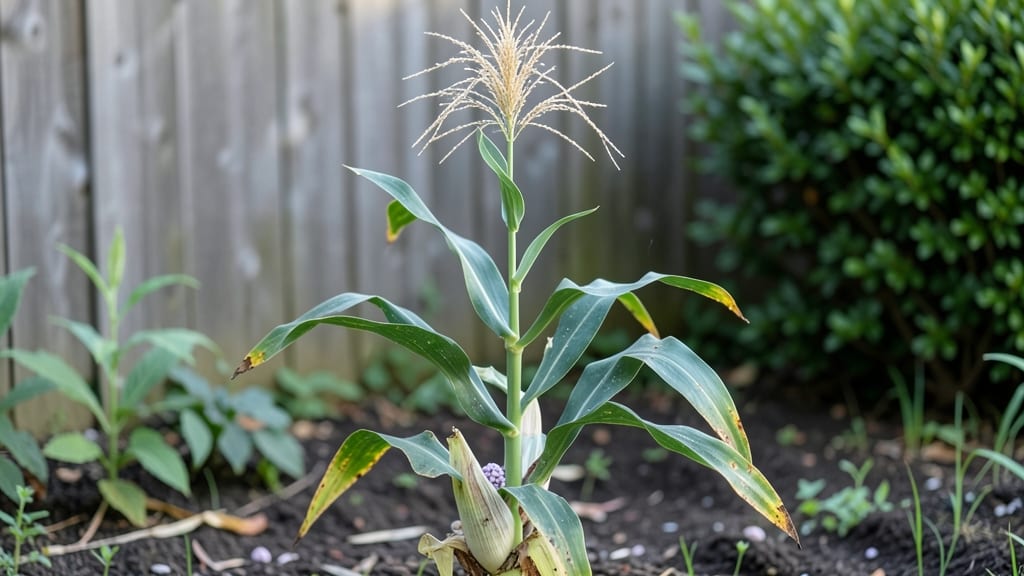
Popcorn plants pictures reveal unique traits across varieties like 'Golden Bantam' or 'Strawberry Popcorn,' highlighting differences in husk color, ear shape, and kernel patterns. Young plants display broad leaves, while mature specimens grow tall stalks and tassels before developing ears.
Identifying popcorn plants through photos starts with recognizing their visual markers at each growth stage. 🌱 For example, 'Strawberry Popcorn' features deep red husks and tiny kernels, while 'Tom Thumb' stays compact with shorter stalks.
The early leaf patterns—like heart-shaped or lobed—also help distinguish varieties before ears even appear. I always recommend photographing plants under natural light to capture these details accurately, especially when comparing multiple types in your garden.
What makes this especially useful is how these traits change as plants mature. The tassels that form before ears appear can signal pollination readiness, while husk color deepens as kernels develop. 💛 For instance, 'Mushroom' popcorn has small, rounded ears, whereas 'Golden Bantam' grows taller with more elongated kernels.
These visual cues become your best tool for accurate identification, especially when planning harvests or sharing seeds with other gardeners.
💡 In This Article
- Visual Traits of Popcorn Varieties by Growth Stage
- How to Photograph Popcorn Plants for Identification
Visual traits of Popcorn varieties by growth stage
The early stages of popcorn growth reveal the most dramatic visual differences between varieties. For example, 'Golden Bantam' starts with broad, heart-shaped leaves that develop a slight waxy coating, while 'Strawberry Popcorn' produces deep red-purple leaves with serrated edges.
These leaf patterns aren't just ornamental—they reflect the plant's genetic makeup, which directly influences kernel development later. 🔥 The leaf size typically ranges from 4-6 inches wide in early growth, with 'Tom Thumb' varieties staying on the smaller end.
As plants transition to maturity, the stalk height becomes a defining feature. 'Mushroom' popcorn varieties grow 3-4 feet tall with thick, sturdy stalks that support small, rounded ears, while 'Golden Bantam' can reach 5-6 feet with more elongated ears.
The tassels that emerge before ears form are another key identifier—'Strawberry Popcorn' develops bright yellow tassels that contrast sharply with its red-purple foliage, whereas 'Tom Thumb' has pale green tassels that blend with its compact growth habit.
The husk color at maturity offers the most striking visual contrast between varieties. 'Strawberry Popcorn' develops deep maroon husks that darken as kernels mature, while 'Golden Bantam' maintains light tan husks with golden undertones.
Kernel patterns also vary dramatically—'Mushroom' popcorn produces small, irregularly shaped kernels (about 1/8-inch diameter) that pop with a distinctive "whoosh," whereas 'Tom Thumb' yields round, uniform kernels (about 1/4-inch diameter) with a sweeter flavor profile.
What most gardeners overlook is how these traits change with environmental conditions. For instance, drought stress can cause husks to develop brighter colors (like more intense red in 'Strawberry Popcorn'), while excess moisture may dilute kernel patterns.
The ear shape also reflects the variety's genetic potential—'Golden Bantam' ears typically form cylindrical shapes, while 'Mushroom' ears grow globular and clustered near the stalk's top.
Here's a quick visual comparison of key traits at maturity:
- Husk Color: 'Strawberry Popcorn' (maroon) vs. 'Golden Bantam' (tan)
- Ear Shape: 'Mushroom' (rounded clusters) vs. 'Tom Thumb' (compact cylinders)
- Kernel Size: 'Mushroom' (1/8-inch) vs. 'Golden Bantam' (1/4-inch)
- Stalk Height: 'Golden Bantam' (5-6 feet) vs. 'Tom Thumb' (3 feet)
The science behind these variations lies in the plant's photoperiod sensitivity—how it responds to daylight length—which directly affects ear development. Longer daylight periods typically produce taller stalks and larger ears, while shorter days can result in more compact growth.
This is why 'Tom Thumb' remains popular in northern climates—its genetics adapt better to shorter growing seasons. 💫
For accurate identification, focus on these three stages: leaf patterns (early growth), tassel color (pre-pollination), and husk/kernel traits (maturity). These visual markers create a clear roadmap for distinguishing varieties, whether you're photographing your garden or comparing seed catalog images.