
Pruning
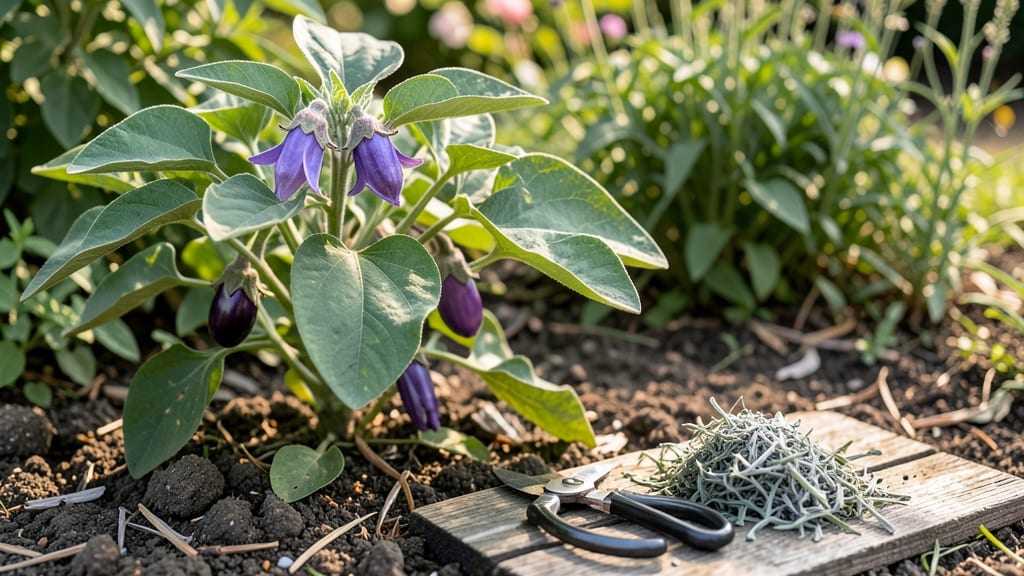
Trimming your eggplant plant isn’t just about shaping—it’s the secret to bigger yields and healthier plants. ✂️ I learned this the hard way after my first eggplant season, where I ignored pruning and ended up with sparse fruit and leggy vines.
The right cuts encourage bushier growth, better air circulation, and more flowers that turn into plump, glossy eggplants.
You’ll need just a few tools: sharp pruning shears, rubbing alcohol to sterilize them between cuts, and a clear day to work.
The best time to trim is in the morning when the plants are dry, and you should do it every 2-3 weeks once the plant reaches about 12 inches tall. Start by removing any yellow or diseased leaves first—they’re just stealing energy from your fruit.
What you’ll get from proper pruning is a plant that looks like it belongs in a nursery display: thick stems, vibrant green leaves, and clusters of flowers that develop into heavy, disease-resistant eggplants.
The key is balance—never cut more than one-third of the plant at once, and always leave at least three or four main stems to support growth.
This method works for both bush and vining eggplant varieties, and it’s especially helpful if you’re growing in containers or small spaces. The payoff? A harvest that keeps coming all season long, with fewer pests and stronger plants that bounce back from heat waves. Ready to give it a try?
📚 In This Guide
- What you need
- Instructions
- Tips and common mistakes
- Wrapping up and next steps
What you need
- ● Pruning shears or sharp bypass pruners – Look for sterilized, stainless-steel blades (3-4" length) to avoid disease transfer.
- ● Garden gloves – Thick, cut-resistant gloves (e.g., nitrile-coated) to protect against thorns and sap.
- ● Rubbing alcohol (70% or higher) or bleach solution – For sterilizing tools between cuts (1 part bleach to 9 parts water).
- ● Small bucket or trash bag – To collect pruned branches and debris.
- ● Sharp knife or scissors – Backup for small trims (sterilize first!).
- ● Pruning sealant (e.g., tree wound dressing) – For large cuts to prevent infection (skip for small trims).
- ● Plant growth regulator (e.g., seaweed extract) – Spray post-pruning to encourage recovery.
- ● Label markers & tags – If tracking pruning dates or varieties.
- ● Compost bin access – To recycle pruned branches (eggplant stems break down easily!).
- ● Healthy eggplant plant – Wait until the plant is at least 6-8" tall with 4-6 true leaves (not just seedlings!).
- ● Good weather – Choose a mild, dry day (avoid pruning in extreme heat or rain).
- ● Patience & observation – Monitor for pests/disease before pruning (trim only healthy plants!).
- ● Sunlight knowledge – Prune in the morning so cuts heal by evening.
Step-by-Step guide to pruning eggplant for healthier plants
Here's how to shape your eggplant for stronger growth and more abundant harvests.
🌿 Step 1: Identify the Main Stem and Side Shoots
Start by examining your eggplant plant closely. The main stem is the thick, central stem growing upward from the base. Look for smaller stems branching off—these are the side shoots. You'll want to focus on the first few sets of leaves near the bottom of the plant, where new growth emerges.
Use your fingers to gently feel the stems. The main stem will be thicker and firmer, while side shoots will be thinner and more flexible. This helps you distinguish between what to keep and what to prune. Real talk: if you're unsure, wait a day and observe how the plant grows—you'll quickly learn what's natural and what's extra.
✂️ Step 2: Prune Side Shoots Below the First Flower Cluster
Use clean, sharp pruning shears to remove side shoots that appear below the first flower cluster. Cut just above a leaf node or a small bump where a leaf or branch grows out. This encourages the plant to put energy into producing fruit higher up, rather than wasting resources on lower growth.
I like to make my cuts at a slight angle to prevent water from pooling on the stem, which can cause rot. Avoid tearing the stem—this can damage the plant and leave it vulnerable to disease. If you're working with a young plant, you might not see flowers yet, so focus on the lower third of the plant for pruning.
🌱 Step 3: Thin Out Crowded Foliage for Better Airflow
Eggplants benefit from good airflow, which reduces the risk of fungal diseases like powdery mildew. Look for areas where leaves are growing too close together or overlapping. Use your pruning shears to trim back any excessive foliage, focusing on the inner parts of the plant where air might struggle to circulate.
You don't need to remove every extra leaf—just enough to create space. Aim for a balanced shape where sunlight can reach the center of the plant. If you're unsure, step back and take a look: if the plant looks like it's blocking its own sunlight, it's time to thin it out.
☀️ Step 4: Encourage Bushier Growth by Pinching Back Tips
Once your eggplant has grown to about 12-18 inches tall, pinch back the tips of the main stem and any strong side shoots. This means pinching off the top inch or so of growth with your fingers. This encourages the plant to produce more side branches, which will lead to more flower clusters and, eventually, more fruit.
I usually do this when the plant has about 5-6 leaves and is starting to look leggy. Pinching back the tips redirects the plant's energy toward creating a bushier structure. Watch for new growth to sprout from the leaf nodes below the pinched area—this is your signal that the plant is responding well.
⏰ Step 5: Monitor and Repeat Pruning as the Plant Matures
Pruning isn't a one-time task—it's an ongoing process. As your eggplant grows, continue to remove any side shoots that form below the first flower cluster. You'll also want to keep an eye out for any suckers (small shoots that grow between the main stem and a branch) and prune them off to maintain the plant's shape and energy focus.
Every 2-3 weeks, take a few minutes to inspect your plant. Look for any signs of stress, disease, or overcrowding. If you notice yellowing leaves or wilting, it might be a sign that the plant needs more airflow or water. Pruning regularly keeps your eggplant healthy, productive, and ready for a bountiful harvest.
Tips & tricks for pruning eggplant plants
Here’s what I’ve learned after years of gardening—these tricks will help you prune like a pro and get the most out of your eggplant plants.
The Timing Secret: Prune in the morning when the plants are dry and the air is cooler. This gives the cuts time to heal before evening moisture can set in, reducing the risk of disease. I always schedule my pruning sessions for early morning, and I’ve noticed a significant drop in fungal issues since then.
Tool Technique: Use clean, sharp pruning shears every time—dull tools crush stems instead of making clean cuts. I keep a small bottle of rubbing alcohol handy to disinfect my shears between cuts, which helps prevent spreading any potential diseases from plant to plant.
Visual Cues for Pruning: Look for side shoots that grow at sharp angles from the main stem—these are the ones to remove. In Step 2, when you’re pruning below the first flower cluster, imagine drawing an invisible line from the base of the plant up to where the first flowers appear. Everything below that line should be trimmed away.
Pinching Technique: When you’re ready to pinch back tips in Step 4, use your thumb and forefinger to crush the growth just above a leaf node. This is gentler on the plant than cutting and prevents the stem from tearing. I’ve found that pinching at the right time—when the plant has about 5-6 leaves—makes a huge difference in how bushy it becomes.
Pro Tips for Trim Eggplant Plant
- Here’s what I’ve learned after years of gardening—these tricks will help you prune like a pro and get the most out of your eggplant plants.
- The Timing Secret: Prune in the morning when the plants are dry and the air is cooler.
- Tool Technique: Use clean, sharp pruning shears every time—dull tools crush stems instead of making clean cuts.
Frequently asked questions
Got questions about trimming your eggplant plant? You’re not alone! Here are some of the most common concerns—and straightforward answers—to help you prune like a pro.
When is the best time to trim an eggplant plant?
Trim your eggplant plant early and often—start when the plant is 6–8 inches tall and has 4–5 true leaves. Focus on removing lower leaves and suckers (side shoots) in the morning when the plant is hydrated. Avoid heavy pruning late in the season, as it can stress the plant before harvest.
How much should I trim off an eggplant plant?
Remove only what’s necessary: pinch off suckers (the small shoots growing between the main stem and branches) and trim yellow or diseased leaves. For bush varieties, keep the plant compact by cutting back leggy growth. Never remove more than 1/3 of the plant’s foliage at once—this ensures it retains energy for fruit production.
Will trimming my eggplant plant increase yield?
Yes! Pruning directs energy to fruit production instead of excessive foliage. By removing suckers and lower leaves, you improve airflow, reducing disease risk and encouraging bigger, healthier eggplants. Just avoid over-trimming—balance is key!
Can I trim eggplant plants in hot or humid weather?
Trim during cooler mornings (60–75°F) to avoid stressing the plant. Humidity can promote fungal diseases, so prune only when leaves are dry and sterilize your tools with rubbing alcohol. If it’s scorching, wait for a cloudy day to protect the plant.
What if I skip pruning my eggplant plant?
Without pruning, your eggplant may grow tall and leggy, with fewer fruits and more disease-prone foliage. While it’ll still produce eggplants, yields will likely be smaller and less uniform. Think of pruning as a quick maintenance task for better harvests!
Are there alternatives to trimming eggplant plants?
If pruning feels overwhelming, try thinning seedlings early on (keep the strongest 2–3 plants per pot) or use cage supports to encourage bushier growth naturally. However, light pruning still yields the best results for larger, healthier eggplants.
Wrapping up and next steps
Trimming your eggplant plant isn’t just about tidying up—it’s your secret weapon for bushier growth, bigger yields, and healthier plants! 🌱 By mastering the right techniques, you’ll encourage more flowers, prevent disease, and enjoy a bountiful harvest.
Now that you’re armed with the knowledge, there’s only one thing left to do: roll up your sleeves and get pruning!
Start with just one plant—whether it’s a small container or a corner of your garden—and watch the magic happen. Before you know it, you’ll be the proud grower of plump, glossy eggplants that’ll make your neighbors jealous. Happy gardening! 🌟