
Pests
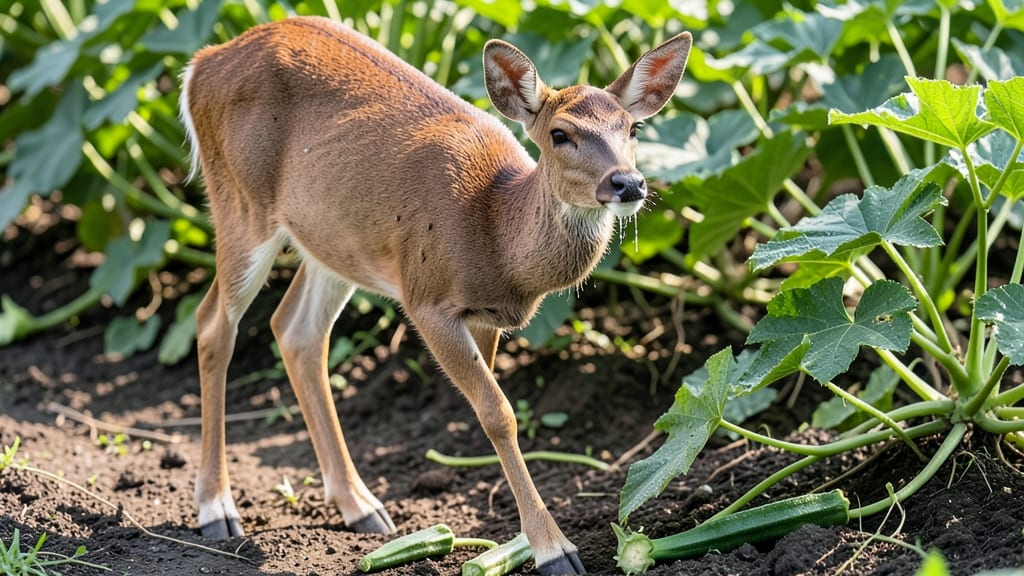
Will deer eat okra plants? Deer will eat okra plants, though they often avoid them due to the pods' prickly texture and slightly bitter taste, especially when mature. Young seedlings are more vulnerable, so protective measures may be needed in high-deer areas.
Okra's natural defenses play a big role in why deer usually pass them by.
The spiky pods deter browsing, while the plant's mild toxins in raw form make it less appealing than softer, sweeter vegetables. 🌱 However, when food is scarce—like during late summer droughts—deer may still nibble on tender young shoots.
I've seen this happen most often in gardens where deer have few other options, so diversifying your plantings can help reduce the risk.
For gardeners in high-deer zones, the key is combining natural deterrents with smart timing. Planting okra later in the season can help, since deer tend to focus on early-spring greens first. Physical barriers like chicken wire or repellent sprays (like garlic-based formulas) also work well when applied consistently.
💡 In This Article
- Why Deer Sometimes Ignore Okra Pods
- Protecting Okra Plants from Deer Damage
Why deer sometimes ignore okra pods
Okra's natural defenses begin with its spiky pods, which act like built-in deterrents. Each pod contains 5-10 sharp, needle-like spines that grow to 1/4 to 1/2 inch long as the plant matures.
These spines aren't just for show—they create physical discomfort when deer attempt to chew, similar to how cacti protect themselves. The spines make the pods feel like they're covered in tiny needles, which deer instinctively avoid to prevent mouth injuries. 🌿
The plant's chemical defenses play an equally important role. Raw okra contains mucilage—a gelatinous compound that gives okra its slimy texture when cooked—and small amounts of oxalates, which can cause mild irritation in deer's digestive systems.
While these compounds aren't toxic to humans in normal consumption, they create an unpleasant, slightly bitter taste that deer find unappealing, especially in mature pods. Studies show deer prefer plants with sweeter, less fibrous profiles, like clover or alfalfa, which have 10-20 times less oxalate content than okra.
Deer browsing patterns also explain why okra often escapes damage. Deer are selective grazers that prioritize tender, nutrient-rich plants first. Young okra seedlings (under 6 inches tall) are most vulnerable because their spines haven't fully developed, and their leaves resemble other deer favorites like lettuce.
However, once okra reaches maturity (typically 6-12 inches), its combination of spines, bitter taste, and fibrous texture makes it a low-priority target. This is why you'll often see deer completely ignore established okra plants while devouring nearby tomatoes or beans.
Seasonal factors add another layer to okra's deer resistance. During late summer and early fall, when food sources dwindle, deer may become more desperate and target okra—particularly if other garden plants have been over-harvested.
In these cases, the pods' defenses weaken as they mature, and deer might sample them out of necessity. The key difference is that even in these situations, deer rarely fully consume okra plants; they'll typically take just a few bites before moving on to easier prey. 🦌
Comparing okra to other deer-resistant plants reveals why it's often spared. For example, rosemary or lavender contain strong aromatic oils that deer find overwhelming, while okra's defenses are more about physical discomfort and mild chemical irritation.
This makes okra's protection more situational—effective against casual browsing but not against determined deer in food-scarce conditions. The plant's natural armor works best when deer have plenty of alternative food sources available.
What most gardeners don't realize is that okra's defense mechanisms are actually more effective when the plant is stressed. Underwatered or nutrient-deficient okra produces pods with higher concentrations of oxalates and more pronounced spines, making it even less appealing to deer.
This is why well-maintained okra plants in fertile soil often face less than 10% browsing damage from deer, while struggling plants in poor conditions might see slightly higher interest—though still minimal compared to other garden vegetables.