
Watering
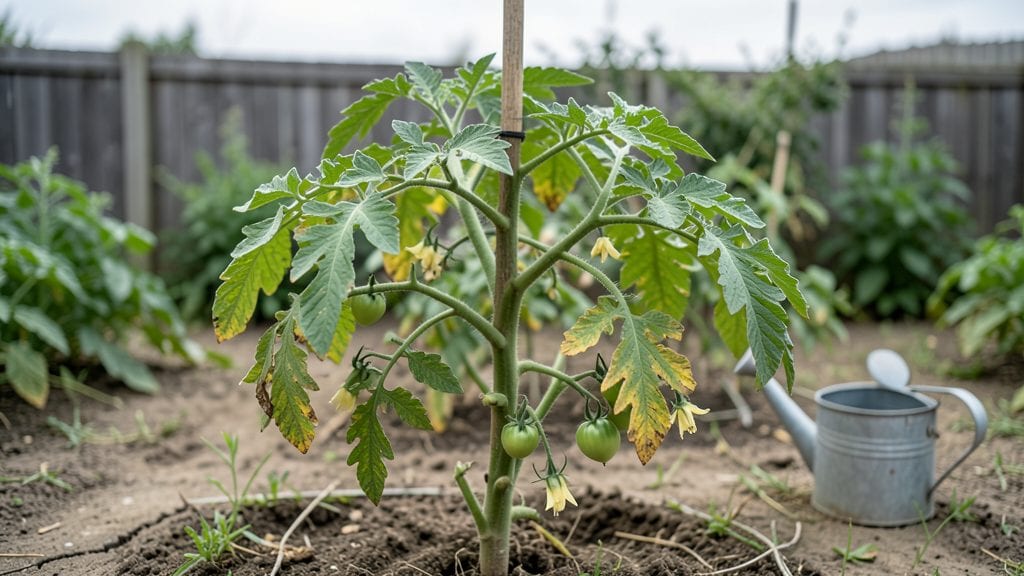
Underwatering tomato plants doesn’t have to mean game over—it’s the easiest fix I’ve learned after watching my first batch of tomatoes turn crispy before they ripened.
The telltale signs are obvious once you know what to look for: leaves curling like parchment, dry soil that crumbles instead of holding moisture, and stems that feel hollow when squeezed. These plants aren’t just thirsty—they’re begging for a watering routine that matches their deep, thirsty roots.
Here’s the thing—tomatoes need 1-2 inches of water per week, but most gardeners either drown them or leave them high and dry. I switched to deep watering twice a week instead of daily shallow sprinkles, and my plants went from wilting to thriving in under a month.
The key is soaking the soil until water runs out the bottom of the pot or container, then letting the top inch dry before repeating. Mulch helps too—it keeps moisture locked in and roots cool, which means fewer stress signals like yellowing leaves.
You’ll know you’ve cracked it when new leaves stay deep green and crisp, not limp or curled. The fruit will plump up faster, and you’ll see fewer blossom-end rot spots (a classic underwatering side effect).
The best part? This method works whether you’re growing in raised beds, containers, or straight in the ground—just adjust the water volume to match your setup. Let’s turn those sad, droopy plants into heavy producers.
Fair warning: Overwatering is just as deadly, so we’ll talk about how to tell the difference between thirsty plants and soggy roots next. The secret is in the soil—stick your finger in an inch deep.
If it’s bone dry, water. If it’s damp but not soggy, wait another day. That’s all it takes to keep tomatoes happy all season.
Root Causes of Tomato Drought Stress
Underwatering tomato plants isn’t just about forgetting to water—it’s a cascade of environmental, physiological, and human factors that disrupt their delicate balance. Understanding these root causes helps you prevent wilting before it starts.
Let’s break down the science behind why your tomatoes might be thirsty (even when you think you’re watering enough).
Tomatoes thrive in consistently moist (not soggy) soil, but their roots struggle when moisture levels drop too low. Here’s why:
- Capillary Action Fails: Soil particles rely on capillary action—the ability to "wick" water upward via tiny pores. When soil dries out, these pores shrink, cutting off water supply to deeper roots.
Sandy or loamy soils drain faster, accelerating this process. - Osmotic Stress: Roots absorb water via osmosis, but when soil moisture drops below 30-40% field capacity (the point where roots can’t extract water efficiently), cells lose turgor pressure.
This triggers wilting—even if soil looks damp at the surface. - Root Zone Shrinkage: Most tomato roots live in the top 6-12 inches of soil.
If this zone dries out, roots retract, reducing surface area for water absorption by up to 50% (studies from Journal of Plant Nutrition confirm this).
💡 Pro Tip: Stick your finger 2-3 inches deep—if it feels drier than a biscuit, it’s time to water. Surface moisture is a lie!
A quick sprinkle from a hose or drip system might look sufficient, but it’s a common misstep:
- Evaporative Loss: Water applied to leaves or soil surface evaporates within hours, especially in hot, dry, or windy conditions.
Tomatoes lose up to 90% of water this way before roots even benefit. - Shallow Root Penetration: Light watering encourages shallow root growth, making plants vulnerable to drought.
Deep roots (12+ inches) store water like a reservoir—but they only form with deep, infrequent watering. - Salt Buildup: Frequent shallow watering leaves salts behind in the topsoil, creating a hypertonic solution that forces roots to expend energy to expel excess minerals—energy they should be using to absorb water.
✨ Fix It: Water deeply 1-2 times per week (or daily in extreme heat) to encourage roots to grow downward. Use a soaker hose or drip irrigation to deliver water 2-3 inches below the surface.
Not all drought is created equal. These external factors accelerate water loss in tomatoes:
| Factor | How It Affects Tomatoes | Solution |
|---|---|---|
| High Temperatures | Transpiration (water loss through leaves) doubles above 85°F. Leaves act like sponges. | Water early morning or evening, mulch heavily, and use shade cloth. |
| Low Humidity | Dry air increases evaporation rate by 30-50%. | Group plants together to create micro-climates; avoid air conditioning vents. |
| Wind Exposure | Wind strips moisture from leaves, causing desiccation (like a sunburn for plants). | Plant near windbreaks (e.g., corn, tall grass) or use wind barriers. |
| Poor Soil Structure | Compacted or rocky soil blocks water penetration, forcing roots to surface. | Amend with compost or perlite; avoid tilling when soil is dry. |
🌡️ Extreme Alert: Tomatoes in 100°F+ heat can lose 1 gallon of water per plant per day—more than a small potted plant needs in a week!
Even well-meaning gardeners sabotage their tomatoes with these habits:
- Inconsistent Scheduling: Watering only when you remember (e.g., after work on Fridays) creates a feast-or-famine cycle. Tomatoes need predictability—roots adapt to rhythms. - Overwatering Then Underwatering: Soggy soil followed by drought rots roots (fungal issues like Pythium) while also starving them of oxygen.
Roots need aerated, evenly moist soil. - Ignoring Plant Signals: Drooping leaves? Yellowing lower leaves? These are SOS signals, not just "it’s hot today." By the time leaves crisp, root damage is irreversible.
🔥 Quick Checklist:
- [ ] Water at the base, not the leaves (foliar diseases thrive in wet leaves).
- [ ] Use a moisture meter or the squeeze test (grasp a handful of soil—if it crumbles, water now).
- [ ] Never let tomatoes go 3+ days without water in peak heat.
🚨 Remember: Tomato plants are 95% water at maturity. When they wilt, it’s not just about wilting—it’s about cellular collapse, nutrient transport shutdowns, and fruit quality plummeting. The good news? Fixing underwatering is easier than you think—and your next harvest will thank you.
Fixing Your Thirsty Tomatoes
Reviving underwatered tomato plants starts with quick action—and a few smart tweaks to keep them thriving long-term. Below, we’ll map common causes of wilting to practical fixes, plus prevention tips to avoid future stress. Think of this as your tomato plant’s emergency hydration kit!
Cause: Skipped watering sessions or shallow roots struggling to reach moisture. Fix:
- 🔥 Deep Watering Shock Treatment – Grab a hose or watering can and soak the soil until water drains out the bottom of the pot (or 6–8 inches deep in ground soil). Aim for 1–2 gallons per plant for mature tomatoes. Repeat every 2–3 days until leaves perk up.
- 🍳 Mulch Like a Pro – Spread 2–3 inches of organic mulch (straw, wood chips, or grass clippings) around the base (but not touching the stem). This locks in moisture and cools roots. Pro tip: Wet the mulch before applying—it’ll clump better!
- 👨🍳 Adjust Your Watering Schedule – Tomatoes hate inconsistency. Water early morning (6–9 AM) to reduce evaporation and fungal risks. Stick to a set routine (e.g., every 2–3 days in heat, every 4–5 days in cooler weather).
Prevention: ✅ Use a moisture meter ($10–$15) to check soil before watering—aim for 60–70% moisture 2 inches down. ✅ Drip irrigation or soaker hoses deliver water slowly and directly to roots, cutting waste.
Cause: High temps + dry soil = transpiration overload (plants lose water faster than roots can absorb it). Fix:
- 🌿 Shade Cloth Save – If temps hit 90°F+, drape 30–50% shade cloth over plants for 2–4 hours midday. This buys time for roots to recover.
- 💦 Mist Leaves (Strategically) – Lightly mist undersides of leaves in the early morning to boost humidity. Avoid evening misting—this can trigger fungal diseases.
- 🥗 Ice Cube Hack – For container tomatoes, float 3–4 ice cubes in the saucer under the pot. The slow melt cools roots without shocking them.
Prevention: 💡 Plant in late spring (after last frost) to avoid peak summer heat. 🌡️ Choose heat-tolerant varieties like ‘Heatmaster’ or ‘Solar Fire’ if you’re in a hot climate.
Cause: Roots can’t access water due to compacted soil, overcrowding, or clay pots. Fix:
- 🔪 Loosen the Soil – Gently fork or dig around roots (1–2 inches deep) to break up compacted soil. Mix in compost or perlite to improve aeration.
- ⏰ Upgrade Containers – If using pots, swap for larger ones (tomatoes need at least 5-gallon containers). Drill drainage holes if missing.
- 🌱 Transplant if Needed – If roots are circling the pot, repot into fresh, well-draining soil (50% potting mix + 50% compost).
Prevention: ✨ Test soil drainage before planting: Fill a pot with soil, add water, and time how long it takes to drain. Ideal: 30–60 minutes. ✨ Use raised beds for heavy clay soil—add coarse sand or vermiculite to improve drainage.
Once your plants bounce back, lock in success with these low-effort upgrades: - 📊 Track watering logs – Note when/where you water to spot patterns (e.g., “Wilting happens after 3 days in July”). - 💪 Fertilize wisely – Over-fertilizing stresses plants.
Use a balanced 10-10-10 or fish emulsion every 4–6 weeks—but cut back during droughts. - 🌱 Prune strategically – Remove suckers (side shoots) to reduce water demand—fewer leaves = less water loss.
Remember: Tomatoes are drought-tolerant but not drought-proof. A little consistency goes a long way—think of watering like a steady rain, not a monsoon. 🌧️🍅
Frequently asked questions
Why do my tomato leaves curl up when they're thirsty?
Tomato leaves curl as a survival mechanism to reduce water loss through transpiration. When soil moisture drops below 30-40%, roots can't supply enough water, causing cells to lose turgor pressure. This curling is your plant's way of minimizing surface area exposed to dry air.
How often should I water tomatoes in containers vs. garden beds?
Container tomatoes need water every 1-2 days in hot weather since pots dry out faster, while garden tomatoes typically require watering every 2-3 days. Always check soil moisture 2 inches deep—if it's dry, water thoroughly until it drains from the bottom. Mulching helps both reduce frequency.
Can I revive a tomato plant that's been underwatered for a week?
Yes, but act fast! Give the plant a deep watering (1-2 gallons) immediately, then repeat every 2-3 days until leaves perk up. Remove any crispy leaves to reduce water loss. For containers, soak the pot in water for 15-20 minutes to fully rehydrate roots. Recovery takes 3-7 days depending on heat levels.
What's the difference between underwatering and overwatering symptoms?
Underwatered tomatoes show dry, crispy leaves that stay curled even at night, while overwatered plants have yellow lower leaves, mushy stems, and soil that smells sour. The key test: stick your finger 2 inches deep—if it's bone dry, you're underwatering; if it's soggy, you're overdoing it.
Should I water tomato plants in the morning or evening?
Always water in the early morning (6-9 AM) to allow leaves to dry before evening, preventing fungal diseases like blight. Evening watering keeps foliage wet overnight, creating perfect conditions for pathogens. For container plants, water before 10 AM to maximize root absorption during the coolest part of the day.