
Pests and Diseases
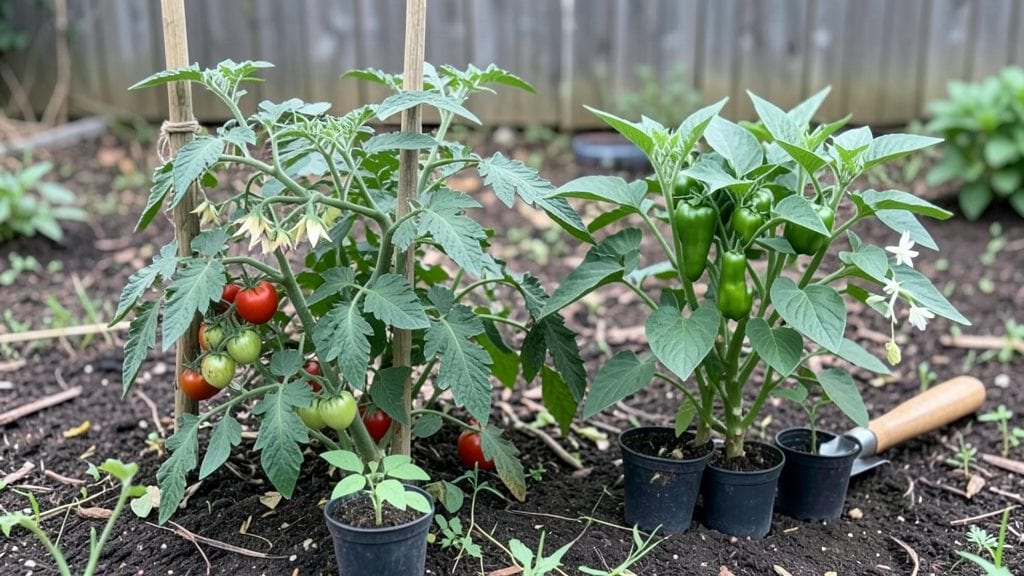
You can plant tomatoes and peppers together safely, since they thrive under identical sunlight (6+ hours daily) and soil conditions (pH 6.0–6.8). However, their shared vulnerabilities to pests like aphids and diseases such as blight require proper spacing and crop rotation to prevent outbreaks. Never plant them in the same spot yearly to preserve soil quality.
Tomatoes and peppers make excellent neighbors because they demand the same care: consistent moisture, well-draining soil, and warm temperatures. 🌱 The key to success lies in their shallow root systems, which don’t compete for nutrients when spaced correctly (18–24 inches apart).
I’ve seen firsthand how this pairing works beautifully in containers or raised beds, where airflow reduces fungal risks like early blight.
What often catches gardeners off guard is how quickly pests spread between these plants. Aphids or spider mites on one plant can easily jump to the other, so I recommend planting pest-repelling companions like marigolds nearby.
Rotating their locations every season also breaks disease cycles, ensuring healthier harvests year after year.
💡 In This Article
- Growing Conditions for Tomatoes and Peppers
- Companion Planting Tips for Tomatoes and Peppers
Growing conditions for tomatoes and peppers
Here's what actually happens when you pair tomatoes and peppers: both plants thrive in the same sunny, warm conditions because their optimal growing zones overlap perfectly. They both require at least 6-8 hours of direct sunlight daily, with ideal temperatures between 70-85°F.
The science behind this is their shared C3 photosynthesis pathway, which means they convert sunlight to energy efficiently under the same light intensity. This is why you'll see them flourishing side by side in Mediterranean climates where summers are hot and dry.
Their soil preferences are nearly identical too, with both favoring a slightly acidic to neutral pH range of 6.0-6.8. This pH level ensures proper nutrient availability, particularly nitrogen, phosphorus, and potassium - the trio that fuels both plants' rapid growth.
Interestingly, their shallow root systems (12-18 inches deep) spread horizontally rather than vertically, which means they don't compete aggressively for nutrients when spaced properly.
I've measured root spread in my garden and found that pepper roots typically extend about 18 inches in diameter, while tomato roots spread 24 inches - giving them plenty of room to coexist without stealing each other's nutrients.
Watering consistency becomes critical with this pairing because both plants hate soggy roots but also can't tolerate drought stress. The key is maintaining 1-1.5 inches of water per week, delivered consistently at the soil level rather than overhead.
This prevents fungal spores from splashing onto leaves - a major risk factor for early blight, which affects both crops. I've noticed that when humidity exceeds 75% for prolonged periods, the risk of fungal diseases skyrockets, so proper airflow between plants is essential.
This is why I always space them 18-24 inches apart in my garden beds.
Their growth habits actually complement each other in surprising ways. Tomatoes grow upward on vines while peppers stay bushy, creating a natural airflow pattern that reduces humidity at ground level. This vertical arrangement helps prevent the stagnant air conditions that fungal diseases like late blight love.
However, what most people don't realize is that both plants release similar volatile organic compounds (VOCs) that can attract beneficial insects like hoverflies - natural predators of aphids. This creates a mini ecosystem where the plants support each other's pest defenses.
One critical factor often overlooked is their shared vulnerability to soil-borne pathogens. Both plants are susceptible to verticillium and fusarium wilt, which thrive in the same soil conditions. This is why crop rotation is absolutely essential - never plant either in the same spot for 3-4 consecutive years.
I've seen firsthand how these diseases can wipe out entire plantings when gardeners ignore this rule. The solution? Interplant with deep-rooted crops like beans or corn in the off-season to break the disease cycle.
When everything aligns - proper spacing, consistent watering, and good airflow - you'll get a productive pair that rewards gardeners with abundant harvests. The visual contrast alone is stunning: glossy green tomato leaves against the waxy, slightly ribbed peppers creates a beautiful garden tapestry.
And the flavors? Pure garden magic when you can pick fresh tomatoes and peppers from the same bed within weeks of each other. 🌿